The hosepipe ban, due to expire in a week’s time, may be extended in Dublin and eastern and southern counties as “challenging” conditions remain for water supplies.
Uisce Éireann is reviewing the ban, officially called a water conservation order, which came into effect in the middle of July amid soaring temperatures and a protracted drought.
While temperatures have fallen back to more normal levels and forecasters are predicting recurring spells of rain over the next two weeks, many rivers that supply regional and local water treatment plants are low.
“The impacts of the current dry weather are being seen most acutely in our river abstractions,” said Uisce Éireann in a statement.
READ MORE


“Recovery is now being observed in parts of the northwest where recent rainfall has improved hydrological conditions.
“However, the situation remains more challenging in parts of the east and south where limited rainfall has been recorded since the beginning of August.”
Demand for water continues to be higher in these regions, noted the statement, adding further pressure on supplies.
The impact of the hot, dry summer on water supplies has become clearly visible in places such as the Vartry Reservoir, where a six billion litre hole in the national store of drinking water has developed.
Vartry, at Roundwood, Co Wicklow, is one of the State’s oldest reservoirs and supplies about 200,000 people in south Dublin and north Wicklow with water stored for treatment in two connected lakes.
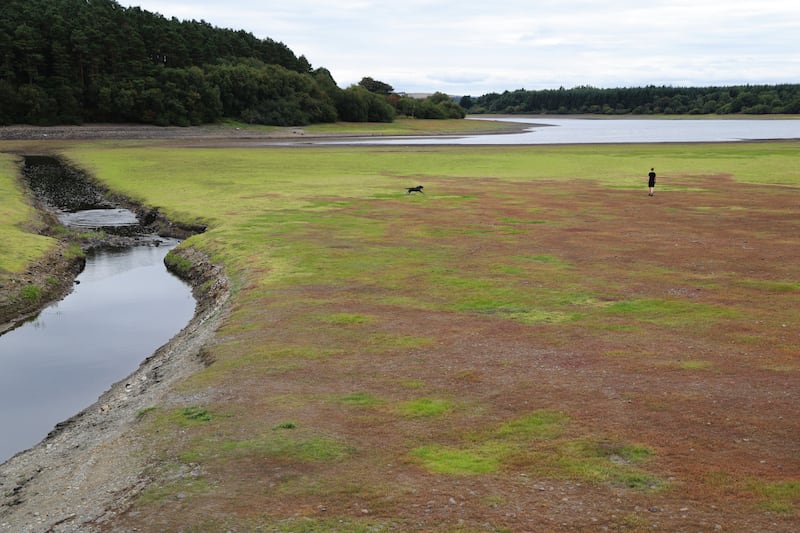
The upper reservoir, with a capacity of 5.6 billion litres of water, is reduced to a trickle, with grass growing on normally unseen ground and walkers taking advantage of the novel scene to exercise their dogs.
Uisce Éireann said, despite appearances, the overall store of water at the facility was at 58 per cent of capacity and “within the normal range for this time of year”.
The lower reservoir can hold about 11.3 billion litres of water and it has been drawing from the upper lake to keep its levels near normal.
The country’s biggest reservoir, Poulaphouca, also known as Blessington Lakes, serves the Ballymore Eustace treatment plant, which supplies large parts of Dublin city and county, and is at 69 per cent of its capacity.
It began the summer at full capacity after benefiting from the weeks of torrential rain that fell in the early months of this year.
“Overall raw water storage levels across the Greater Dublin Area remain robust,” said Uisce Éireann.
“Lake, reservoir and groundwater sources generally provide greater storage and are therefore more resilient to short-duration dry periods.
“However, these sources can also come under increasing pressure if below-average rainfall persists for an extended period and levels do not have a chance to recover.”
However, a decision must be made in the next few days whether to issue a further water conservation order when the current one expires on August 26th and, if so, to which areas.
The order requires a technical report to be submitted to the Government explaining the rationale behind any request to introduce or extend it.
“Uisce Éireann is currently reviewing the water conservation order, taking into account recent rainfall, raw water availability, customer demand trends, the outlook for water resources across the country and the weather forecast,” said the statement.
“Uisce Éireann will continue to closely monitor conditions and implement the most appropriate measures to protect water resources and maintain secure water supplies for customers.”


