
We saw these on the trail around the Upper Reservoir at Bohernabreena on March 19th, while out with a walking group. At first we all thought they were frogs, but on closer inspection they look like toads. Are there toads in the wild in Co Dublin? Paul O’Kane
I am afraid so. This Common toad is now considered to be an invasive species. It was first recorded in Dublin in a garden in Stepaside in 2019 and has now become established in the wild. These were out of hibernation, on their way to spawn in the water. This lad couldn’t wait and has already picked a female, who now must carry him the rest of the way.
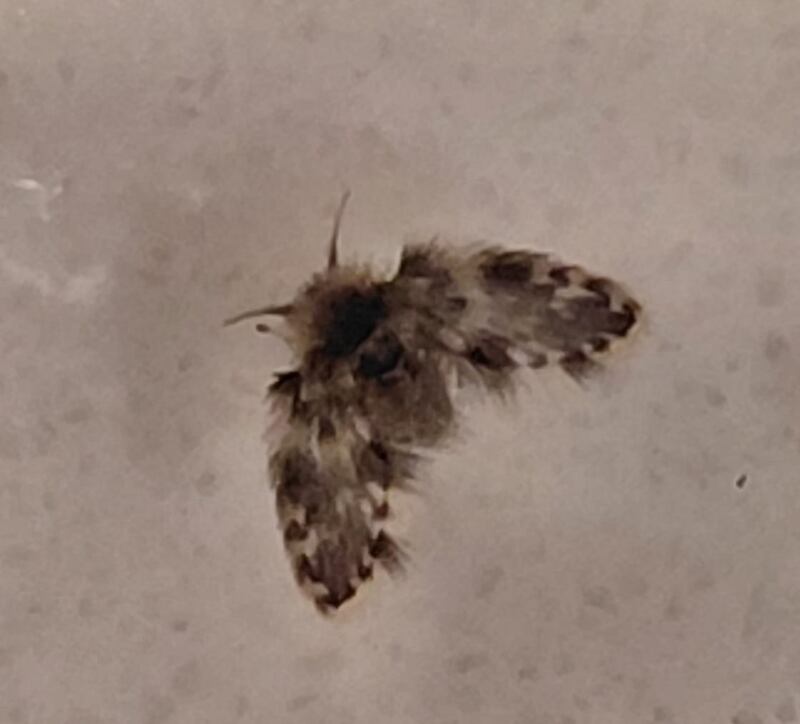
We found this tiny fellow, wingspan about 4mm, on a door in our kitchen. What is it? Denis and Catherine Healy, Salthill, Galway.
This is an excellent picture of an absolutely tiny fly known as an owl midge or a hairy moth fly – a member of the family Psychodidae, of which we have 60 species in Ireland. Despite the name, it has absolutely nothing to do with owls. They live in aquatic habitats, which in houses means sinks, drains, etc, where their larvae live in the moist bacterial scum that may accumulate in overflow channels. Charming. However, they neither bite nor sting, nor carry disease.
READ MORE


This is a photograph of a pair of courting Great-crested Grebes which I took at Vartry reservoir on March 22nd. Robert O’Leary, Dublin
You have captured magnificently the weed ceremony which was originally described by Julian Huxley in a 1914 paper, “The Courtship Habits of the Great Crested Grebe”. This was a landmark in ornithology, as it first described ritualised animal behaviour. This ceremony is part of an elaborate courtship dance where both birds, in full breeding plumage, dive and bring up aquatic vegetation. Then they approach each other with their necks lowered and present the weeds, following which they rise vertically in the water, breast-to-breast, using their feet to tread water while swaying side to side. After this there is a final head shake, the weed is dropped, and the deal is sealed.
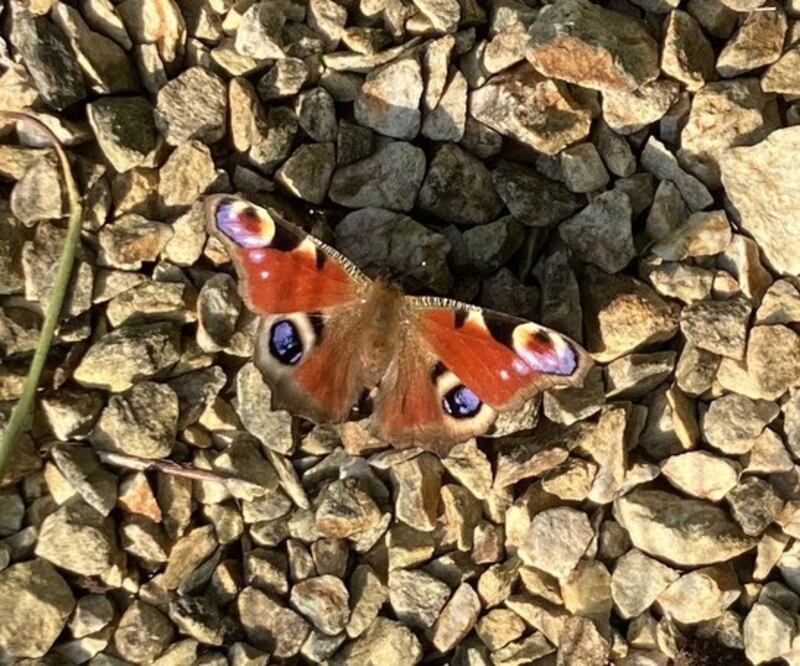
I spotted this beautiful butterfly in my suburban garden one afternoon in mid-March. I believe it is a European Peacock. I have never seen a more beautiful butterfly. Felix Larkin, Cabinteely, Dublin
The large colourful neon light eyespots on the wings are what give it its name – reminiscent as they are of the spots on the feathers of the male peacock. Both sexes in the butterfly species are alike, except the females are noticeably larger than the males. It overwinters as an adult, and they emerge at this time to feed on nectar from dandelions, grey willow and butterbur, before mating and laying eggs on the leaves of the common nettle – another good reason to let dandelions and nettles thrive in at least some parts of your garden.

I found these little beauties on the west end of Ventry beach below Cathair a Trant. At first, I thought they were shards of painted ceramic pottery glistening in the sand, but when I picked them up, I saw the beautiful whorled patterns and mother-of-pearl tops that were glistening in the sun. Are they all top shells? Mick Sheeran, Blasket Islands Eco Marine Tours, Ventry, Co Kerry.
You have three different species there. The painted topshell, Calliostoma zizyphinium, has a pointy triangular type shell - the brown and white one on the right. You have three flat periwinkles, a yellow, a brown and a black one, and the rest are purple top shells - Gibbula umbilicus. Top shells are not edible.
Please submit your nature query or observation, ideally with a photo and location, using the form below or by email to weekend@irishtimes.com


