
I spotted this early honeybee on willow in Conamara on the very first week in March. Paul Dunne
It seems a bit furry for a honeybee. It is more likely to be a queen buff-tailed bumble bee – Bombus terrestris – often the earliest queen to emerge from overwintering. The catkins of willow provide copious early pollen. Collecting this will stimulate her ovaries to begin producing eggs. She’ll lay those eggs in small batches on the ball of pollen she has collected back in the nest she has created underground. Close by, she’ll have created a tiny little wax pot and filled it with nectar. This allows her to lie on the eggs to keep them warm and feed at the same time. Bumblebee eggs need to be kept at about 30˚C for about four days. The emerging worker bees will feed on the pollen ball.

I found this stranger on our windowsill last August in Ballyhea (North Cork). Correct me if I’m wrong in thinking that it’s a kestrel? Presumably it hit the window, but thankfully didn’t seem to have any injury. It flew away a few moments later. We have noticed kestrels hunting on our farm by hovering above our hedgerows. Frank Mc Namara
It is a female sparrowhawk, distinguished by its dark grey-brown back and wing feathers and by the pale stripe known as a supercilium over the eye. Kestrels are smaller and the wing and back feathers of the females are warm red-brown in colour and these birds have a black stripe below the eye. But as you have noticed, it is the kestrels who hover and drop down on rodent prey. Sparrowhawks hunt smaller birds which they grab with their talons, having launched a surprise attack from behind a hedge.
READ MORE


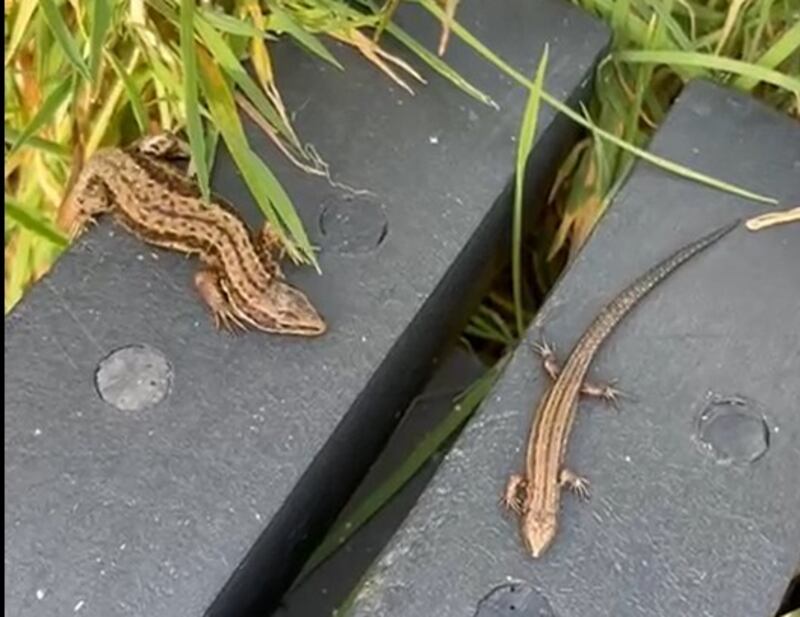
The lizards in the garden always come out in early March. I am intrigued by the disparity in their size. A. Nic an tSítigh, Ballyferriter, Co Kerry
The adult males and the juveniles emerge first from hibernation – the females don’t appear until several weeks later. Our only native species, this Common or Viviparous lizard produces live young in July/August rather than fertilised eggs, mating having taken place at the end of April or the start of May. Being a cold-blooded creature, it needs to be warmed up by the sun to about 30 degrees to be able to move about and catch insects.

A trail camera in Co Leitrim picked up this large bird. Can you identify it for me please, as we haven’t seen it here before? Laurence Mc Givern
It is a buzzard, which is indeed a large bird of prey, with a length of 55cm and a wingspan of 125cm. Only our two eagle species are larger. Buzzards have made a spectacular return to Ireland over the past 50 years, since poisons such as DDT were banned. It is very common in the eastern half of Ireland and is steadily spreading west, nesting in hedgerow trees, plantations, shelterbelts and woodlands. There is lots more information about buzzards on the Birdwatch website at https://birdwatchireland.ie/birds/buzzard/
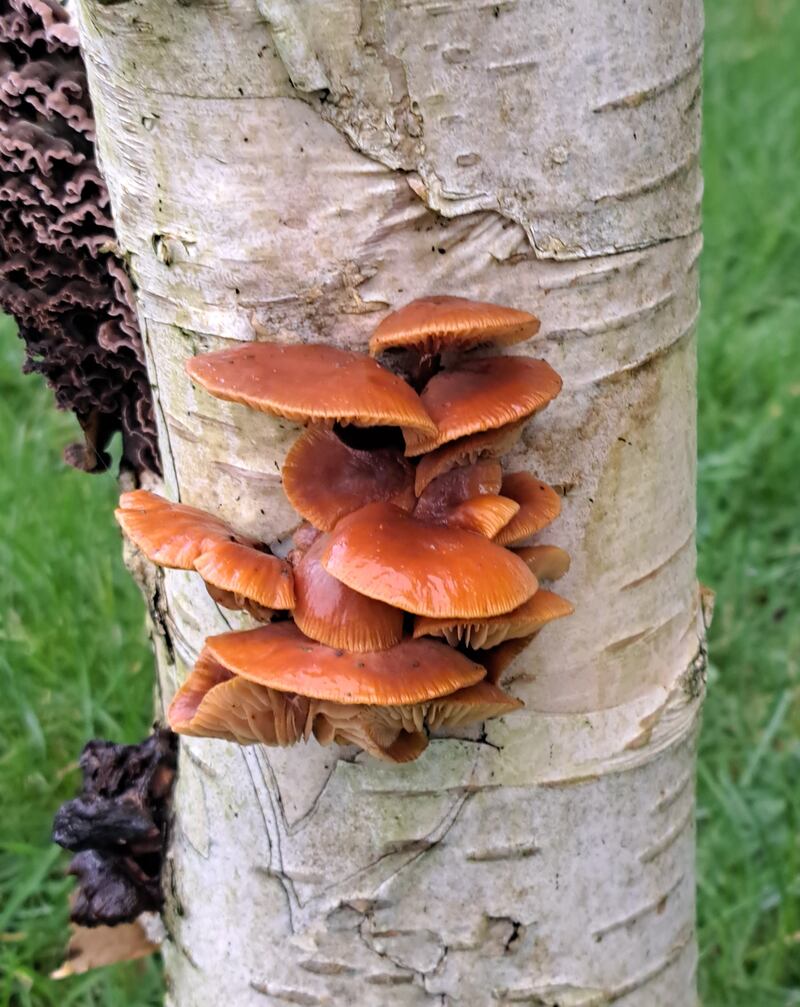
I am puzzled once again by an unfamiliar fungus – this time the colour is unusual... can you enlighten me?
Frank Rafter, Co Tipperary
It looks like Flammulina velutipes - Velvet Shank. It is a pity that the photo doesn’t show the critical feature - the stem/stipe - which is blackish in this species. Normally it grows on dead wood, but it has also been recorded on living trees, which were most likely moribund. Your image shows another fungus growing on the left-hand side of the tree trunk, so the tree is either dead or dying – certainly it is on its last legs.
Please submit your nature query or observation, ideally with a photo and location, using the form below, via irishtimes.com/eyeonnature or by email to weekend@irishtimes.com


