

Cork Jazz Festival, October 1982. The long-weekend jamboree may only have been four years old, but its energy and ambition were already clear. What had begun as a hastily arranged event at a single hotel had branched out into venues across the city, and a new sponsor, Guinness, had brought extra money – and big names.
Splashed across the festival’s glossy new souvenir programme were such leading American jazz and blues acts as BB King, Clark Terry, Carmen McRae and Memphis Slim. Upfront within that programme, opposite a page promoting the Cork leg of the first European tour by a little-known 21-year-old trumpet prodigy named Wynton Marsalis, was a spotlight on the great Irish guitarist Louis Stewart.
Scheduled to appear in a headline concert at Cork Opera House on the Saturday night, the 38-year-old was presenting perhaps the most artistically bold and demanding music of the entire festival: the premiere of a six-part jazz suite for a new octet that combined original music composed by Stewart with narrated passages from James Joyce’s novel Ulysses.
JoyceNotes was a significant musical departure for Stewart. The virtuoso guitarist was, in the words of the Irish bass player Ronan Guilfoyle, “a reluctant composer” – he largely preferred to be an intuitive interpreter of the elegant melodies and harmonies to be found in jazz and Great American Songbook standards. “For me, composition means that, when we play a gig, I try to compose on the bandstand… the spontaneous thing,” Stewart once explained.
READ MORE


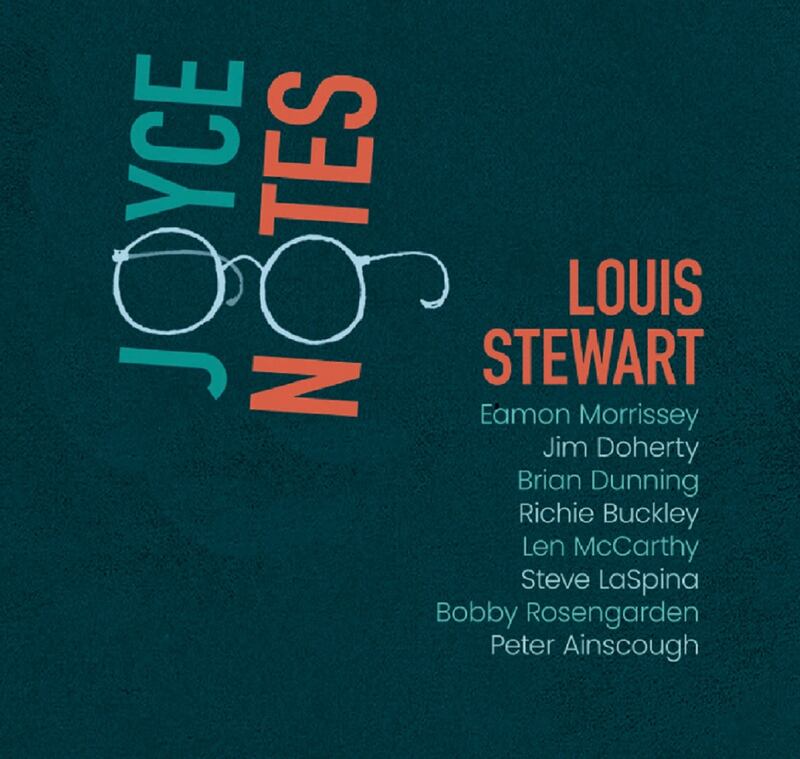
In fact, JoyceNotes, now being released for the first time on CD and download, more than 40 years later, would remain Stewart’s only fully self-composed large-scale project. Famously modest about his world-class abilities, he perhaps needed an external stimulus – or encouragement from the Dublin painter, gallery owner and arts polymath Gerald Davis, who founded Ireland’s first jazz label, Livia Records, in 1977, expressly to record and release albums by Stewart and his contemporaries.

Davis was also known as a Joyce aficionado and scholar, and he had helped the guitarist select the six passages from Ulysses. He had also encouraged Stewart the year before to apply for an Arts Council award to write music to mark the centenary of the birth of James Joyce, the granting of which had made the whole project possible.
* * *
The relationship between jazz and literature is long and fertile. From the earliest days of the music at the start of the 20th century, the vitality and spontaneity of jazz, and its sense of individuality and freedom of expression, have become a kind of modernist blueprint – a fire and a force to ignite other forms of experimentation in the arts, particularly in poetry and the novel.
In turn, literature, with its imaginative spirit of storytelling and invention, has proven a rich source of inspiration for jazz composers.
During the Harlem Renaissance in New York in the 1920s, the writer and activist Langston Hughes reshaped the revolutionary musical structures and syncopations he was hearing at such places as the Cotton Club into the nascent art of jazz poetry. “Jazz is a great big sea,” Hughes once wrote. “It washes up all kinds of fish and shells and spume and waves with a steady old beat, or off-beat.”
Many other American works of fiction have ridden that wave of identity, liberation and change, from F Scott Fitzgerald’s The Great Gatsby to Jack Kerouac’s Mexico City Blues and Toni Morrison’s Jazz.
The influence has travelled in the other direction too. Scenes and characters from Shakespeare’s plays supplied the creative spark for Duke Ellington and Billy Strayhorn’s album Such Sweet Thunder, while Dylan Thomas’s radio play Under Milk Wood inspired the English pianist Stan Tracey’s evocative jazz suite of the same name.
Louis Stewart shared some of these enthusiasms. As well as being a lifelong fan of the satirical and hyperimaginative novelist and columnist Brian O’Nolan, who wrote under the pen names Flann O’Brien and Myles na gCopaleen, Stewart was a dedicated devotee of the works of James Joyce – in 1978 he released the fusion-leaning LP Milesian Source, the first side of which featured four Stewart originals inspired by short stories in Joyce’s Dubliners.
Stewart would also have known that a link between music and Joyce was not at all far-fetched: the author had been a fine tenor singer in his youth, and his works are filled with musical references and allusions. “I wrote this chapter with the technical resources of music,” Joyce said about the Sirens episode in Ulysses. “It is a fugue with all musical notations: piano, forte, rallentando, and so on.”
* * *
The ensemble that Stewart put together for the debut performance of JoyceNotes was a fascinating mix of Irish, international and theatrical talent.
Alongside the leader was a quintet of versatile Irish jazz musicians that comprised “Ireland’s number one piano man”, Jim Doherty, the gifted jazz and classical flautist Brian Dunning, the drummer Peter Ainscough, here switching to congas, the Corkman Len McCarthy on alto saxophone, clarinet and second flute, and the tenor saxophonist Richie Buckley, then aged just 22.
“Louis’s songs were lovely, and his writing was beautiful, and I sensed a great vibe from early on. It was as if Louis and James Joyce were kindred spirits,” Buckley says. “Both were passionate Dubliners, and Ulysses has a kind of stream-of-consciousness element to it that Louis seemed to respond to. As a nation we are very proud of Joyce. He was a genius, the Charlie Parker of literature. I remember thinking that if Joyce had been alive at that time, he would have loved what Louis was doing.”
The Irish contingent was augmented by the renowned Dublin-born stage actor Eamon Morrissey, as the presenter and narrator of scenes from the text. As with the Irish musicians Stewart had carefully selected for JoyceNotes, it would have been hard to think of a more suitable contributor to the project than Morrissey. In 1980 he had premiered a one-man show called Joycemen, which featured a collection of Morrissey’s favourite characters from Ulysses. The performance had been broadcast on RTÉ on Bloomsday, four months earlier.
Two fine American musicians completed the ensemble. The driving drummer Bobby Rosengarden was, at 58, the oldest and most experienced member of the octet, while the 28-year-old star double bassist Steve La Spina was a member of a Rosengarden group with the pianist Derek Smith. Stewart had made his New York club debut with that trio the year before. The bond with the drummer and bassist had been so strong that Louis had determined to bring them to Ireland to play; JoyceNotes was his golden opportunity.
La Spina remembers rehearsing JoyceNotes in Dublin. “It was quite an undertaking, because we hadn’t played together before as a band, we didn’t have much time and none of us had been involved in a project that mixed jazz with spoken word. But the music was well written, and I also felt that, even though Louis was not very forthcoming as a person, and kept a lot of emotional stuff inside, JoyceNotes came from the heart. He was definitely able to draw on something.”
* * *
For the past few years, fans of Louis Stewart, Irish jazz, guitar-led ensembles and the many risks and rewards of integrating music with literary works have been able to watch the 1982 JoyceNotes concert on YouTube. It was filmed by RTÉ and broadcast the following year.
Although the concert’s rudimentary staging and garish lighting show its age, the filming still captures the verve of the music and playing. JoyceNotes is decidedly a group composition, with smart arrangements of the wind instruments in particular, yet Stewart leaves plenty of room for individual expression. The energy on stage seems cheerful and collegial (if somewhat tense), and the extended suite is animated by exceptional solos from group members.
Morrissey is nonpareil as the narrator, his Irish accents and Dublin delivery perfectly capturing both the rhythms and cadences of the prose and its sometimes quicksilver flights of imagination, association, bawdiness and humour. “I let him larrup it into me for the fun of it,” Morrissey, playing the bold prostitute Zoe, cries at one point, to much audience laughter.
While Stewart is clearly out front, cueing both narrator and musicians, words and music seem to coexist naturally and grow organically.
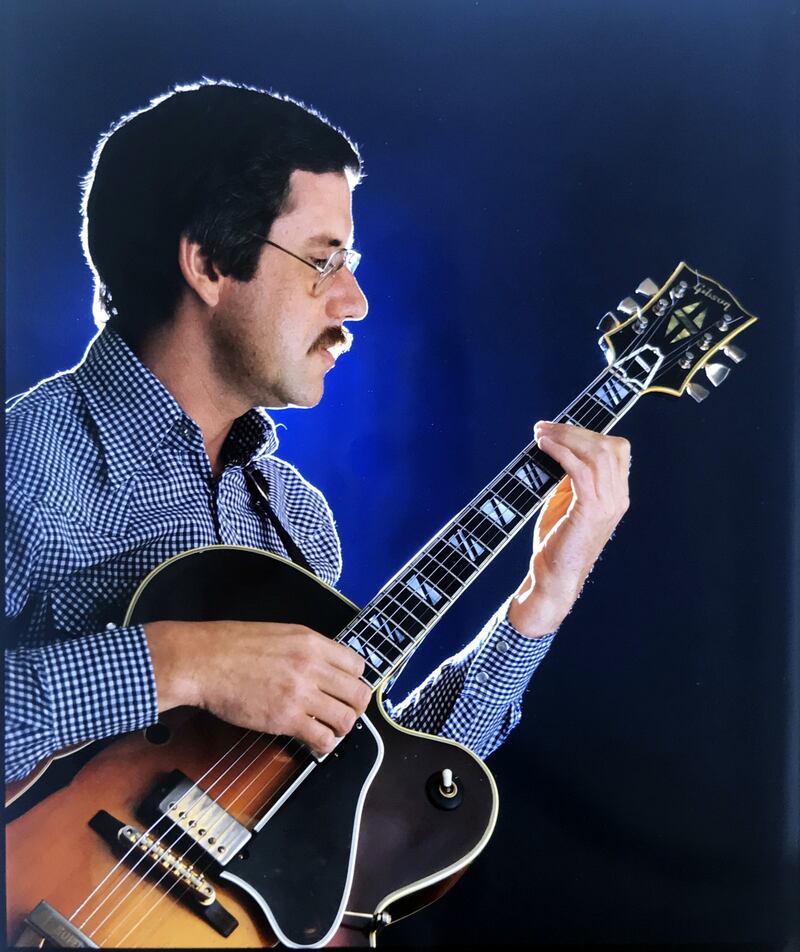
The remastering of this music by Livia Records from the original RTÉ tapes is an attempt to honour Stewart’s achievement. As well as the balance of instruments and the gorgeous tones of Stewart’s Gibson electric archtop being far superior to the sound quality online, this posthumous release (Stewart died in 2016) gives a new spirit to a work that, after it was first performed, all but disappeared.
Not only was the concert criminally overlooked at the time, but JoyceNotes was also performed only once more in Ireland, nine years later, in Dún Laoghaire (with Gerald Davis himself assuming the role of narrator). A live album of a JoyceNotes concert at Norway’s national theatre, with Stewart on guitar conducting a local octet, was made available on CD in 1993, but it was a very limited-edition release, and the narration was in Norwegian.
[ Louis Stewart: Legendary jazz man known by all as LouisOpens in new window ]
“I have strong memories of the Cork concert, because it was just a super night of music,” says Jim Doherty. “Louis’s compositions were great, that was a cracking band, Eamon Morrissey delivered the spoken-word passages with great gusto and bravado, and it all got a madly enthusiastic reaction from the audience.
“Louis worked on a few composing projects of his own after that, but most didn’t see the light of day unfortunately, so JoyceNotes is important because, besides standing up today as a suite of music, it’s also the only work in his career that appeared fully formed, that he wrote himself from start to finish, top to bottom. I know that, for a long time afterwards, Louis was well bloody pleased with it.”
JoyceNotes is released by Livia Records. This article is adapted from Philip Watson’s liner notes to the album


