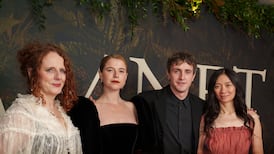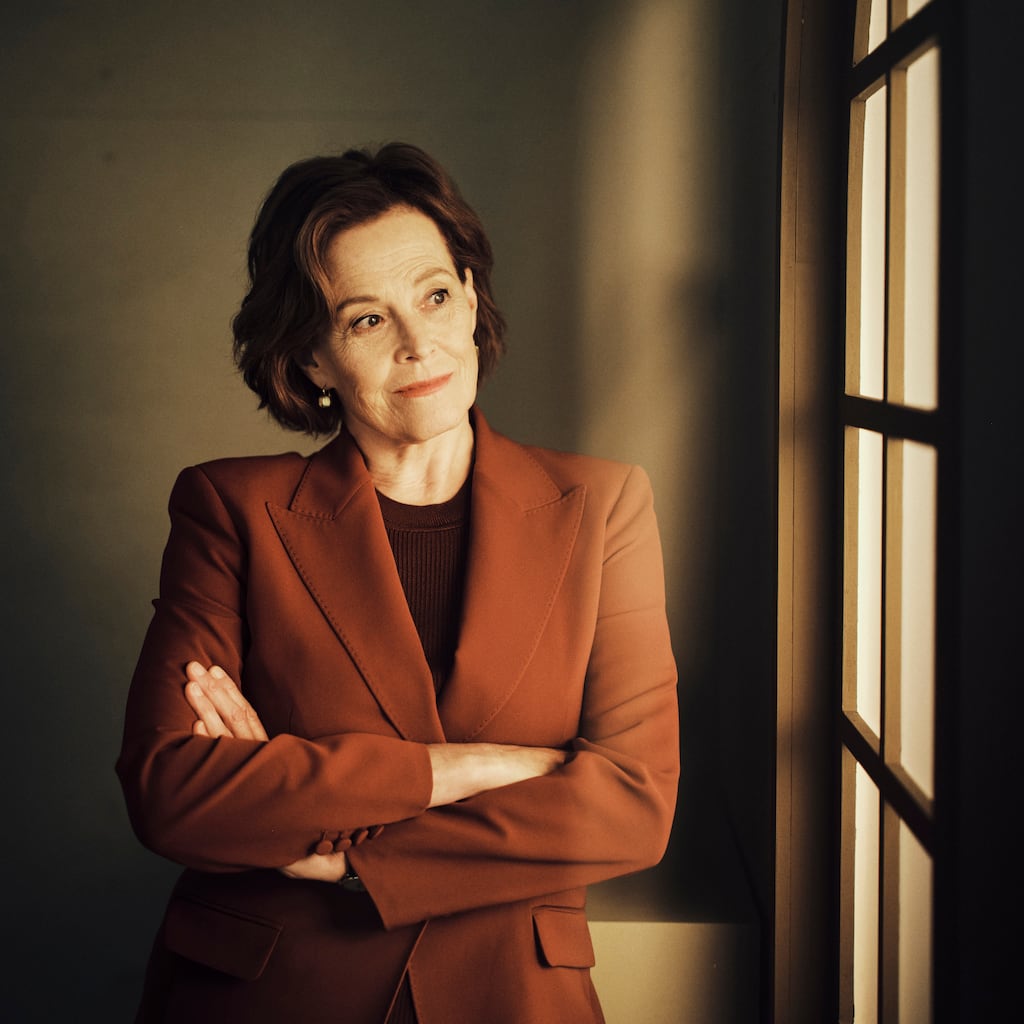

To the press junket for Avatar: Fire and Ash at the eye-wateringly snooty Hôtel Le Bristol, in the centre of Paris. The media operations for these franchise films are always mounted on the scale of military invasions, but the current bash looks (appropriately, given the material) to be on a particularly epic scale.
Dozens of journalists are being shepherded to rooms all about the fourth floor. Downstairs, a huge press conference is being arranged. The first two episodes of James Cameron’s space opera took in more than $5 billion. All this press stuff costs, to Avatar accountants, the equivalent of small change.
Down the corridor and around the corner, I find Sigourney Weaver waiting in a room stuffed with cameras and recording equipment. Neatly dressed in Upper East Side chic, she manages to seem relaxed amid all this disciplined chaos.
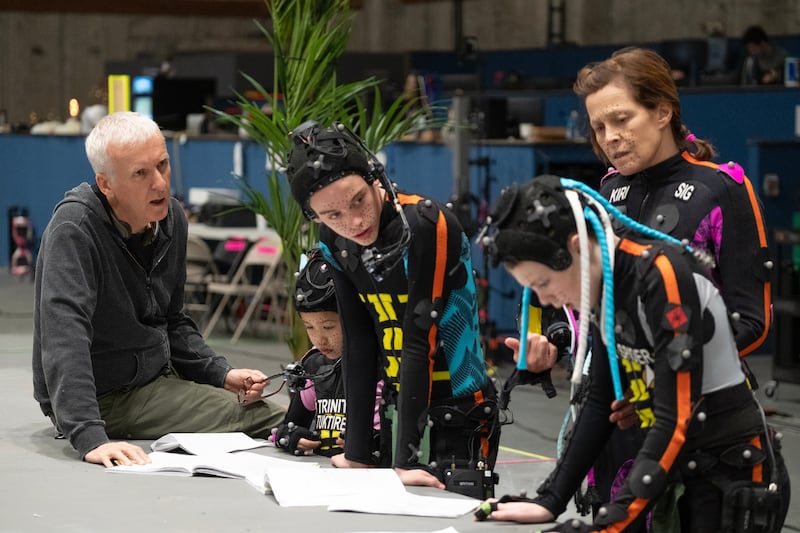
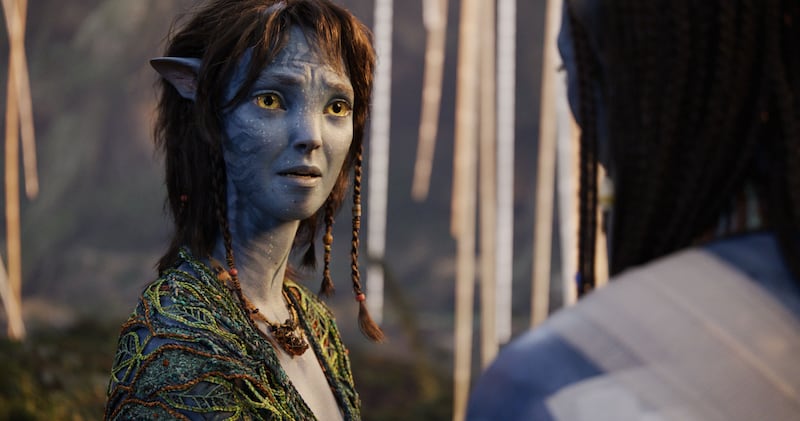
I guess she is used to it by now. Weaver appeared, 16 years ago, in the first Avatar film as Dr Grace Augustine and returned, in its 2022 spin-off, Avatar: The Way of Water, as Kiri, digitally rendered, teenage daughter to Augustine’s own Na’vi avatar. That character is back in Fire and Ash. (If none of this makes sense then watch the first two films again.)
READ MORE



And, of course, Weaver has form with Cameron. It is close to 40 years since she cut up the heavens for him in Aliens.
“We had a lot of fun,” she says of the current project. “On Aliens we didn’t really have fun because we were really up against it. But that wasn’t our fault. It was a great movie. And to have the opportunity to come back and work with Jim again and again has just been the greatest artistic present. And it was always my greatest goal to work with the same people again and again. That sounded nice and normal.”
I guess it seems nice and normal now. But I can’t imagine this is where Weaver, who still radiates the civilised ambience of an upmarket theatre actor, can have expected to end up.
She was born, 76 years ago, in New York city to a family with real presence in the entertainment business. Elizabeth Inglis, her English-born actor mom, had a small part in Alfred Hitchcock’s The 39 Steps and was in the original theatrical staging of Patrick Hamilton’s Gas Light. Pat Weaver, her dad, was president of NBC.
“His family came to America in 1620,” she tells me. “I grew up in the showbiz world. I really had no illusions about it. I knew what it was. My father called it ‘the racket’. Right? So I think that gave me an advantage over some people who think, Oh, you get your big break, and then that’s it for the rest of your life. I knew that would never happen. So I think it made me more down to earth.”
It is an unusual sort of career. Born Susan Alexandra Weaver – she took her current forename from a minor character in The Great Gatsby – the budding actor had the most respectable of respectable educations. She attended the Ethel Walker School in Connecticut before moving on to Sarah Lawrence College, Stanford and Yale, where she performed with Meryl Streep in the first production of Stephen Sondheim’s The Frogs.
By the mid-1970s she was on Broadway opposite Ingrid Bergman in William Somerset Maugham’s The Constant Wife. The most civilised of careers beckoned. Shakespeare in the Park here. A new Tom Stoppard play there. Poetry readings at the Met. Repertory theatre.
Weaver did, indeed, manage to keep a toe in the theatre. As recently as last year she played Prospero in Shakespeare’s The Tempest, in the West End of London. But something happened in 1979 that sent her on a different path.
That was, of course, Alien. Her role as the dogged Ripley in Ridley Scott’s classic science-fiction horror – horribly well designed by HR Giger – made her a star as it helped transform the perception of women in mainstream film. She can’t have seen that coming. Was that a complete swivel?
“Well, it was acting,” she says with a laugh. “And Ridley was kind enough – I was a little critical of the script, because I’m an English major – to show me all the Giger designs and everything. I realised I’d never seen anything like this. So I kind of felt it was a small, off-off-Broadway film. And that world I felt comfortable in.
“Even though it was supposed to be my big break, I didn’t want to think of it that way. But I was working with wonderful actors. So I didn’t really think about it much.”
One could easily image a crueller world in which Hollywood failed to make the best use of Weaver. After all, they hadn’t had much experience with classically trained women taking roles traditionally allocated to the likes of Kirk Douglas or Burt Lancaster.
Maybe the worst scenario would be repeated typecasting as the same gun-wielding sci-fi heroine. Her pal Jamie Lee Curtis admits that she was channelled into the scream-queen stream after early success in Halloween.
[ Jamie Lee Curtis: ‘Once you mess with your face you can’t get it back’Opens in new window ]
But Weaver proved her versatility in the 1980s. She was inspiring as Dian Fossey in Gorillas in the Mist. She was hilarious in Mike Nichols’s Working Girl. So what was the secret of avoiding stereotyping?
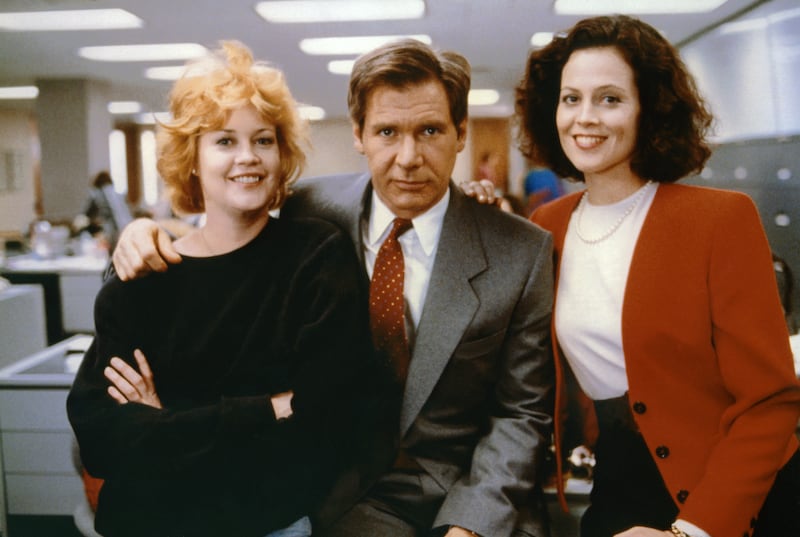
“I can tell you my secret,” she says. “The drama school I was at was very discouraging and told me I had no talent and I’d never make it in the theatre. So I was a bit daunted by that, I think. That was difficult for me. And, of course, after I did Ripley they sent me nothing but bad Ripleys.
“So I thought, ‘You know what? I can do what I want to do in rep. I can do that with my career.’
“And so that’s what I’ve done. I’ve been genre blind. I just follow the story. And if, as the pernickety English major, it passes my questions, if it is it about something more than the people in it, then that is one way of choosing a film that has legs – that can continue to resonate for people.”
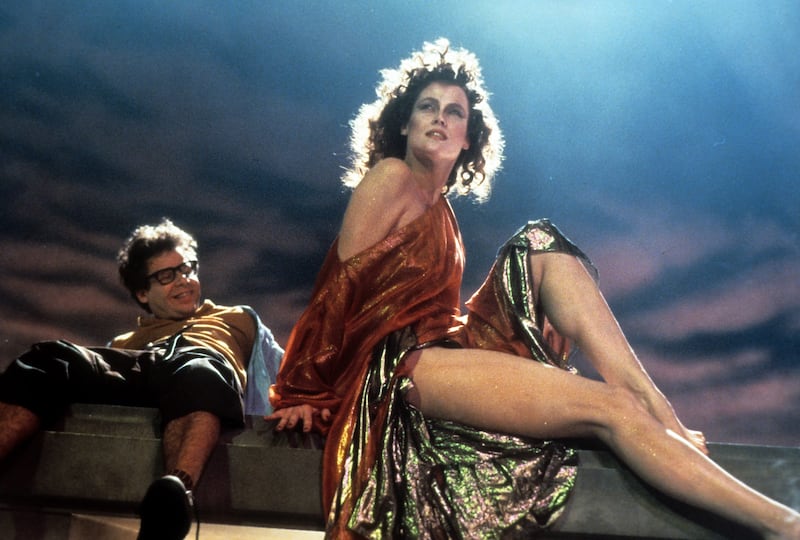
That seems a plausible argument. You can read something like Ang Lee’s film The Ice Storm, from 1997, in which she was electric as a woman caught up in the post-1960s sexual revolution, as satisfying all her criteria. But Cameron’s Aliens, one of the best sequels ever made, is equally resonant in its own bellicose fashion. Her role in Ghostbusters tested other mainstream inclinations. Avatar has an inimitable epic sweep. In 2026 she enters the Star Wars universe with Jon Favreau’s The Mandalorian and Grogu.

“I’ve been genre blind,” she repeats. “I haven’t put acting first. I’ve put participation in great projects first. It was never my intention to have four franchises. But here I am, and I feel very grateful.”
Weaver has managed to maintain a steady level of well-remunerated activity over the past four decades. Meanwhile, she has forged an apparently happy home life with the stage director Jim Simpson. Married since 1984, they live quietly in Manhattan, where they were among the founders of a space called the Flea Theatre. Their only child, Shar Simpson, is an author and narrative designer.
All very cultured. All very sophisticated. Still, I can’t help but think back to her father describing the entertainment world as “the racket”. Were her parents resigned to the risks when she eventually decided to throw herself into acting?
“I think they were,” she says. “I was so shy and so tall and so self-conscious for so long. I think they were really utterly amazed I was successful. And my father was always very encouraging. I think my mother was just sort of waiting for it all to end any minute. But I was very lucky. And my goal was always to work with people more than once. So, in case of James Cameron, I’ve been very, very lucky.”
It is interesting how she comes back to this. Though Cameron does have a reputation for huge, technically complicated productions, actors seem to be loyal to him. He talks their language as well as the language of pyrotechnicians and special-effects people. She gets on with him?
“He is very smart and he is a delightful friend and it’s a great experience to continue to be friends with him,” she says.
Let us go back to that inhibition she mentioned earlier. Speaking to The Irish Times in 2016, she told my fellow critic Tara Brady, “I was much too shy to ever think that I was going to be an actor.”
This keeps coming up in profiles. It sounds as if that had something to do with her height. Meeting Weaver at the Bristol, I can’t say this is something one now notices. (Then again, we often expect actors to be taller than they prove to be.) But I suppose there once were concerns about a female actor brushing the 6ft marker.
“Well, the good thing was they wouldn’t cast me in certain roles,” she says with a laugh. “I’d come in into a room in a studio in Hollywood and all the men would sit down: producers, directors, actors. Because they didn’t know what to do with me. They didn’t know what to do with a tall woman who spoke her mind.
“I felt for a long time it took a kind of mad director to hire me – someone unconventional. It threw me into contact with a lot of people who weren’t conventional directors and writers. And I feel like that was where I wanted to be anyway.”
She has an enormously gentle and friendly presence. But, later, when she enters the Salon Versailles, at the Bristol, alongside Cameron and her Avatar costars Sam Worthington and Zoë Saldaña, you have the sense of an old-school star occupying all of whatever space she encounters. Like Bette Davis. Like Joan Crawford. Like Barbara Stanwyck.
But, in some ways, she has it better than them. Those great stars struggled to find decent roles once they passed their mid-40s. She can tell me I’m wrong, but I think that’s one area of Hollywood where things have improved for women.
“I think you’re right,” she says. “If there was an older woman’s part it was usually a caricature. It took the movie studios a long time to admit it wasn’t all about male, white, 18-through-21.
“So I am here at a very lucky time. I think the studios recognise that there’s a great appetite to see people all across the age spectrums and every spectrum, and see human stories that they can relate to.”
I buy that. Nobody shuffled Meryl Streep or Susan Sarandon or Sigourney Weaver into the shadows when they passed a certain age.
“In our world, older people are a very important part of our community,” she says. “So I think it is a good time. It is a more democratic time in film, and I have been a beneficiary of that.”
Good news for once.
Avatar: Fire and Ash is in cinemas from Friday, December 19th