Curiosity is the virtue celebrated in two books of quirky facts that have arrived at the same time – one covers all of Ireland, the other just the North. In Ireland’s Curious Places: 100 Fascinating, Lesser-known Treasures to Discover (Gill, €16.99), Michael Fewer selects sites from each county, resulting in an absorbing mix of history and heritage. Fewer, an architect by profession, guides readers through some of the island’s most intriguing sites.
The pages glint with scintillating nuggets such as the 17th-century healer Valentine Greatrakes, from Affane, Co Waterford, whose detractors belittled his powers; or the story of Major General Robert Ross from Rostrevor, Co Down, who in 1814 was involved in the defeat of the US army at the Battle of Bladensburg and later burned down the White House. Attractive colour photographs of each location reveal stories of a tapestry of people, many associated with specific buildings in a book filled with witty writing.
In The A-Z of Curious Northern Ireland: Strange Stories of Mysteries, Crimes and Eccentrics (The History Press, £14.99) Doreen McBride delves into a variety of topics, illustrated with humorous sketches and photographs. She uncovers an assortment of tales from the Culdee monks in Fermanagh who are thought to have lived around Lough Erne, to the ghost that haunts the grounds of Killeavy Old Church in Co Armagh. Other entries discuss hellfire clubs, highwaymen, Sheela-na-gigs, white cows and the Leap of the Dog at Limavady.
On a smaller but no less curious scale, Wild Bathtubs: Tracking the Wild Bathtubs of North Clare (Starry Bog Publications, €17.99) by Michael D Walsh is a remarkable history of the humble bathtub. Cast-iron tubs revolutionised house design, and many old tubs found a new afterlife as recycled cattle troughs dotting the landscape. The author explores the tubs’ origins, trivia surrounding them, discusses early sightings and reminds readers that the bathroom is statistically the most common room where people die or sustain injuries.
READ MORE


A contrasting historical aspect of an older outdoor life is surveyed in Irish Fairy Forts: Portals to the Past (O’Brien Press, €19.99). In eight chapters the folklorist Jo Kerrigan spotlights traditions connected to mounds and grassy banks which, although many are on private land, are rarely vandalised. Evocative colour photographs by Richard Mills capture a range of fairy trees, ringforts, dolmens and crannógs, each with an aura of mystery. Intriguingly, throughout their fieldwork, the author and photographer experienced a strange number of unusual problems and accidents that made them wonder if somebody – or something – was expressing annoyance at their interference. As a form of compensation, they dedicated their book to Na Daoine Mhaithe, The Good People.
Farrelly’s Field Guide to Irish Faerie Folk (O’Brien Press, €16.99) by John Farrelly, draws on the faded pages of notebooks from his great-granduncle, Fantasius Farrelly. Born in 1870, Fantasius lived in a remote cottage in south Armagh, was the seventh son of a seventh son, and kept a compendium of Ireland’s weirdest creatures. From legendary beings such as banshees and chatter-heads to sea-maidens and shape-shifting pookas, the guide details their locations, powers and lifespan. Delightful illustrations set the scene for a shrieking, screaming and keening romp through ancient magic.
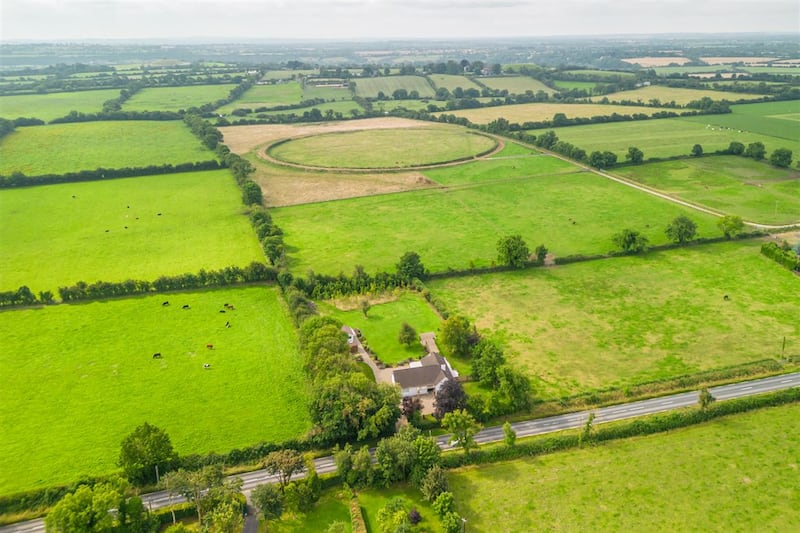
Moving from the supernatural to the archaeological, Knowth (Royal Irish Academy, £15), edited by Helena King, presents essays on six millenniums of ritual and settlement at the Unesco world heritage site in Co Meath. This convenient guide will help visitors navigate their way around a place of ritual and settlement dating from the beginning of the Neolithic to the modern era. Aimed at a general readership, the book gives a feel for the Knowth passage tomb cemetery and how it came to be what it is. The essays are based on material from the seven-volume Excavations at Knowth series.
Gerard Madden shines a light on a specific part of the west in The Ancient Parish of Moynoe, nOrbraighe, Co Clare (Croí Publishing, €25). Across 13 chapters he considers what he regards as the forgotten parish of Moynoe – where he has lived for 40 years – at different historical periods embracing its churches, land divisions, topography, the ironworking industry and education. The family of the author’s late wife, Olive O’Grady, had been associated with the parish for more than 1,000 years and he describes their motto Vulneratus non Victus, “wounded but not defeated”, as a tribute to their tenacity.
One chapter discusses the Ringrose family of Moynoe. Their name was originally Rose but in 1560 Queen Elizabeth presented a ring to Col Richard Rose of Hampshire as a reward for his military service and the name subsequently became Ringrose. He had longevity on his side and was reputed to be 124 years of age when he died in 1707. The family tree, compiled from a chart by a descendant, is preserved in the Hardiman Library, Galway.
In The Little History of Galway (The History Press, £14.99) Colm Wallace looks at the struggles of the people of the county over the centuries. He covers the Stone Age, the coming of the Normans and their conquest of the city, as well as Galway’s 20th-century contribution to Ireland’s battle for independence, up to the modern era. Although present-day Galway, he concludes, is a far wealthier place than in decades past, many challenges remain; young people have difficulty in affording their first house while pressure on the four bridges across the Corrib leads to traffic chaos in the city at peak times. Despite this, the economy is booming, the arts sector is vibrant and tourism is flourishing.