

Ceramic plaques on derelict facades, a strange parade across a monochrome hillside, whispers from the heating vents, a cascade of sliced oranges, and an absolutely enormous backside: visit the RHA Gallery this month or next and you’re likely to be profoundly impressed by the work of the latest generation of graduating artists in Ireland, as selected for the RDS Visual Art Awards.
The prizes, which are a vital boost at a crucial time in their careers, have been quietly supporting emerging artists and makers since 1860, when the Taylor Art Trust Awards were set up. (Previous winners have included Mainie Jellett and Walter Osborne.)
The work of the shortlisted artists used to be on show for a limited time at the Royal Dublin Society, in Ballsbridge. After spending 2023 at the Irish Museum of Modern Art they have now found what will, with luck, be a long-term home at the Royal Hibernian Academy, where the generous exhibition spaces do these very talented artists full justice.
Another crucial element is the curation: the RDS panel appoints an artist curator to work with the shortlisted graduates. Previous holders of the role have included Elaine Hoey, Aideen Barry and Alice Maher. This year Niamh O’Malley, who represented Ireland at the 2022 Venice Biennale, helped the 10 artists to refine their degree or master-of-fine-art presentations into the installations on show today.
READ MORE



Looking at the difference between the occasionally chaotic exuberance of student showings and the concisely precise works at the RHA is a powerful illustration of the often unsung role that a really good curator can play in bringing an artist’s sensibility into the wider world.
The installations are timely, provocative and relevant, touching on the housing crisis, emigration, feminism, sexual identity, ritual and belief, and community and belonging. After a year, perhaps two, of post-lockdown graduate work, which by definition had a narrower frame of reference, the artists here are almost fully formed.
This is also testament to the huge commitment of their tutors and mentors at art colleges across Ireland – it’s intriguing to sometimes spot echoes of particular artists with a teaching practice in the work of their students. In the main, however, the hard work of our art educators lies invisible, as they help and guide their students to find their voices.
So what do the next generation have to say?
Charlie Dineen
Dún Laoghaire Institute of Art, Design and Technology. Winner of the RDS Graphic Studio Dublin emerging visiting artist award
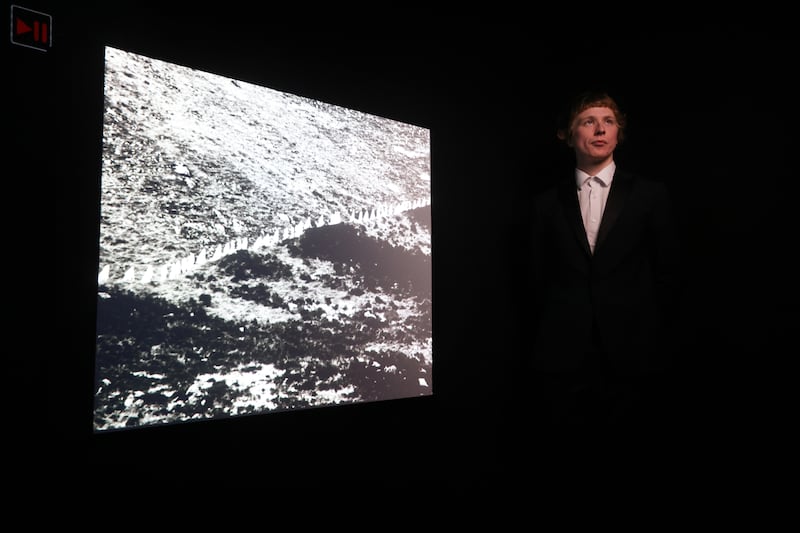
Shot in black and white on an analogue camera, Dineen’s film combines ritual and myth with a clarity of eye to create a haunting hymn to the ancient power of the Co Kerry landscape. “Ireland is in a really positive place creatively, and this show is emblematic of the range and quality of the work being produced,” Dineen says. “It makes me feel like I am on the crest of the tidal wave. That said, we still need dedicated spaces and funding to help us develop our work. For the year ahead, I was fortunate to be accepted into Photo Ireland’s residency programme, and I’m looking forward to working on new projects.”
Susanne Horsch
Ulster University Belfast
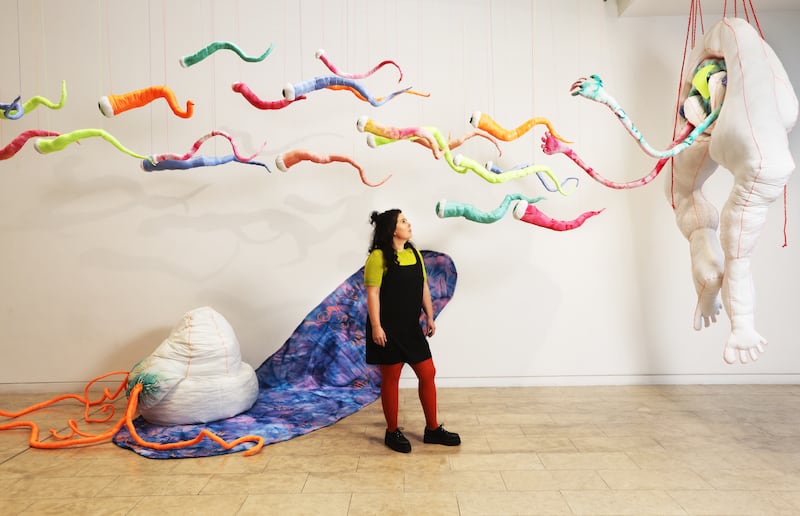
Private parts and bodily functions are made large (and soft) in Horsch’s playful, vivid fabric installation, which serves the serious function of laying bare the loci of shame. “Collaborating with a professional team taught me how to communicate my vision clearly, and to find creative solutions for installing work,” Horsch says. “I want the work to live in the world. This platform allows that to happen on a larger scale. Alongside my studio at GOMA Waterford, I have upcoming residencies at CCA Derry and the Butler Gallery in Kilkenny, and a solo show at the University of Atypical Belfast. My greatest challenge is sustaining my artistic practice while making a stable living. Much of the administrative work artists do is unpaid and extremely time-consuming, which can add to the pressure.”
Lily Mannion
ATU Galway. Winner of the RDS Members’ Art Fund award
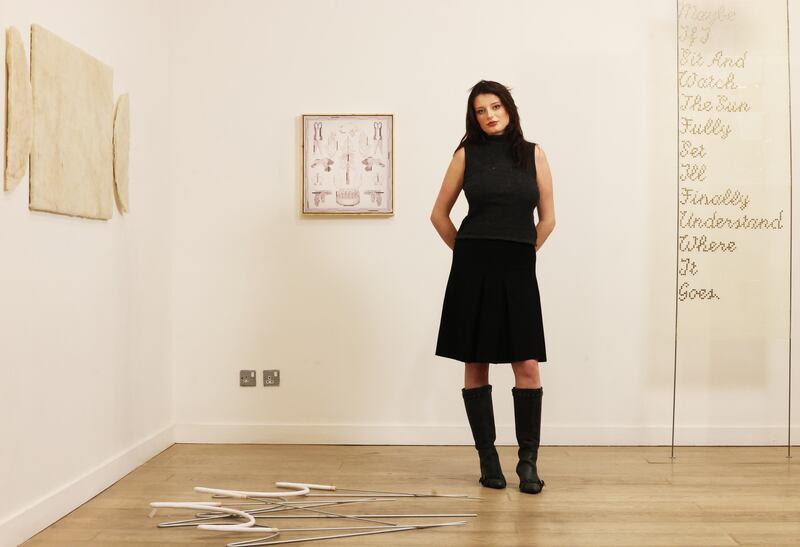
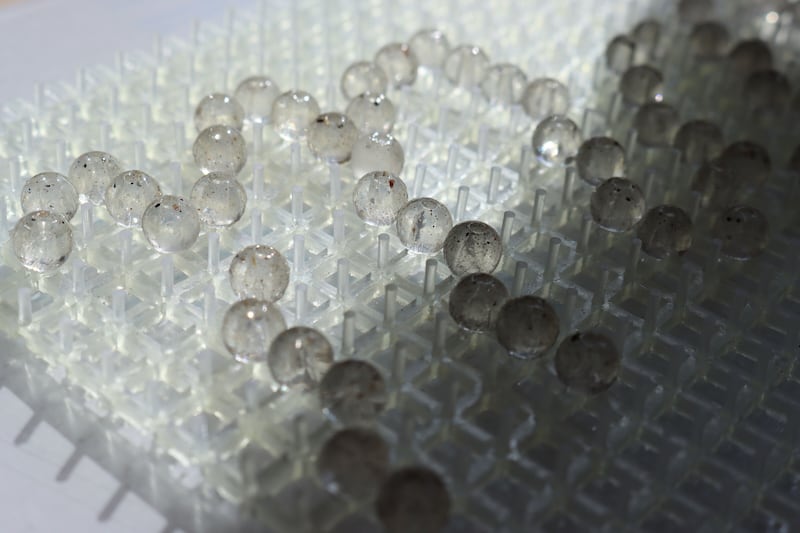
Dust, held in resin beads, spells out a message about our place within the mysteries of the universe; while craft, farming and the land inspire Mannion’s sculptural shapes. This highly contemporary work speaks to the timelessness of some tasks. “The housing crisis and the rising cost of living are major concerns, so supports like the basic income for the arts are essential,” Mannion says. “I would like to stay in Ireland after graduating, hopefully working with artist-led organisations. It’s important to involved in your local communities and art scene, even though emigration from Ireland in your 20s can seem unavoidable. There are amazing people and organisations working hard, like 126, the artist-run gallery in Galway, and Pallas Projects in Dublin. It’s impossible to create art if you’re struggling to pay rent and buy food.”
Clara McSweeney
Dún Laoghaire Institute of Art, Design and Technology. Joint winner of the RDS Taylor Art Trust award
If These Walls Could Speak ... Monologues, which McSweeney describes as confessions, play through heating vents and drain pipes, whispering hidden stories of Dublin’s vacant buildings. “The biggest challenge is carving out the time to think and make while also working,” she says. “I am a curatorial assistant at the Lab Gallery in Dublin, which I love. I have also begun a new role at the National Sculpture Factory in Cork. With freelance projects coming up, balancing these and my art practice can be difficult. In terms of the challenges facing us all, the amount of hatred in the world at the moment is something many of us are feeling, and struggling with.”
Thaís Muniz
Dún Laoghaire Institute of Art, Design and Technology. Winner of the RDS Mason Hayes & Curran LLP Centre Culturel Irlandais residency award and RC Lewis-Crosby award
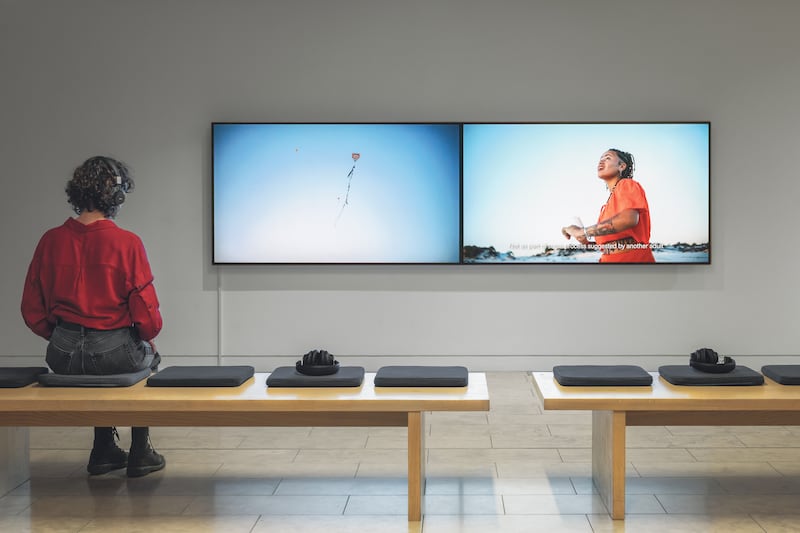
A powerful two-channel video work, The Kite Ballet lovingly explores the Brazilian-Irish artist’s research into how the land can shape, heal, create community and be a source of joy. “Being selected means that my work is touching others and resonating beyond my echo chamber,” Muniz says. “It is a massive validation, especially considering the amount of work submitted, the calibre of the panel and the institutions behind it. The challenge is to remain hopeful and dream radically while staying alert, strong and critical in the face of political and social manipulation.”
Éile Ní Fhiaich
TU Dublin
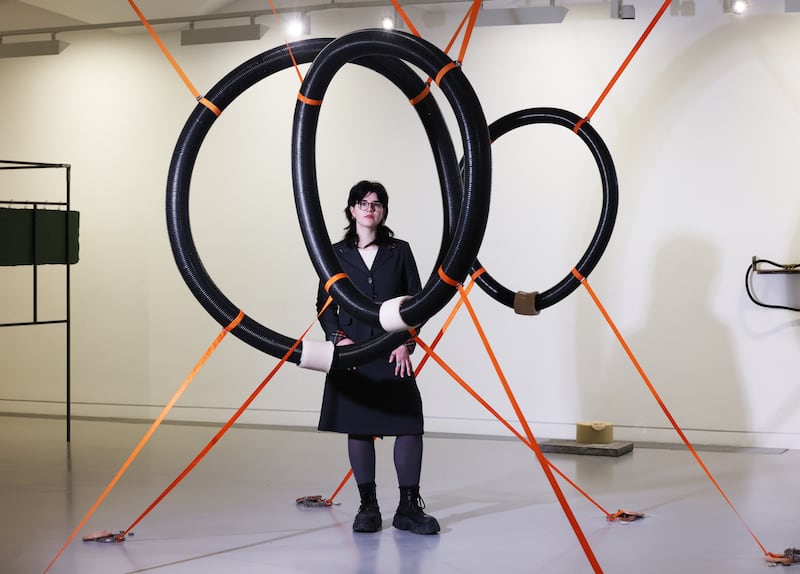
Industrial materials meet handmade objects with hints of the presence of the human body. Ní Fhiaich manages a fine tension that adds a dash of the uncanny to what might otherwise be mundane. Could this be what the future will look like? “The arts awards have helped me to keep up the momentum I gained during my degree, giving crucial experience working with a gallery, a curator who understood the work and had a great vision for it, and a team of technicians,” Ní Fhiaich says. “It also gives visibility, which will help to make connections. It has been exciting to work with other artists who are in similar points of their careers. We have been able to support each other, and I hope we will continue to support each other in the future.”
Vicky Ochala
TU Dublin. Joint winner of the RDS Taylor Art Trust award
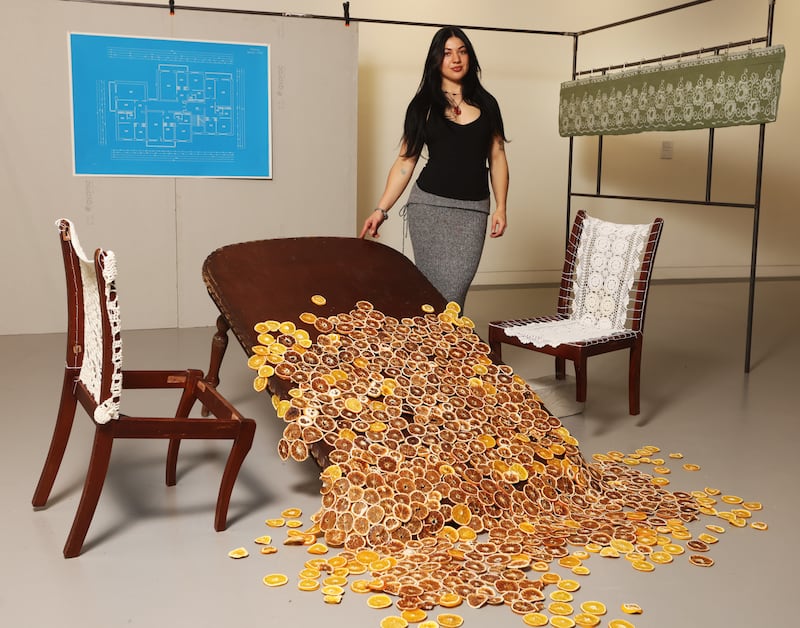
Inspired by the dimensions of a post-communist-era Polish apartment, Ochala, whose work will be on show in January at Mart Gallery, in Rathmines in Dublin, creates an installation that speaks both to memory and to the dreams of housing for all, however flawed they may have been. “This feels like a brilliant start to my career,” Ochala says. “I’m grateful and excited to see my work in a real gallery, to realise that the visual language I’ve been building connects with people. Every element in my work has meaning, and each bit tells its own story. Talking to people at the opening made me realise it’s understood and enjoyed. What has meant the most is hearing that it sparks a sense of nostalgia for people from all over eastern Europe. It’s really special to see the work translate across different nationalities and cultures.”
Billie Adele O’Regan
MTU Crawford Cork. Winner of the RHA graduate studio award
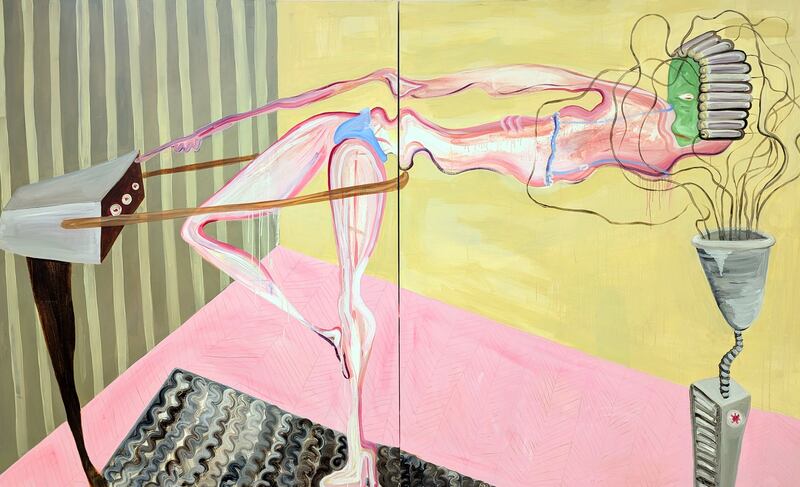
With a solo show coming up at Backwater Artists in Cork in June, O’Regan is the only painter in the exhibition, and what paintings they are: distorted bodies, strange beauties and a marvellous look into the fun-house mirror of inner truth. “The nine artists I am showing beside each hold a universe inside them,” she says. “Their work reveals fragments of those worlds. It feels special to be part of that and to see how art can draw us into connection across completely different practices. Throughout the exhibition Niamh has created conversations between the works, bringing a visual poetry that lets them resonate and respond to one another. Showing at the RHA adds a whole other layer of meaning to this experience. Exhibiting there now feels like a dream come true.”
Anastassia Varabiova
Dún Laoghaire Institute of Art, Design and Technology
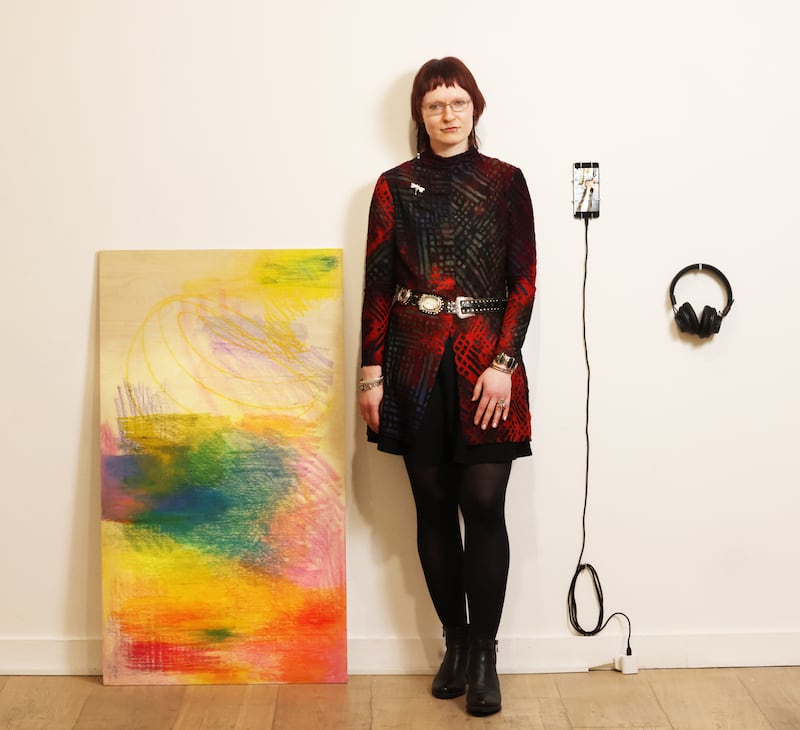
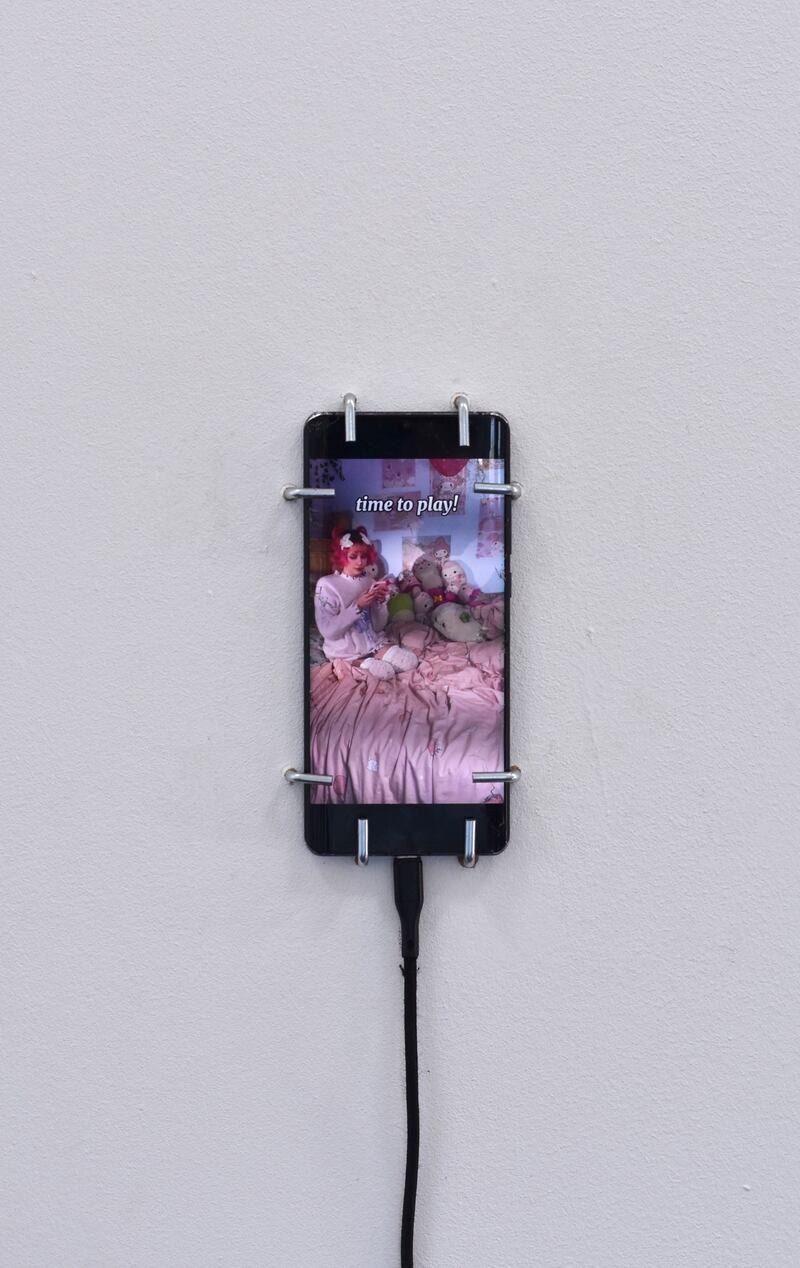
Spirituality, wellness, marketing and sex dolls, dread and humour: it’s another typical day in an online life. Varabiova’s caged and cracked phone is both weapon and window. “The exhibition has meant my work is closely looked at by curators, institutions and other artists,” she says. “It has been great opportunity to feel part of a wider peer group and has made me more aware of audience. Showing work in the intimacy of a classroom is not the same as showing it in the context of a gallery such as the RHA. It’s easy to feel alone and disheartened after graduation, but it’s important to take part in building communities with peers.”
Charlie (Lauréline) Yris
Limerick School of Art and Design
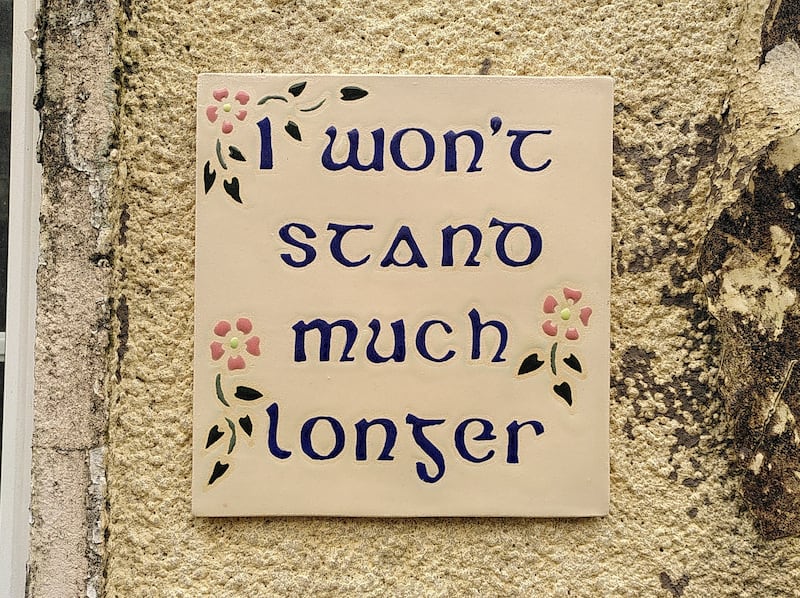
Ceramic tiles and plaques have an illustrious history, decorating the homes of people who have them, or marking famous former residents. In this work they adorn the facades of Limerick’s derelict buildings, with messages of desperation and a call for care. “Being shortlisted is an honour, a real validation of the work, which tackles the housing crisis,” Yris says. “One of the biggest challenges we have to face as artists is to figure out accommodation and studio space. Sustaining an artistic practice just after college in this situation is tough. Many of us struggle to balance making a living and continuing to create. I have moved back to Brittany, where I am setting a ceramic studio and a home base.”
The RDS Visual Art Awards exhibition is at the RHA Gallery, Dublin, until January 26th. The shortlisted artists were selected by five judges, Rachel Joynt, Christina Kennedy, Sarah McAuliffe, Patrick T Murphy and Niamh O’Malley, from a longlist drawn up by the art curators Viviana Checchia, Rachael Gilbourne, Paul McAree, Davey Moor and Aoife Ruane, who visited BA and MA degree shows at 12 institutions around Ireland


