
Minister for Finance Simon Harris has outlined further details of a plan to encourage households to invest, with money put into a special savings scheme set to attract only a small flat rate of tax – and avoid taxation on capital gains.
The planned Irish regime will carry an annual flat-rate tax to the value of assets held in the account above a tax-free threshold that is likely to be set in the budget later this year. The Minister said this flat rate of tax could potentially serve as the sole form of taxation on investments made through the new account.
The aim is that all investments made within the account would receive consistent tax treatment and account providers would be required to administer the tax to help remove complexity for investors.
The proposal is likely to be styled on a Swedish model, where the rate of tax is linked to the market rate – or yield – that applies to the Government’s benchmark bonds. The Swedish tax rate is currently 1.065 per cent.
READ MORE


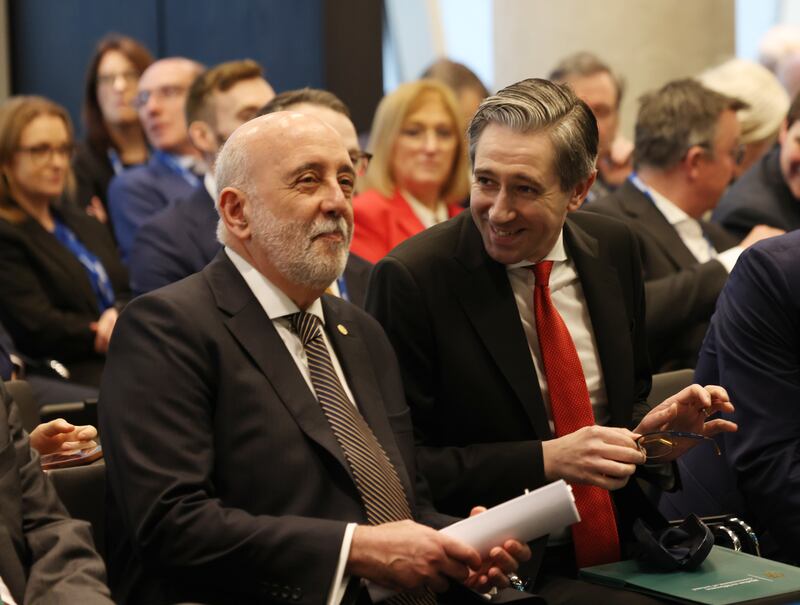
“We want to make investing simpler, clearer and more accessible for ordinary people, and help their hard-earned money work harder for them over time,” Harris told an investor forum hosted by the Central Bank of Ireland on Tuesday.
“This will be a priority for Government. Our aim is to legislate for the framework in 2026 and to allow accounts to be offered from 2027.”
He said the account would be designed as a “simple, one-stop option” for individuals, adding that the Government wanted to “simplify and adapt the tax framework to further support retail investment”.
“Ireland still does not have a sufficiently diversified savings and investment culture. Too much of people’s hard-earned savings remains in low-yield deposits, where inflation can erode value over time.”
[ Canada or Sweden? Simon Harris considers Ireland’s savings futureOpens in new window ]
Speaking to reporters on the fringe of the forum, Harris said the deemed disposal rule, which is applied to investments in Irish funds and life assurance products, was “too high”.
He said his predecessor Paschal Donohoe had lowered the rate in the last budget. “I believe it’s too high. It went from 41 per cent to 38 per cent. If we’re actually to build up true economic resilience, we’ve got to help middle Ireland build it up themselves.”
The Irish plan is in line with a push by the European Commission for EU member states to adopt tax-friendly models to encourage individuals to invest.
Harris said officials in the Department of Finance have been reviewing the commission’s recommendation that such accounts should be simple, accessible, tax-efficient, easy to administer, transparent on fees and portable across borders where possible.
Irish households have about €170 billion on deposit with banks, most of which is earning little or nothing in current or on-demand deposit accounts.
Commenting on the planned scheme, Colin Ryan, financial services country lead with EY, said: “A typical deposit product might return 2-3 per cent (pretax) while an index fund might return closer to 10 per cent.
“There is a now a real opportunity to improve outcomes for savers and build a better long term investment culture in Ireland. The associated domestic capital can be channelled to investments in our entrepreneurial ecosystem and national priority areas such as housing, infrastructure and the climate transition.”
Households countrywide saved 12.4 per cent, or €1 in €8, of their disposable income in the final three months of last year, according to the Central Statistics Office.
The provisional saving rate for 2025 as a whole was 13.6 per cent, similar to 2024 and higher than 2023, the agency said earlier this month.
[ State investment scheme should not tax entry or transactions, says Ibec groupOpens in new window ]
Adrian Moynihan, head of consumer banking at AIB, said: “We believe the proposed offering should provide robust consumer protections and support to retail investors, offering both digital guidance and in-person advice tailored to individual customer preferences and experience levels.”


