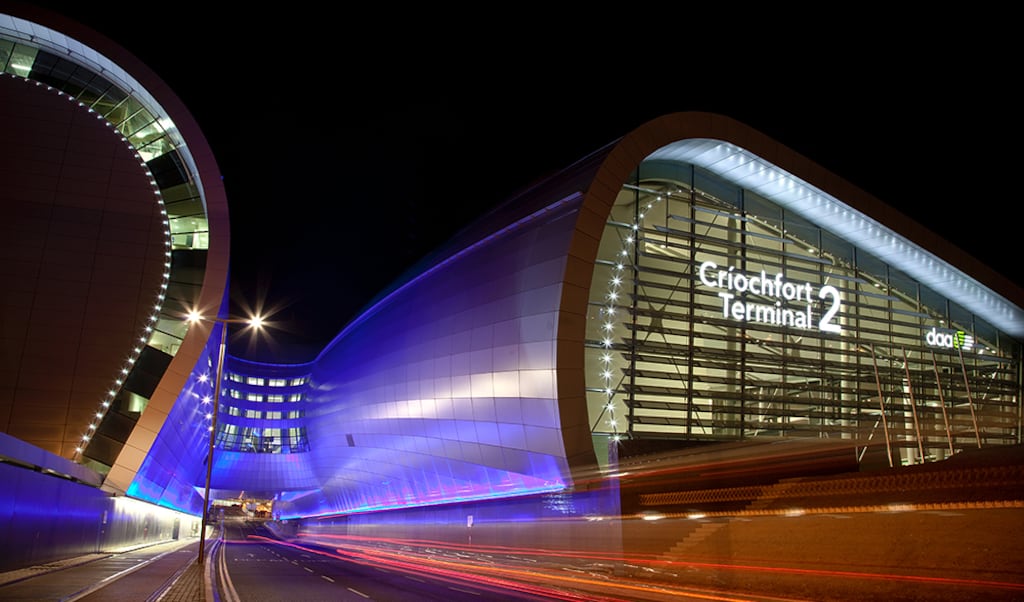
Dublin Airport will leave its official 32 million annual passenger limit even further behind next year after regulators allowed airlines there to add up to 5,000 extra flights in the summer.
Most expect numbers at the country’s biggest gateway to top 36 million in 2025. The Irish Aviation Authority (IAA) ruling allowing airline to boost operations further could result in close to 1 million more people travelling through Dublin Airport between March and October 2026, sources estimate.
Further expansion could also follow next winter.
Next year will be a crunch one for the 32 million cap, which An Bord Pleanála imposed in 2007 to curb traffic jams when it gave the airport permission to build a second runway.
READ MORE


Minister for Transport Darragh O’Brien brought legislation to axe the limit to Cabinet this month. But the Oireachtas must pass this before it becomes law, which will take time.
Meanwhile, European courts could rule on key elements of a legal challenge to the cap by Aer Lingus, Ryanair and North American carriers by the end of next year, many in the air travel industry believe.
Ryanair chief executive Michael O’Leary has confidently predicted that the EU’s Court of Justice will shoot down the cap, or rather the mechanism for implementing it, which his company and the others are challenging.
If he is right, then the Irish courts, which referred the issue to Europe in the first place, will have to judge the airlines’ challenge in light of that, stacking the odds against the cap’s survival.
The High Court here suspended the only means of implementing the planning condition when it referred parts of the airlines’ challenge to Europe. The IAA last year set winter and summer seat limits on carriers operating there when setting out the conditions for allocating take-off and landing slots at Dublin.
The authority noted that DAA, the State-owned company responsible for operating Dublin Airport, had asked it to take the passenger cap into account when determining how those slots would be allocated. Airlines challenged this on several grounds relating to European Union law. This prompted the High Court to refer the issue to Europe.
It blocked the IAA from taking the passenger cap into account when deciding how slots should be allocated until the EU courts had dealt with its referral. DAA itself cannot stop airlines from using Dublin Airport.
That has allowed passenger numbers to exceed the 32 million limit in the meantime. Predicting continued growth earlier this year, DAA chief executive Kenny Jacobs dubbed the limit a “zombie cap”, implying that it was all but dead.
Alongside this, industry lobby Airlines for America (A4A) has warned that the cap could result in the US department of transportation sanctioning Irish airlines by limiting their access to its airports. The group maintains that it breaches EU-North American air travel treaties.
The organisation has not yet made formal complaints to the US government, but it has raised the issue with Irish and EU officials. A4A says those talks have been “constructive” but wants to see faster progress on the cap’s removal.
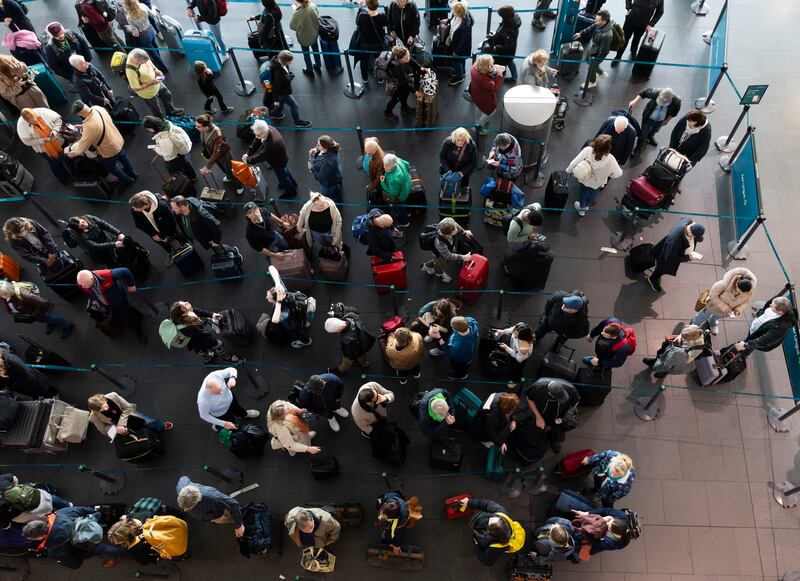
Towards the end of the year, DAA decided that it would withdraw an application to Dublin Airport’s local planning authority, Fingal County Council, to have the cap raised to 36 million. The State company had sought to increase the limit via two separate applications.
One was part of an overall expansion plan aimed at preparing the airport to deal with 40 million passengers per year, a number it should hit by 2030.
The second application did not involve building anything new. Jacobs hoped that as a more straightforward request, the council would be able to process it quickly. He is currently in dispute with the company’s board, and the manner in which he has handled the relationship with Fingal over the passenger cap is among the issues at the heart of the rift.
Even if the cap’s days are numbered, planners threw airlines at Dublin Airport another curve ball in July. An Coimisiún Pleanála said it would limit night flights at the gateway to 35,672 a year in a ruling that most hoped would clear up a debate that has run since it opened its new north runway in 2022.
The commission boosted the number of flights allowed between 11pm and 7am to 98 from 65. It also extended the hours during which the north runway can operate to between 6am and midnight. Previously, taking off or landing there was banned between 11pm and 7am.
Planners proposed that flight noise at night would be managed through a quota system, a move that airlines sought. However, they argued that this should get rid of any need for limits such as those that the commission imposed in July.
The decision looks set to spark more litigation, as airlines have since argued that it is effectively a “second cap”. US airlines who land in the early hours of the morning could be worst hit. This could potentially further anger their lobby group, which already wants the passenger cap lifted.
Meanwhile, Cork Airport’s €200 million expansion plan seems to be going a lot more smoothly. This will allow passenger numbers there pass the 5 million mark, from the 3.4 million it is expected to handle this year.
Work kicked off on this project in October when it started building a new mezzanine floor that will house passenger security equipped with new C3 scanners that will allow quicker processing. The expansion will also include more car parking and more aircraft stands.
Jacobs noted earlier this year that Cork was the fastest growing airport in the country. Recently it was named Best Regional Airport in Europe for the third time by Airports Council International.
The IAA will next year set passenger charges at Dublin Airport that will apply from 2027 to the end of 2030. DAA argues that they should increase to protect levels of service while airlines challenge this view. The authority began consultations in July and will produce a draft determination in 2026 before finalising its decision.
Whatever decision is arrived at by the regulator is likely to be challenged by at least one side in the debate.
Three things to watch in air travel in 2026
More destinations: Aer Lingus will start flying from Dublin to Cancun, Mexico in January while Sun Express kicks off Cork to Antalya, Turkey, in May. Given that regulators will allow 5,000 more summer flights from Dublin Airport while no restrictions apply to the others, carriers should announce more routes.
Air fares: Ryanair believes air fares could rise next year in Europe as demand continues to outstrip overall airline capacity. The International Air Transport Association, meanwhile, says there is scope for them to fall while American Express Global Business Travel thinks they will remain stable. As usual, booking early gets the best deals.
Airports: Cork Airport is working on a €200 million expansion that will see it add a new bigger security area and aid it in handling 5 million passengers annually from around 3.4 million now. After a delay, Dublin Airport is now using C3 scanners, which eliminate the need for passengers to take out liquids and large electronic equipment from their bags. Cork will add these to its new security area.


