

Digital transformation is not just all the rage, it’s EU policy. But what exactly does it mean?
If anyone knows, it’s Garvan Callan, founder of OneZero1, a business transformation consultancy. He not alone helps leaders to develop and execute their business strategies but when it comes digital transformation, he wrote the book.
Digital Business Strategy: How to Design, Build and Future-Proof a Business in the Digital Age, came out in 2023.
Yet even now, three years on, there remains confusion about what digital transformation entails, and indeed, the difference between digitisation and digitalisation.
READ MORE


It’s a code worth cracking because, given the pace of technological acceleration and the exponential growth in AI capabilities, strategy is no longer a static play, he points out, but an increasingly dynamic one.
What is urgently required is an adaptive strategy, or, as he calls it, ‘stradaptability’.
That goes from the very front of the business – its consumer facing brand - right through to the back-end office processes on which every organisation is built.
Having worked in financial services, helping legacy banks take on upstart neobanks, as well as lecturing on the topic and sitting on boards of enterprises getting to grips with it, successful digital transformation is something he has enormous experience in.
He defines digitisation as the taking of a task, and, instead of doing it in a traditional manual or physical way, reinventing its execution, through the use of code, as a virtual or computer-based service.
Digitalisation refers to the digitisation of a series of such events. It goes beyond just one task, to getting an entire job done via software.
In financial services, for example, it is what allows you to complete an entire loan application digitally, from seeing an ad online, to clicking through to a website, to uploading forms, undergoing credit scoring, securing approval and receiving funds into your bank account electronically.
Digital transformation runs even deeper.
It is where an organisation looks at itself and says, ‘We should digitise, and digitalise the things we do in order to make it better for our clients, easier for us to deliver, able to reach more people by doing things smartly, more cheaply, and maybe taking risk out of the system as well,’ he explains.
As such it represents a systemic overhaul, not just of products and services but of processes.
It’s not unlike the journey the marketing industry has been on wherein, initially, ‘digital’ simply meant a new channel to market. Today by contrast, in areas such as programmatic marketing, software and algorithms have automated the entire process of buying and selling of digital ad space.
Yet the technology underpinning all this transformation actually sits at the bottom of the totem pole, not the top. That’s because, despite its central importance, the kit you are running on doesn’t stand still.
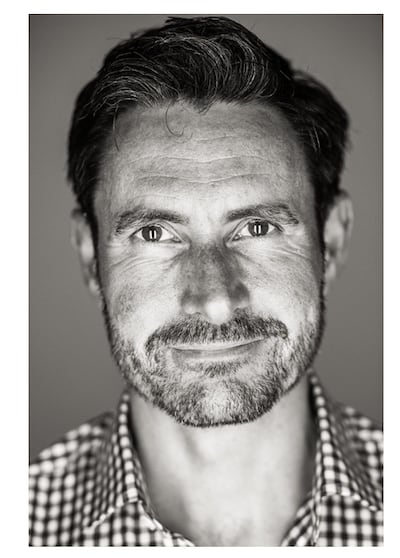
“Technology is changing perpetually. Therefore, the successful, thriving organisations are taking an adaptable approach by trying to build and layer and continuously accelerate the adoption and the application of the latest, the newest, the prowess and power of digital technologies,” he says.
They do this “to get disproportionate market share, to get ahead, to create that best brand, whatever their strategic objectives are,” he explains.
A business can approach digital transformation by a variety of routes. Some will digitalise existing practices, others will set up entirely new digital native enterprises instead. Others still will achieve it on the acquisition trail.
He points to the success of Polish digital bank, mBank, created as an offshoot of legacy firm BRE Bank, as one example.
“They created an entirely new digital organisation that thinks and acts differently,” he says. “Within a couple of years, they had done a leapfrog.” The BRE brand no longer exists, “and the new bank is flourishing,” he adds, “because the experience is better, the efficiency is better, the risk profile is better.”
But all digital transformations are different, he says: “There is no one journey.”
It’s never just about digital either. Increasingly what is required is what he calls a “phygital” approach, one that blends both real life and online services.
That’s because, for basic transactions, consumers want the quickest route, which is typically online. But for high value purchases such as mortgages, cars, or health services, consumers “want to look a human in the eye”, he tells Winterlich.
For brands, it’s about “appreciating the moments when humans need humans,” he adds.
Moreover, “we need to be more human in a more technologically driven world. We can digitise away all the micro moments ... It’s in those emotional moments, those more complex moments, that we really rely on, need and value the human interaction,” he says.
Understanding that fact revolutionises how brands interact with the market. He points to an Audi showroom he visited in London as a case in point. Surprisingly, it had no cars.
Rather than the traditional approach of trying to shift whatever vehicles were in the lot, the process focused entirely on Callan’s lifestyle, needs and budget. “They said, let’s take out all the cars and start with the customer,” he explains.
“So it started with a conversation about me. What was happening behind that profiling was a picture of an A6 estate, with a pet grille for the dog at weekends and a darker leather interior that would suit my young kids. The ‘Audi of Garvan’ was being constructed and it was a very compelling experience.”
The technology involved has since moved on to include virtual reality, augmented reality and now AI. In the meantime Callan, by then home in Ireland, bought an Audi.


