Marseille is having a moment. Long burdened by French Connection-era stereotypes, France’s oldest and second largest city is enjoying a reinvention that has inspired some to proclaim it a “new Berlin on the Med”. CNN recently declared it Europe’s coolest city. This relatively recent buzz can be rather amusing for those of us who remember the old Marseille (I first visited more than two decades ago, and it has been my adopted hometown for several years), but the city’s transformation is undeniable. Even if poverty and crime still scar some neighbourhoods – more than a dozen people were killed in drug-related turf wars last year – Marseille is changing.
Much of this is the result of a new generation of creatives relocating here from Paris and well beyond France, including Ireland. According to the French national statistics bureau, around 10,500 young creatives move to what locals affectionately call Planète Mars every year. Among them are artists, writers, filmmakers, photographers and chefs who draw on the city’s multicultural culinary heritage to produce what many consider France’s most exciting food scene right now.
Those dubbed the ‘néo-Marseillais’ come for the weather – the tourism board boasts of 300 days of sunshine – and a Mediterranean lifestyle with rural Provence on their doorstep. They come for rents that are a fraction of Paris and other major European cities. They come for one of France’s most diverse and dynamic urban centres, where, as local author Vérane Frédiani put it in her book Marseille Cuisine le Monde (Marseille Cooks the World), people have always flocked for a fresh start.
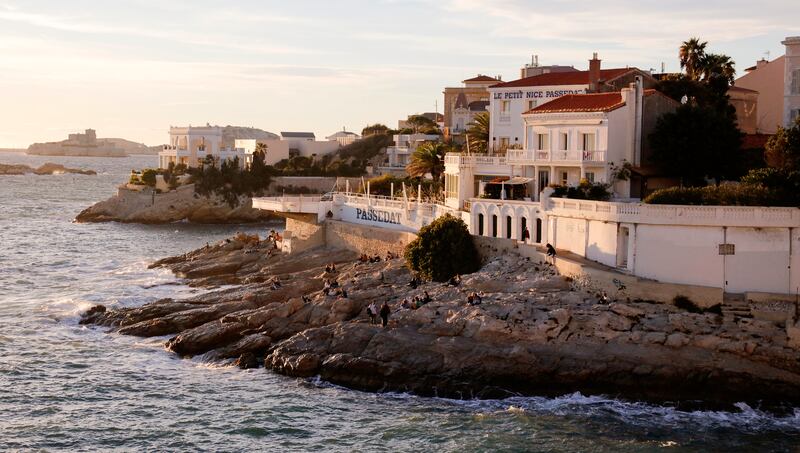
Marseille is something of a frontier town. This is where Europe meets Africa, and not just in terms of centuries of trade and migration. Once one of Europe’s most important ports, Marseille is now home to key undersea fibre-optic cables that link the two continents, underpinning Africa’s connectivity. Investors are intrigued by the role the city may play in what is becoming an increasingly geopolitical Mediterranean. Its hinterland – the Marseille-Aix region – is earmarked to become a French equivalent to Silicon Valley.
READ MORE


Marseille’s fortunes began to change when it was anointed European Capital of Culture in 2013. New flagship venues and initiatives, including the Museum of European and Mediterranean Civilisations, sprang up and helped birth the vibrant creative scene that exists today. The annual Art-o-rama contemporary art fair has helped put Marseille on the global map, as did the city’s staging of the travelling biennale Manifesta. In recent years, film directors – both French and international – have made its sun-bleached streets a favoured shooting location. American actor Matt Damon fell for Marseille while filming here in 2019, and told Paris Match that if he were a young Frenchman, he would move to the city. Visiting Marseille for a literary festival last year, Irish novelist Colum McCann was similarly enamoured. He told me its gritty, infectious energy reminded him of an older, less gentrified New York.
The newcomers, who see this once beleaguered city as a place of creative possibility, have driven demand for more exhibition spaces, studios and artist residencies. Nora Hickey M’Sichili, director of the Centre Culturel Irlandais in Paris, is a fan of this new Marseille.
“There’s a generosity of spirit there that makes it easy to connect and create. It feels less hierarchical than Paris, more porous and alive. Perhaps that’s why the city speaks so naturally to Irish creatives,” she says. “There’s a shared maritime spirit – a love of movement, of song and storytelling, of looking outward while staying rooted in place. Both cultures balance tradition with a hunger for renewal, and both find humour and humanity even in rough edges. Marseille offers a kind of raw, unpolished inspiration that feels very of-the-moment.”
Adele Keane
Co-founder and creative director Imvizar
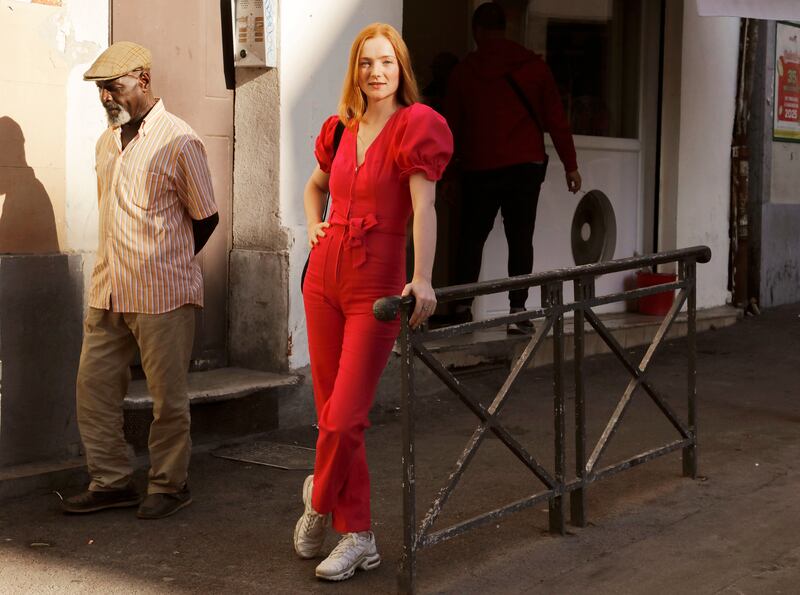
I have always followed my heart instead of my head, and that is what brought me to Marseille. Having lived in Dublin, New York, Los Angeles, and a smaller French city before landing here, Marseille feels like the perfect balance of what I love: lively streets, rich culture, and people with stories to tell.
As the co-founder of a creative-tech start-up focused on spatial storytelling, I spend much of my time exploring how technology can deepen our connection to place. Through augmented reality, we bring locations to life, turning streets, landmarks, and public spaces into living experiences.
Marseille is an ideal setting for that. The city is changing quickly, yet its history lingers, hidden in plain sight, showing traces of what came before. Looking through old archives and reimagining those layers of time shapes how I approach my work. I am always searching for new ways to tell stories that help us see the world a little differently.
My work sits between creativity and innovation, and Marseille reflects that balance. The city feels half real, half imagined. Surreal, serene seascapes sit alongside graffiti-covered, noisy streets. Beauty and chaos coexist, and I am somewhere between both. It attracts people who follow their own rhythm and think differently. There is also a growing Irish creative community here, and although our areas of work vary, we share the same curiosity and drive. The result is a city that feels alive with ideas, conversation and possibility.
gethan&myles
Artists

We originally came to Marseille for what we thought would be six months, maybe a year. Fourteen years later we’re still here. Marseille will do that. But let’s not kid ourselves: this is not an easy city. Given its capacity to frustrate and amaze, to horrify and awe – often in the space of five minutes – Marseille is less a love story, more a love-hate story. It’s a city of extremes and paradoxes where things that seem impossible are totally within your grasp, and things that should be straightforward turn out to be impossible; it’s full of mythologies and multiple blind spots, of accidents waiting to happen, of messy, improbable, beautiful dreams waiting to be dreamed. Never straightforward – always ready to surprise.
Years ago a friend of a friend who was leaving for good complained that it was “une ville qui ne ment pas”: a city that doesn’t lie. Her reason to leave was ours to stay – Marseille wears its beauty and its scars with equal, unabashed pride. And then of course there’s the light. And all the stories, rubbing up against each other. Truth and light and stories.
So, it’s complicated, but it’s worth it: the postmen steal your packages, the cafes set up their tables in the cycle paths and the firemen double park in front of their favourite ice-cream parlour, but you can go swimming under the “baignade interdite” signs and watch the sun set into the Mediterranean on pretty much any evening you like. If that’s the sort of trade off you’re interested in, it might just be your kind of town. And if it’s not, you know what? Marseille doesn’t care.
Liam McCorley
Architect

I moved to Marseille in 2018 after I was offered a place at the architecture school here. Growing up in France, I always heard that it was some kind of Gotham on the Med. People claim that Marseille isn’t France. This is used to mock the city – or to proudly claim its singularity – but it says a lot.
Just like the Mediterranean’s greatest city states such as Athens, Carthage and Venice, Marseille built itself as an autonomous territory by looking out to the Mediterranean and the trading opportunities it offered while ignoring the French mainland.
Marseille is more than twice the size of Paris, a giant puzzle made of 100 boroughs. It’s a city of surreal juxtapositions. Here you can find shopping malls next to farms; gated communities in some of Europe’s poorest neighbourhoods; high-rise buildings in the middle of a forest; a national park inside the city limits; a cathedral built on the docklands; or a fisherman’s hut in the city centre.
Marseille is extremely rich and poor; rugged and refined; peaceful and violent; ugly and beautiful; natural and built up; simple and complicated. The city encapsulates all the places and communities it has built itself from. It’s a giant melting pot. Marseille’s energy hits you in the gut. You will never fully understand it, but it will permanently change you and challenge you.
Once you get Marseille’s organised chaos, you feel like you can make anything happen. It’s easier to establish projects because there are less rules, people are more accessible and inclined to making things happen. I owe Marseille a lot, because it allowed me to grow and push back my limits.
Joanna Walsh
Writer

It’s no news that Dublin is an increasingly difficult city for artists – and anyone who doesn’t have a stable and relatively high income – to keep a foothold. I don’t have a salaried job – and though I qualified for the Basic Income for the Arts pilot, I wasn’t picked to take part. Like an increasing number of friends surviving as arts practitioners, I’m spending occasional time away from the city.
Paris was too expensive. Marseille is cheaper and sunnier, two things that explain the influx of artists from across Europe and beyond. The food culture is extraordinary thanks to Marseille’s multicultural population, and set-up costs that, in France’s second largest city, are lower than in the capital.
Walking and mapping cities on foot is vital to my work. Marseille has a rhythm of streets and a larger pattern of quartiers that have become part of my ability to “tell” time and space. Walking from the city’s main station to where I’m based in Noailles (less than 15 minutes away), it’s possible to cross at least five distinct atmospheres – seedy, bobo, elegant, swanky commercial, anarcho – as well as areas dominated by different French populations from white French, West African, Maghrebi, Armenian, to Comoran, Italian, Corsican ... Unlike in many French cities, these diverse populations aren’t relegated to the banlieues (suburbs), leaving depopulated centres to the wealthy and tourists.
My writing is steeped in French culture, and is occasionally in French. This year I have a grant from the Samuel Beckett Centre at Reading University to research in their archives. Beckett worked on a farm in nearby Roussillon in hiding as a resistance worker during the second World War. I’ll visit.
I’m here for the winter: I was still swimming in the sea in October.
Oona Doherty
Choreographer

I was very lucky to get an associate artist position at Pavillon Noir from 2024 to 2025. It’s the home of Ballet Preljocaj and located in Aix-en-Provence, around 40 minutes’ drive from Marseille. France’s support for the arts through its DRAC programme allows a wide range of dancers, choreographers and artists to be supported in between projects. This is something Ireland should aspire to and it’s exciting to see Ireland begin to build a similar support net for artists.
At the time, my ambition when it came to France was to obtain core funding for my dance company OD Works through the DRAC programme.
I decided to live in Marseille where the cost of living is manageable, particularly for artists. I love the city. The food is great. The heat helps the body open while dancing. It’s a busy city. It’s dirty and full of young people putting the world to rights. Marseille feels like the beginning of something. There’s colour in the streets, Arabic music playing in the restaurants. In contrast with Paris – the coloniser – this feels more like a colonised place. There are Algerians, Senegalese, Turks and so many others to talk to and learn from. It’s so rich in its stories. I feel like you can get a more truthful, a more honest, French story here. The good, the bad and the ugly rather than a polished elitism. And of course the light is of Cézanne’s standard and the rosé tastes good. I learned a lot in the south.
Michael Stone
Creative producer, the Glasshouse Ensemble

I first came to Marseille in 2024, mostly because life had given me a few knocks and I needed a change of scene. I wanted to relearn French and go somewhere with sun and a bit of craic, and I heard tell of this lively city by the sea. I signed up for a month of classes and came without thinking too hard about it.
I didn’t plan on staying. But the city was immediately distracting – in a good way – loud, unfiltered, full of people doing their own thing with no real interest in how they appear. I liked that. I liked walking down to the sea after class and watching everything happen at once: music from different speakers, kids playing, traffic backing up on the Corniche. It should feel overwhelming, but it doesn’t. It’s messy, and yet there’s peace in there.
In the middle of all of that I fell in love and decided to move over properly. It felt mad, but also obvious.
I now work for an Irish company between here and Dublin. But the city has also revitalised my interest in the arts and I’ve been delighting in producing music and stage projects. Being here has changed how I work, mostly by slowing me down and helping me appreciate the soft life. It’s been very good to me.
Jane McAvock
Art historian

My first impression of Marseille more than 20 years ago was not a very positive one – I found it overwhelming. As I got to know the city better, it grew on me. And of course Marseille has changed a lot since.
I am very sensitive to the history of Marseille. It’s the oldest city in France and you feel the layers of history here in a more tangible way than Paris. As a keen hiker, I also love the proximity of nature which makes it so unique. In half an hour from the city centre you can be in this amazing landscape.
[ Seán Moncrieff: Visiting from France, my daughter found Ireland hard to loveOpens in new window ]
My reason for coming here was to do research in the archives. It makes you very conscious of the history of the place because the regional archives are huge. There’s a whole community of art historians here. My archival work shows me how Marseille was a really dynamic and cosmopolitan city in the 17th century. There were people of all shapes, sizes and colours coming and going because it was a major port trading with North Africa and the East. When you do the kind of research I do, you’re conscious of the wealth of Marseille in that respect.
There’s a pride here that I don’t see in Paris. This visceral love for and pride in their city people who live here have – I think it’s amazing. There’s also an edginess, the city has a unique energy. Paris is elegant, magnificent and calm but Marseille rumbles with energy that is sitting on top of this very ancient history. And the brightness here – that light – is something I have not experienced anywhere else, including other cities in the south.
Nick West
Photographer

I first came to Marseille over 20 years ago, introduced by Chloé, my Parisienne girlfriend at the time. I was not enjoying Paris and thought a trip to the sea might cheer me up. The buildings were caked in soot, the streets felt dirty, neglected, but racy and full of bawdy life. It was chaotic and a bit shocking – and I loved it.
By the time I ended up by the sea in the neighbourhood of Endoume, the hills dropping into the water reminded me of Dalkey in Dublin, near where I grew up. I had a small epiphany: this is where I should land in my later years, fishing and drinking Chablis on a little boat, my skin salted and leathered by the sun. I filed the thought away, but the city stayed with me.
When I returned years later, the Mediterranean was still there, glinting away as if nothing in the world could truly disturb it. Marseille is a gift to a photographer: a city of layers permanently on the edge of precarity, with wild shifts of light and weather and a constant parade of Marseillais (the city’s residents) whose exuberance seems, somehow, unflappable.
For a Dubliner used to keeping an eye on the horizon, it feels familiar: a port city looking outward, a bit of rough, full of stories still hanging in there.


