
There are enough comparisons and tables in the 600-plus pages of the latest OECD report (Organisation for Economic Co-operation and Development) on how wages are taxed across its 38 member countries for every side in the debate on taxing households in Ireland to find something that suits their case.
But let’s try and pick out the main points to identify just what the reality is behind the rhetoric. And look at the key policy implications behind the political promises to lower the income tax burden in the budget.
The top line
The average “take” from wages through income tax and pay related social insurance (PRSI) in Ireland at 25.1 per cent is precisely in line with the OECD average. The point of comparison here is a single employee on a typical full-time earnings – put in the Irish case in the early €60,000s.
The Irish system does have its peculiarities, as we will see, but industrialised countries on average take around one-quarter of employee income in tax and social insurance from this mythical “average” worker.
READ MORE

Of course the employee focuses on the difference between gross earnings and take-home pay. But there is one key difference in Ireland.
The income tax and universal social charge (USC) take on the typical single employee at 21 per cent is higher than the 15.5 per cent OECD average. But employees here pay less social insurance than elsewhere – 4.1 per cent versus the 9.6 per cent OECD average.
Social insurance systems vary across countries, and, in some cases where charges are higher – such as many northern European countries – benefits are also better, notably in areas such as healthcare.
The detail – single people versus families
The tax take varies across income levels and family types – and in the case of families the OECD calculations net out payments such as child benefit and the working family payment. This is to try to measure the impact of Government policies on households.
The first stand-out points to note here is that families are treated relatively generously in Ireland, particularly at lower-to-average income levels. Taking into account benefits as well as tax, the net average tax rate for a one income family with two children in Ireland is 10 per cent, compared to the OECD average of 14.7 per cent.
In general the OECD calculates that the tax and welfare “benefit” given to families is significantly higher than the OECD average.
At higher income levels, the Irish system is not quite so generous – because taxes in Ireland rise quickly as earnings increase, as we will see below. The average tax take – net of benefits – of a couple with two earners and a total income of €135,000 is 17.4, not far below the OECD average of 18.9 per cent.
The detail - lower versus higher earners
The Irish income tax system is highly “progressive”, in other words it generally treats lower income people more generously than the average while those on higher incomes pay a bit more.
Looking at single people for example, those on two-thirds of the average full-time wage (€60,258) – earning in the early €40,000s – pay 16.1 per cent in tax and PRSI, compared to 20.7 for the OECD average and 24.1 per cent for European countries.
In contrast, the single employee on around €90,000 pays 35.4 per cent in income tax, USC and PRSI compared to an OECD average of just over 30 per cent and slightly ahead of the average European rate.
The same trend appears for married couples – though a two-income couple on around €125,000 pay around a quarter of their gross income in income tax and PRSI (after netting off payments such as child benefit), just above the OECD average of around 24 per cent. Again, they pay more income tax than the average but less social insurance.
Kerry Group CEO on the impact of Middle East conflict, AI and drive to keep bread fresher for longer
One area where the Irish tax system stands out is the low income tax take on lower incomes – meaning that large numbers of lower-wage employees escape the income tax net completely, even if many pay some PRSI.
This changed after the financial crash when the USC was introduced, but successive increases in the lower limit at which the USC applies have gradually increased the numbers out of the income tax net completely, or largely.
PRSI rates, which apply to those earning more than €352 a week, are being gradually increased under a programme to underpin the Social Insurance Fund out of which welfare and State payments are made – so this will add modestly to the burden across the board, including for lower earners.
The detail - marginal rates
So far we have been looking at the average or effective rate of tax and social insurance on people’s incomes. However the marginal rate – the rate which applies on the next euro of income – is also important.
It is seen as having an impact on people’s decisions to work to earn a higher income and the costs to employers of rewarding them through extra pay or bonuses. Marginal rates in Ireland are high – and as the higher 40 per cent income tax rate kicks in at relatively low incomes, it is 52 per cent for many when USC and PRSI are added in. The OECD average for someone on above average earnings is closer to 40 per cent.
The detail- the tax wedge
The other key part of tax on income is employers’ PRSI. Adding this to employee payments gets what is called the “tax wedge” – the difference between what the employer pays out and what the employee gets.
For our single worker on an average wage, the total wedge is 33 per cent compared to 35 per cent for the OECD average, with the difference due to a lower employer social security charge.
The policy implications
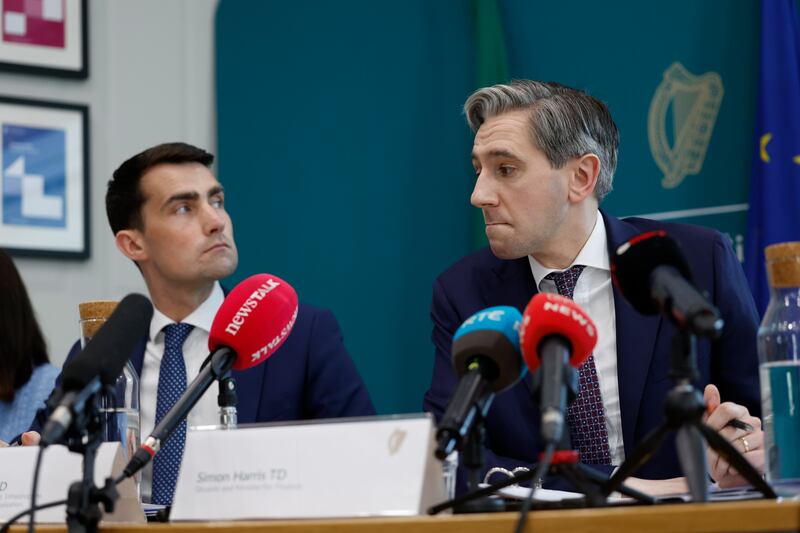
Everyone wants a lower income tax bill. Budget ministers Simon Harris and Jack Chambers have both indicated hopes to reduce income tax in the budget – however this is likely to involve an adjustment of bands and credits to adjust for inflation, rather than any big relief.
Bands and credits were not changed in the last budget, meaning that the income tax burden is likely to edge up this year. One area for likely change in the budget is the income level at which the higher 40 per cent rate kicks in – currently €44,000 for a single person.
More fundamental change costs money and the big increases in spending in recent years have been the focus of additional resources.
A key issue has been the gradual narrowing of the income tax base as higher earners pay a larger share of the total – the top 10 per cent of earners pay two-thirds of all income tax. With corporation tax also highly concentrated, this means the Irish tax base is relatively narrow.
But widening the tax base is problematic. Imposing a bit more income tax on average or lower earners is not likely to fly, given the cost-of-living pressures they face in a high cost economy.
Various studies, notably the 2022 Commission on Tax and Welfare, called for more tax to be levied on wealth and property – here, too, the politics is difficult with the biggest share of national wealth in people’s homes and the Government already committed to some reductions in inheritance tax.
So there is no easy route to lowering income tax bills or widening out Ireland’s narrow tax base. And the danger remains that if the exchequer finances do hit more turbulent times in the years ahead, the minister for finance of the day will again dip into the income tax pool for more resources.
For now, modest relief can be expected in October’s budget, but only if the economy and the public finances are not hit by a deepening of the conflict in the Middle East. As we saw last year, if the numbers are tight, then the risk is that tax reliefs are pared back to allow spending to continue to rise.