
On the website of the Odesa opera and ballet theatre, it is still possible to find an announcement from February 24th, 2022.
“Dear theatregoers,” it reads, “due to the imposition of martial law in Ukraine, the Odesa opera is suspending performances for an indefinite period. We will provide updates on the theatre’s operations in due course. Please take care of yourselves and your loved ones!”
It was the day Russia launched all-out war on Ukraine, this Black Sea port and other towns and cities were already being bombed, and Moscow’s invasion force was advancing from the north, east and south.
The notification still conveys some of the shock and uncertainty of that time: Odesa was a prime target for the Kremlin, a place of great strategic value for its military and a coveted prize for Russian nationalists, and it seemed inevitable that enemy troops would soon land on beaches near the city.
READ MORE


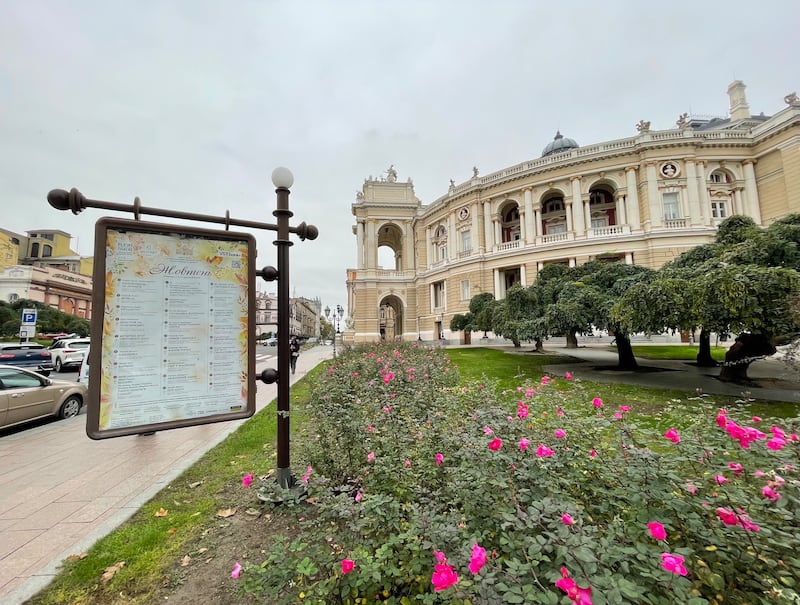
It could have been the last message in Ukrainian from a theatre that has been an Odesa landmark since opening in 1810, when the city was part of Russia’s empire and Ukrainian language and culture were systematically suppressed.
The fact that it is now buried so far down the theatre’s news feed shows how differently things turned out: Ukraine defended Odesa, the theatre reopened four months later, and the performances haven’t stopped since.
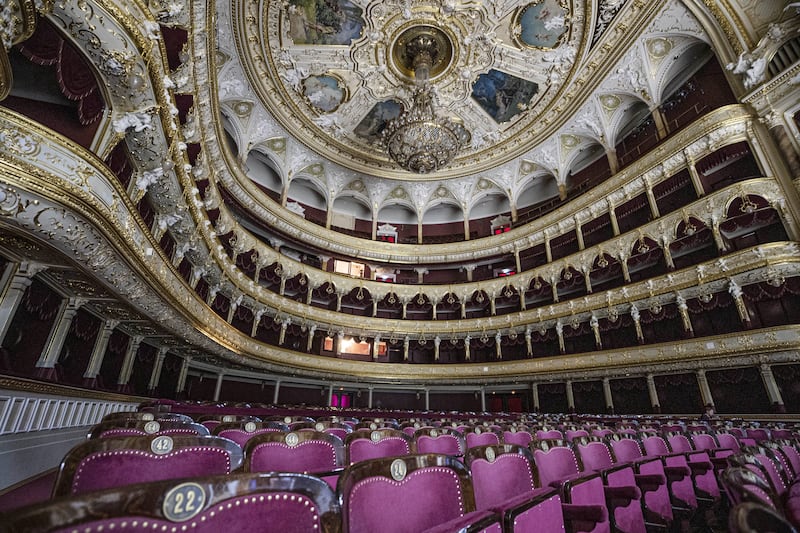
Now the theatre’s website welcomes visitors with a glittering view of its rococo red-and-gold auditorium, and news of a packed repertoire for its 217th season.
“This time is the renaissance of our theatre,” says Olesya Shliakhtych (31), a director, choreographer and dancer at the Odesa ballet.
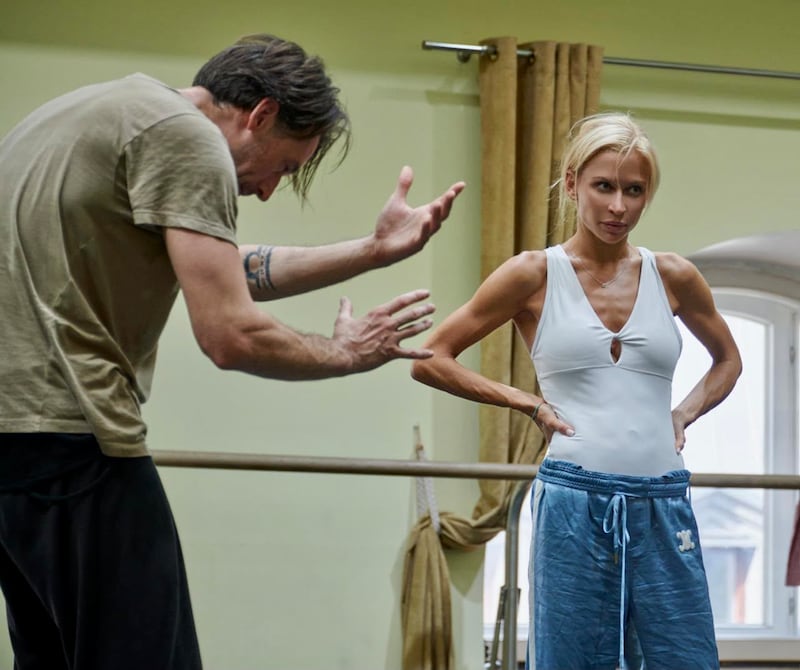
“We said goodbye to Russian ballets in 2022 – Swan Lake, the Nutcracker and others – and I’m very happy about that. Now we have space to create something new, something Ukrainian, something wild – something that is about us,” she adds during a break from rehearsals.
“In that way, I think this is a golden time for our performing arts. Now, for the first time for 150 years, we have the possibility to do something truly Ukrainian.”
[ Zelenskiy seeks concrete western commitments before Ukraine peace dealOpens in new window ]
Alongside classic European operas and ballets by the likes of Verdi, Puccini and Bizet, the Odesa theatre stages modern ballets by Shliakhtych and other Ukrainians that are inspired by their nation’s literature.
“We still have big audiences, and the mood in the theatre is very good,” she says.
“I don’t think of our performances as a distraction for people, but more like a dialogue with me and the dancers and other creators – with great Ukrainian writers like Lesya Ukrainka, Taras Shevchenko and Ivan Franko. It’s a dialogue in movement that everyone can understand.”
This autumn, the theatre staged the premiere of Shliakhtych’s ballet Snow in Florence, based on a 1987 dramatic poem of the same name by Lina Kostenko.
“All my performances take their subjects from Ukrainian literature, and Ukrainian artists make the scenery, the music, the costumes – it is 100 per cent our production,” she says.
“My ballets are not directly about war. If we are creating something about love, then the war is somewhere in this process – but only in very tiny movements, in tiny colours, so it is not too evident.”
Yet reality inevitably crashes in, when Odesa and its ports are under almost nightly Russian attack.
Rehearsals and performances continue when there is a so-called yellow alert – meaning there is a threat from drones – and are suspended during a red alert, when ballistic or cruise missiles could be incoming.
“Under a red alert we all go to the bomb shelter – one for the audience and one for the performers. If it lasts more than an hour-and-a-half, the performance is cancelled. Otherwise, we restart after the all-clear,” says principal dancer Stanislav Skrynnik.
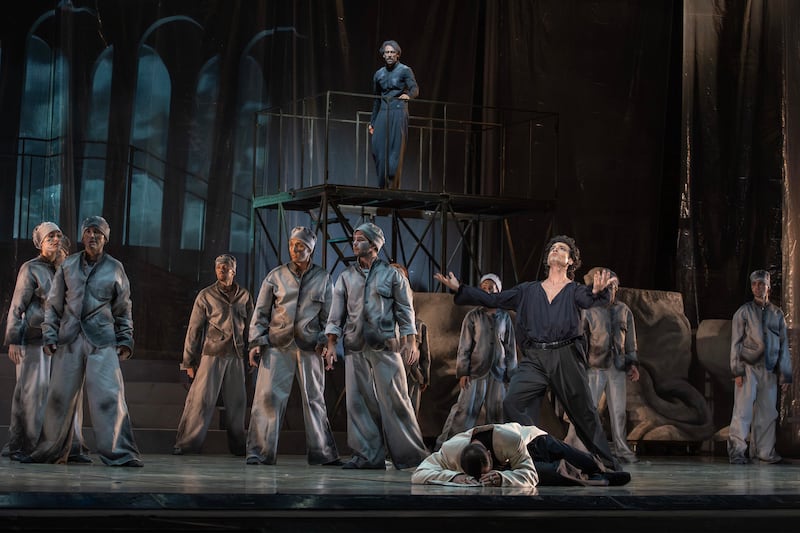

“It’s very tough, physically and emotionally, to have these forced breaks. You put everything into the dance, and then you must suddenly stop and come back to reality. And when the alert ends, you might only have five or seven minutes to warm up and get ready to dance again.”
Dozens of performers and other staff members have left the Odesa theatre since 2022, with some going abroad or to safer parts of Ukraine, and others joining the war effort. At least one of its dancers, Rostyslav Yanchyshen, was killed in combat.
[ How culture became one of Ukraine’s most powerful weapons against RussiaOpens in new window ]
At the start of the full-scale war, Skrynnik (36) had a part-time job in a workshop making body armour and other equipment for soldiers. In the ballet company, he is now a mentor for a younger generation of Ukrainian performers.
“This is my life,” he says. “I really like how people still value our performances and value art – we often have a full house of 1,500 people, especially on weekends. For me, this is a time when we can develop and show Ukrainian art to the whole world.”

Shliakhtych says she never considered leaving wartime Ukraine.
“Only here can we create something important. Only here can we understand which way to choose in art. Because if you have no pain, you have no theme from which to create. It’s complicated to be here, but it’s easy to create.”