

As I write, Ireland still awaits the outcome of the review process chaired by Prof Anne Scott, an expert in medical ethics, into the State’s response to the Covid pandemic of 2020. And rather than waiting further for the outcome of that report, I feel compelled to express my own opinions on how the Irish State (and many other states) dealt with the Covid crisis.
Whether or not the Covid-19 virus emanated from the wild or whether it escaped from a Chinese state laboratory in Wuhan which was experimenting in virus mutation, the result for the world, and in particular the advanced industrialised parts of the world, was by any standard colossal in scope and effect.
Though for many images of Italian army trucks being loaded with coffins in Bergamo or the opening of mass grave cemeteries in New York are by now just fading memories, there is no doubt the prevalent reportage of Covid was one in which a pandemic threatened the very future of civilised society if not the future of humanity itself. The aura of fear swept national and international media and drove many democratic governments to extremes in the fight to contain the deadly Covid threat.
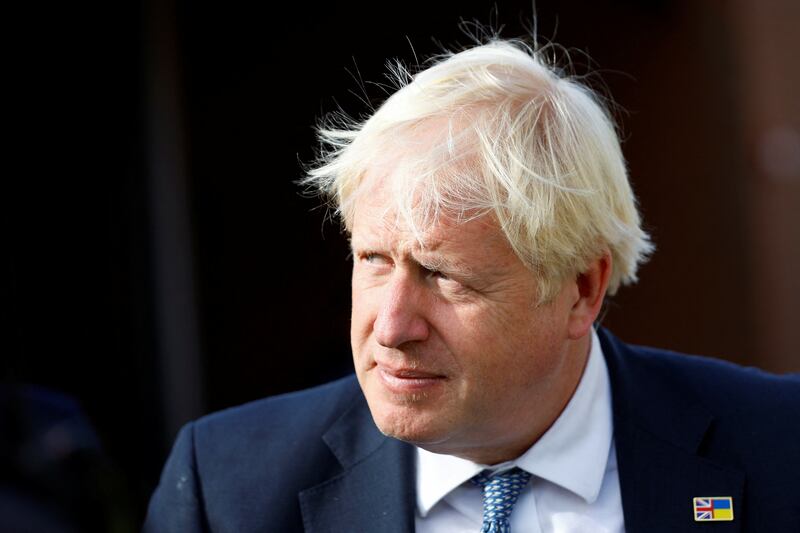
Ireland was by no means an outlier or a pioneer in counter measures. We should not forget the astonishing theatrics of the UK’s prime minister, Boris Johnson and his entourage at Number 10 Downing Street or the fact that his apparently cavalier approach to health risks involved in Covid-19 led to his being hospitalised, heavily sedated, in intensive care.
READ MORE


In these columns over the course of two years I wrote many articles querying the necessity for some of the more extreme preventive measures instituted by government under emergency health legislation. At the time, and mainly before the availability of mass vaccination, I felt instinctively that measures proposed by Nphet (National Public Health Emergency Team) were grossly excessive.
Starting at the more extreme end, the idea the entire country should be as far as possible confined to their homes on pain of committing a criminal offence seemed then, and still seems, gross. Closing beaches, playgrounds, some parks, and golf courses was apparent nonsense. Placing Garda checkpoints on suburban roads and motorways to challenge movements by car seemed wholly excessive.
Closing down all commercial activity, with a few exceptions such as meat plants and food outlets, represented economic and social catastrophe. As I wrote at the time, it appeared that levers of government had fallen into the hands of persons who invoked the precautionary principle to justify social collapse. The precautionary principle was never applied, it seemed, in a way that avoided massive economic, social, educational, and psychological damage and suffering on the community at large.
Absurd rules were invented such as confining people to counties bequeathed to us by our medieval English overlords. Travel from Youghal to the Beara Peninsula, 140-160km, was lawful, but travel from Shankill to Bray on a shopping expedition was a crime.
A vast number of enterprises and trades were peremptorily shut down, many permanently, leading to economic catastrophe for owners and employees alike. Nearly all building sites were closed. Nearly all offices lay abandoned. Universities and schools were closed. Nearly all opportunities for recreation were banned.
Vulnerable elderly people in nursing homes were most at risk and yet, at the beginning, infected patients were distributed to such homes to unwittingly spread the plague. The dying were left isolated and alone. Those emotional scars are still there for many.
We were told that the insufficiency of intensive care beds justified all of the foregoing. That insufficiency was well known before Covid and I wonder whether it still exists. Protecting the in-patient health service from being swamped was the key driver of public policy.
While Sweden initially exposed its elderly to high mortality rates, it avoided more extreme lockdown measures implemented in Ireland. In the last analysis, Swedish mortality rates did not vary that significantly from those of the most draconian lockdown states of similar size.
Irish people were obedient and compliant with what, in retrospect, appears to have been a grossly excessive and damaging reaction to Covid-19. Of course, there was no certainty that vaccines would become available when they did. And we are left wondering what would have happened if development of vaccines had taken, say, two more years.
Strangely, the Oireachtas Covid committee chaired by then deputy Michael McNamara was closed down just when it was needed most for accountability, and complete capture of the government by the Nphet process was allowed to continue regardless of the enormity of the consequences of lockdown.
My point is this. The occurrence of another pandemic like Covid-19 is no mere possibility; it is predictable. Its severity may be greater or lesser. But no matter what the conclusions of Scott’s report, we must never repeat the colossal blunder which we inflicted on ourselves in terms of economic, social and psychological damage.
[ Long Covid to cost OECD economies up to €115bn a yearOpens in new window ]


