
To get our heads around the staggering reality that the United States is now openly attempting to destroy the European Union, we might start with the Opium War. It was launched to force a highly addictive drug on a country that was trying to stop the damage it was doing to its society.
It tells us some important things about how far a superpower that has been captured by the pushers of lucrative toxins will go to further their interests. All resemblances to living people are very much intended.
The First Opium War, fought between 1839 and 1842, was really a series of massacres. Britain unleashed its vastly superior firepower on imperial China. It did so solely because the Chinese had the temerity to try to prevent the new western empire from flooding the old eastern empire with opium. The assault was driven by a fusion – very like that in Trumpworld now – of public and private interests.
The public concern was (again with loud echoes in the present) with the balance of trade. Britain imported huge quantities of tea from China, leading to a very large fiscal deficit. To correct this imbalance, the British forced millions of Indian farmers to grow nothing but opium, which it then pushed on the Chinese.
READ MORE




The private concern was the leading drug cartel, Jardine Matheson. One of its two founders, William Jardine, bribed English newspapers to generate outrage about China’s appalling assault on free trade. Jardine personally planned the war with the British foreign secretary Lord Palmerston.
The First Opium War and its second iteration between 1856 and 1860 still resound in Chinese consciousness as a memory of abysmal national humiliation. In November 2010, then British prime minister David Cameron and some of his senior ministers outraged their Chinese hosts during a state visit to Beijing by insisting on wearing their Remembrance Day poppies. The Chinese asked them not to do so because, for them, the flower symbolised a traumatic history.
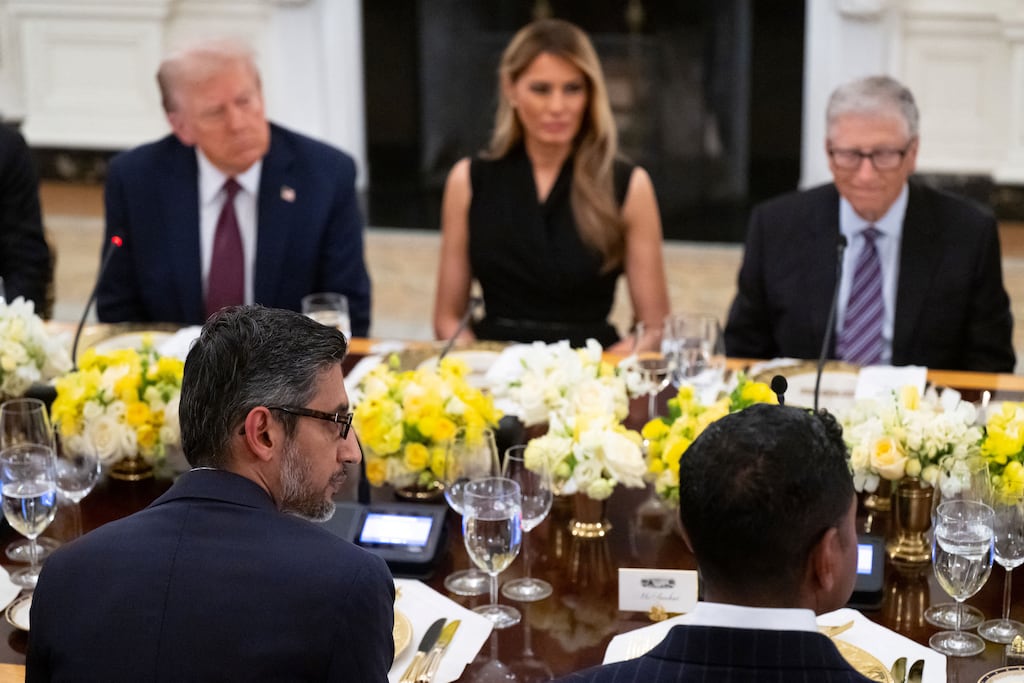
But the resonances with today’s open American hostility to the EU are no less powerful. Now, as then, the world’s largest superpower has fused its interests with those of pusher cartels – for the opium lords of 1839, think the tech bros of 2025. For Jardine Matheson, think Instagram, Facebook and YouTube. For opium, think algorithms designed to get children hooked on poisonous images delivered straight into their developing brains. And for China then, think the EU now.
Donald Trump thinks of Europe in exactly the way the Victorian imperialists thought of China. Last week, he told Politico that Europe is a “decaying” group of nations being destroyed by wokeness: “Europe, uh, they want to be politically correct and it makes them weak. That’s what makes them weak.”
And the weak practically invite exploitation. The decadent Chinese provided, precisely in their very decadence, a vast market for addictive toxins that would keep them quiet, while also making British cartels fabulously rich. The decaying Europeans – and especially their defenceless children – present an equally lucrative market for the tech oligarchs. They too can be hooked on mind-altering junk: suicidal ideations, misogynistic porn, high anxiety and low self-esteem. Algorithms are the opium of the children.
In 1839, Jardine’s propaganda campaign for his Chinese war was organised around the virtue of free trade. In 2025, the ideological Trump card is free speech. Stopping the flow of opium was a scandalous assault on the freedom to sell whatever anyone is buying. Stopping the flow of digital brain rot is an affront to the God-given right to say whatever the hell you want.
The EU’s rather timid and belated attempts to limit the damage inflicted by the social media oligarchs are not the only reason for Trumpworld’s determination to take it down. Climate change (and the threat to America’s vast fossil fuel industries from the EU’s green agenda) has to be factored in. So does white supremacist ideology – the fascist trope of Europe’s “civilisational erasure” is officially embedded in the new US National Security Strategy.
But “censorship of free speech” is front and centre in the strategy’s narrative of European decay. It is a primary justification for the now-open desire to destroy the EU by encouraging the rise of far-right parties in its member states and of “working with” Austria, Poland, Hungary and Italy “with the goal of pulling them away from” the EU.
The Trump administration is, of course, itself an enthusiastic suppressor of free speech, especially online – it wants to police the social media feeds of every visa applicant. “Censorship of free speech” is mere code for the regulation of social media corporations.
Follow the money: in the US, six social media companies (Facebook, Instagram, Snapchat, TikTok, X and YouTube) made $11 billion in 2022 from ads targeted at children. YouTube alone made a billion dollars from kids under 12. Europe is an even bigger market and revenues from children have surely expanded in the last three years. Child abuse (and let’s be clear that this is what is happening on an industrial scale) is far too lucrative to give up without a fight.
One of the front lines in the Algorithm Wars is Ireland. Meta, TikTok, YouTube, X and Snapchat all have international bases here. Meta alone ran €85 billion worth of revenue through its Dublin HQ last year. Delicious shavings dropped onto our table in the form of Meta’s corporation tax payment of €367 million. Some of that is undoubtedly dirty money made from children.
The Government is (in the words last week of Minister for Communications Patrick O’Donovan) “very concerned about the appropriateness of what some children are seeing online” and has promised to make child safety a major theme of its EU presidency next year. But this means war – and the enemy is very much within.
The Algorithm Wars of 2026 will tell us whether Trump is right and European democracy really is decaying. And whether Ireland is too badly hooked on social media lucre to get up and join the fight.