I left the house early that morning, knowing the boats would not come. High winds had arrived overnight, and the crossing from the mainland was out of the question. I was living on the Great Blasket Island for the six-month season, working as a caretaker, looking after the small café and accommodation. Days like this fell outside the usual rhythm of arrivals and departures. There were no rooms to turn over, no visitors to meet, only the long stretch of the island and whatever weather came with it.
I set out for Ceann Dubh, the end of the island, its furthest western reach, following the familiar path up along the ridge.
I heard the rain before I felt it, a low, gathering sound moving in from the Atlantic. From halfway up An Cró Mór, the Great Blasket’s highest point, I turned and looked back. The clouds had already crossed the Foze Rocks and were moving toward An Tiaracht, closing the distance.
Rain this heavy must have been building for hours, gathering itself somewhere out at sea, and now it was coming straight for me. I was more than an hour’s walk from our cottage on the sheltered side of the island, with no cover along the route. I stepped off the path and crouched alongside a low rock, waiting, though I knew it would make little difference. I willed the clouds to bear northwards, head for Inis Tuaisceart, The Sleeping Giant, but they held their line.
READ MORE


The wind hit me first, cold and swirling, lifting grass and tugging at my hood as it pulled the cloud in behind it. Then the rain followed, first as heavy drops that made a dull sound as they hit the rock and my sleeves, then the full, saturating, downpour. The sky was entirely black now, and this weather system that had made its way across the ocean greeted the land fully. There was no point in waiting it out. I left the rock and began the walk back home.
The path back seemed longer than before, the rocks and grass slick underfoot, the line of the horizon drawing closer or drifting farther away as the rain shifted. On other days, I would have stopped along that route, looking toward the Iveragh Peninsula or trying to pick out the pyramidal peaks of the Skelligs in the distance. That day, there was no pause, only steady forward motion. I had been a good swimmer as a child, and there was something of that same movement in it, pushing forward through resistance, taking short breaths and keeping a steady pace. By the time I reached the cottage, nothing on me remained dry.
This was how I learned that my backpack was not waterproof.
Everything inside was soaked. The soggy leftover sandwich was of little concern, and I had to laugh as I pulled out the foolhardy combination of emergency sunglasses and suncream I’d packed that morning. But the willingness to look on the bright side of the drenching left me as I removed my journal from the bottom of the bag. I had been writing in it most days since we arrived, keeping track of our season on the island as it unfolded. Three months in, it held the details I thought I might otherwise forget. I took it out and stood there for a moment, peeling the pages apart. The ink had spread out, pooling into itself, whole sections dissolved into swirling, soft, unreadable shapes.
I tried to save what I could. I set it near the fire, pages fanned, hoping the heat would somehow rescue the words within by drying them out. Hours later I went back over what remained legible and copied it into a fresh notebook, squinting at every scribble and smudge, trying to dredge as many lost words as possible from a silt of ink. It felt necessary then, as though the act of recording might preserve something that could be lost to me.

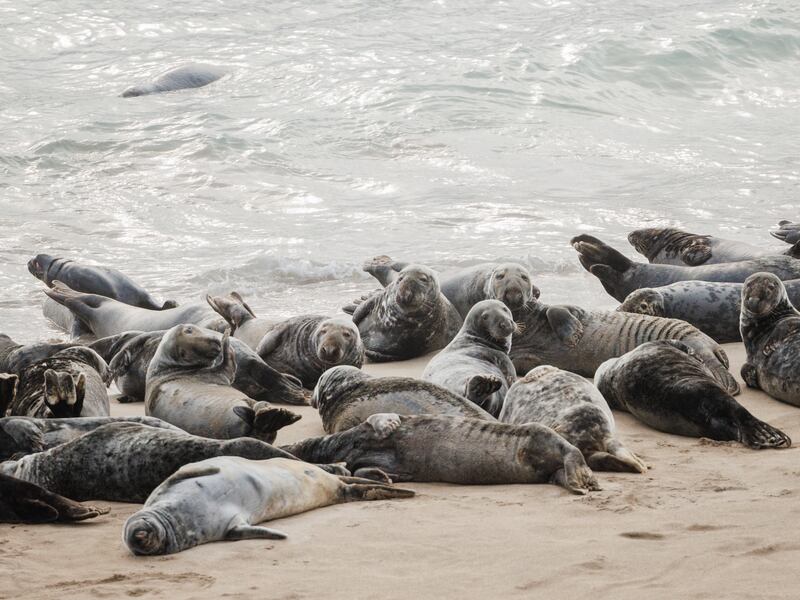
It is only now I know that nothing essential was lost. The journal held the detail, but not the experience itself. What I had written would not have matched the way the Great Blasket has stayed with me since. The changing light, the ghostly calls of the seal colony on the strand, the feel of the door latch in my hand all remain, as clear now as they were then. I had been taking in the days as I lived them, knowing I would need to find my way back to them.
When the season was over, I returned to the mainland, glad to be home but aware of the different way of living I had left behind, out there beyond the sound. I knew I would go back to visit, but I also knew I would not live it in the same way again.
Naively, I thought that by writing it down I might help me let go of that feeling, to set it out clearly before moving on. So, I turned again to my journal, returning to the details from earlier in the season and trying to trace a line from those early days in April to the final, quieter weeks of October.
But any attempt to put pen to paper felt impossible. The words wouldn’t come, only the feelings that were still too raw and too close. Everything I tried to write fell apart halfway through.
What I had taken from the island was not something that could be set down quickly. The days there were shaped by what needed to be done. I got up, went out, worked with what was in front of me. Weather changed the order of the day without warning, the arrival of boats with their cargo of visitors determined when things began and ended. There was a rhythm to it and I found my place within it.
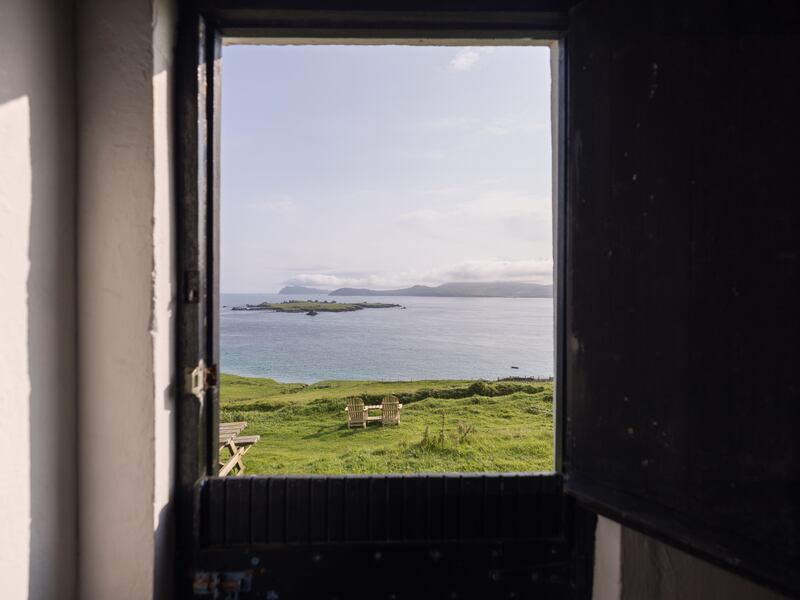
On the island, once the work was finished, the house would fall into darkness. The fire would burn low and the rest of the island would fall out of reach. I moved by candle and torchlight, doing only what was needed. There were sheets to fold, surfaces to clear, the next morning to prepare for. Once these were done, there was nothing left to do but sit with the island as the night drew in.
Some nights were steady and quiet, the lights of the mainland visible across the water. Other nights brought loud weather, moving in unseen, filling the dark around the house. There was nothing to be done but let it pass. It came and went in its own time with nothing to be done but surrender to it, knowing that tomorrow the island would feel fresh again and I would begin again the day’s routine as before.
In time I realised that writing about the island would be much like those nights. It asked for patience, and a willingness to stay where I was as it shifted around me, with sudden squalls of loss at having left it behind. It could not be forced. I had to sit down and begin, without knowing where it would go. This time, I worked without an outline and began with what I could call to mind clearly.
The hue of the seawater in a hidden cove, faceted in blue and green on a summer evening. The last of the light setting fire to the horizon as the sun slipped into the waves. I wrote it all down, at first without deciding what mattered. The small tasks alongside the larger moments. Cleaning the windows of Peig Sayers’ cottage. Standing on the cliff, listening for whale song, (though I never heard it). Lighting the fire at the end of the day. Making a cup of tea.
It did not come together immediately. Like the island, the writing asked that I turn up every day, tired or not, and put in the effort. I returned to the same sections more than once, setting them down again, cutting them back, leaving some aside.

Seeing it set out like that made something clear. The days had not been divided into the ordinary and the remarkable. Rather, the two had been held together. The work of the day, the weather, the people who passed through, all of it belonged to the same thing, that very particular magic of the island. I realised as I wrote that memory changes shape depending on how you hold it, what light you hold it up to. The island became quieter in my mind, smoothed out at the edges. I remembered the still days more than the wild ones, the moments of calm between jobs, the sound of the kettle, the rain against the window.
That was how I had lived it, and it was the only way I could write it.
Lesley Bond and her husband Gordon were the first couple to embark on the six-month caretaking residency on the Great Blasket Island in 2019. The couple now live in Kildare. Blasket Bound: Memoirs of an Island Caretaker is published by Gill