

I was born in Dublin to Cork parents. I think that was my first identity crisis – that I was born in the wrong county. All my cousins, uncles, aunts, grandparents on both sides, are from Cork. I loved Cork and I grew up between Dublin and Cork.
Ireland is different in lots of ways now than when I was growing up. Divorce was illegal until 1995, and my parents separated when I was seven. They did it, I have to say, brilliantly. They would not appreciate this phrase, but they consciously uncoupled long before that was a thing. It was the late 1980s. People just didn’t separate. There were a lot of very unhappy families stuck living together. The Catholic Church, while it was waning, was still there. I know my grandparents wouldn’t necessarily have approved of the decision, but my parents handled it really well. They always spoke really highly of each other, so for me it didn’t seem like a big deal.
Then when divorce was legalised, people’s parents started splitting up left, right and centre. I remember friends in their 20s being devastated at their family splitting, and mine had split up long before but I hadn’t been traumatised by it. In fact, I thought it was kind of cool. That was something I was interested in with [my TV series] The Dry: how the myth of family can be very potent.
I was aware, growing up, of what my parents [journalists Anne and Eoghan Harris] did, but I wasn’t that interested. My bigger influence was my sister, who was a film student. She used to work in the video shop – another part of Ireland that doesn’t exist any more. She would take me to work with her sometimes, and we would watch all the movies. She was studying kind of weird movies, like John Waters movies, Alfred Hitchcock, David Lynch. That was a big influence. I think Irish people are total movie buffs. I don’t think it’s quite the same in London [where I live now]. I don’t think people consume film in quite the way.
READ MORE


I didn’t know when I started college [in Trinity College Dublin] that I was going to become a writer. I probably, although I didn’t admit it to myself, wanted to be an actor or maybe a director. I realised through college I was neither of those things.
There were no playwriting courses in Ireland at the time, so I applied to a course in Birmingham. I couldn’t afford to go at first so I worked in retail for a year. We were the Celtic Tiger generation. Ireland became very rich overnight. It was not a good thing. There was a real lack of empathy to immigrants. In the shop, people were so rude sometimes. They would say things like: ‘Is this where your degree got you?’ Then, of course, there was the massive bust. Everybody’s lives changed overnight.
What was interesting about that time was that suddenly we went from being a country that had been more of a victim to a country with a bit of power. It’s like: how do you use that power, when you’ve got wealth? What’s our responsibility when we’ve got money? That became very interesting to me – to write about middle-class cruelty. That is what a lot of my playwriting is about.
The longer you stay away, the less you belong anywhere. I don’t really belong here [in London]. I don’t really belong there [in Ireland]. With The Dry, I was asking that question: where do I belong? There is this thing, when you go away, of wanting to come back and have achieved something. That could be a job, or marriage, or, in the show’s protagonist Shiv’s (played by Róisín Gallagher) case, sobriety. But what if that thing you seem to have achieved isn’t really valued by anybody? And what is success? Is there any such thing? When you go away, you’re sort of conscious of that.
I’m delighted the show feels truthful internationally; I think that’s probably because family and dysfunction and addiction are very universal subjects, but to be honest, the only thing I wanted it to do was feel truthful to an Irish audience. I wanted the humour to be Irish. In the country now, people can’t leave home a lot of the time, or can’t separate, not because it’s illegal, but because they just cannot afford to. How all these external stresses affect our relationships is part of the show.
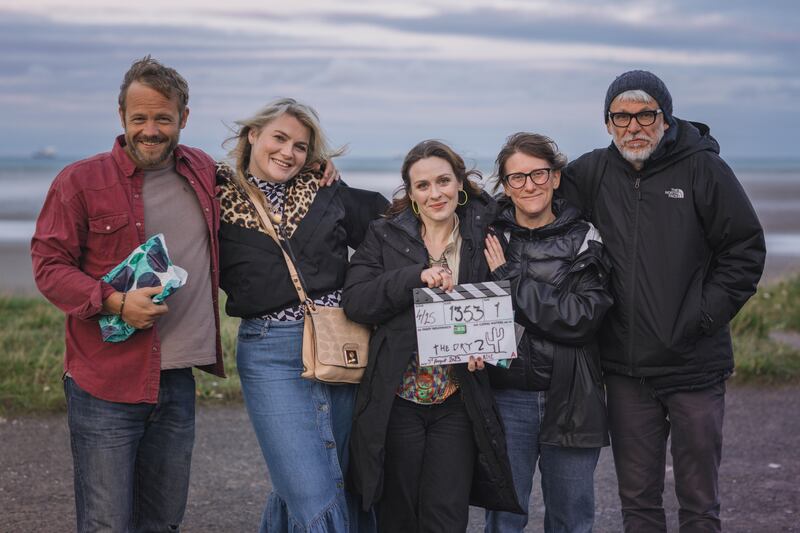
I think Ireland is becoming better in how we talk about and deal with addiction. Ireland is way more open to looking at itself than it gives itself any credit for. It’s one of the things I love about Irish people. They’re very open.
The idea that Ireland is full of drinkers is a stereotype, but I sometimes think when a country has been given a stereotype, they might be the best people to look at it. The Dry was an opportunity for us to take the stereotype, turn it on its head and really look at a very serious problem that happens all over the world, and be the country that’s not afraid to look at it.
One of the joys of writing three seasons is we don’t have to stay in the opening theme of the drink problem. It’s about the permutations of addiction.
In conversation with Niamh Donnelly. This interview, part of a series about well-known people’s lives and relationship with Ireland, was edited for clarity and length. Season 3 of The Dry starts on RTÉ One and RTÉ Player at 9.35pm on Thursday, April 23rd.


