The wife of an Irish citizen being detained in a Russian prison has asked Minister for Foreign Affairs Helen McEntee to intervene in her husband’s case, saying she fears for his safety.
Dmitry Simbaev (49), a dual Russian-Irish citizen, has been detained for almost seven months after messages expressing anti-Russian sentiment were found on his phone.
His wife Daria Petrenko (37), a Ukrainian woman living in Co Galway, said she has not spoken to him in five months and is very worried about his welfare.
“I’m incredibly sad. I’m very worried about my husband,” Petrenko told The Irish Times.
READ MORE


“I know nothing about his wellbeing and believe he is in danger. Dmitry’s parents are not allowed to see him. Only a lawyer can visit him.”
In a letter sent to McEntee last week, Petrenko asked for the Minister’s “help and assistance in this difficult situation”.
A spokesman said the Department of Foreign Affairs was “aware of the case and is providing consular assistance” but “does not comment on the details of individual cases”.
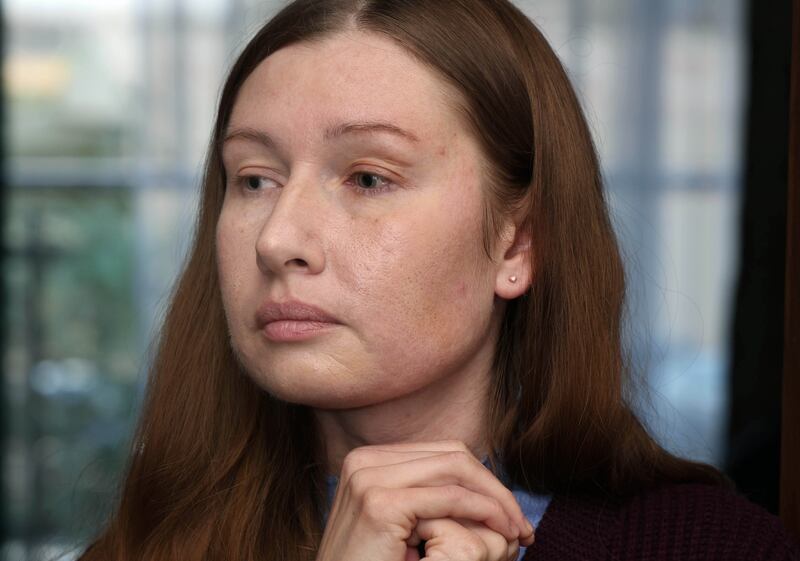
Petrenko said she has provided a written statement confirming she wrote the messages found on her husband’s phone. However, she said this seems to have made little difference in the case to date.
Simbaev, who lived and worked in Ireland for more than 20 years, was arrested by police at Chelyabinsk Airport in west-central Russia last August. He was returning to the country to visit his parents – a trip he made almost annually.
Simbaev was travelling on his Russian passport at the time of his arrest last year.
Petrenko said she did not know why her husband was targeted by police on his trip. She said police searched her husband’s luggage and took his mobile phone.
She said police told Simbaev they were detaining him because of “anti-Russian” content on his phone. She believes this relates to messages she sent him in 2024 in which she expressed anger at Russian authorities over the invasion of Ukraine.
Petrenko said her mother died of a heart attack that she believes was caused by the stress of the war. She said she was very distressed when she sent the messages and regrets doing so.
Petrenko moved to Ireland after the Russian invasion of Ukraine in 2022. The couple met here and married in January 2023. She believes Russian authorities think her husband’s Russian citizenship supersedes his Irish status and, as such, may not co-operate with Irish officials.
Petrenko said her husband has been charged with various offences under Part Two of the criminal code of the Russian Federation. The specific articles – 205, 280 and 330 – refer to “public justification of terrorism”, “public calls for extremist activity” and “arbitrary action committed with the use of violence or the threat of its use”.
If found guilty, he could be jailed for several years or sent to a forced labour camp.
Since the invasion of Ukraine in 2022, there has been a notable increase in prosecutions in Russia for online comments deemed anti-Russian or antigovernment, Amnesty International has said, with many cases resulting in lengthy prison sentences.
Speaking about the case last December, McEntee confirmed officials were “providing consular assistance to this individual who holds dual Irish and Russian citizenship”.
“As with all consular cases, a dedicated consular officer has been assigned to the family of the Irish citizen who has been detained, and they remain in contact,” she said at the time.
“The consular officer has provided support and advice to the citizen and their family.”


