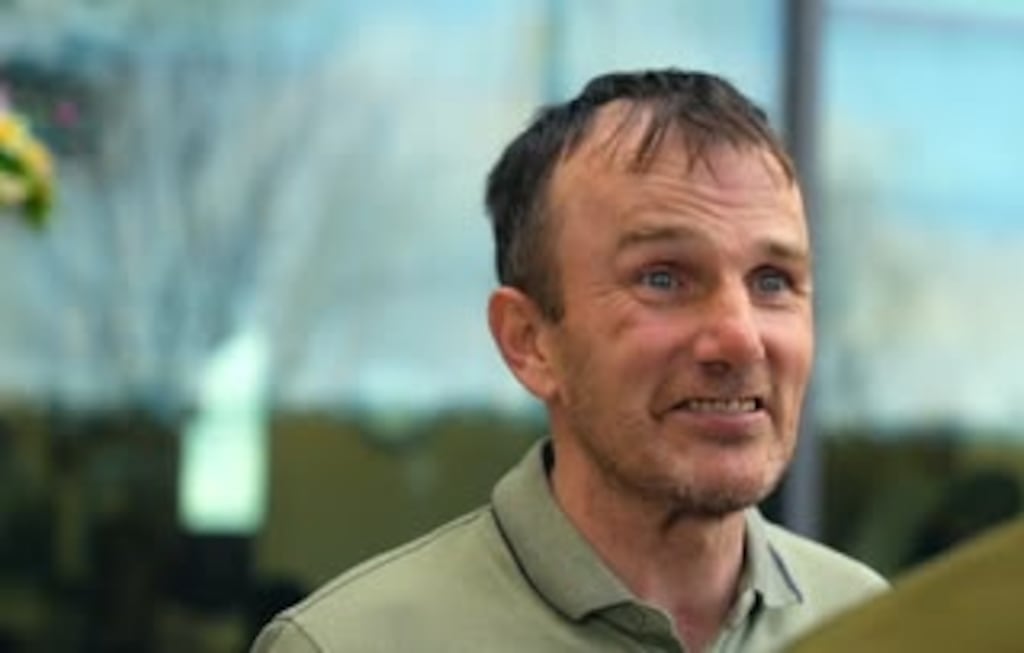
A fall from his bike aged 14 has changed the trajectory of Niall Connor’s life, leaving him with a permanent brain injury. Now, the Dundalk man is the face of a new road safety campaign encouraging cyclists to wear a helmet.
Connor (45) was cycling home, lost control on a downhill stretch and collided with a wall, he told The Irish Times. He was not wearing a helmet that day, falling into a 10-day coma and suffering a significant brain injury.
“I had my whole life in front of me up until that day,” he said. “One fall from a bike without a helmet changed my life forever.”
“I have lived with this brain injury for 30 years. If I could turn back time, I’d wear a helmet.”
READ MORE


The fall which “changed everything” for Niall Connor has impeded his speech and left him with lifelong physical impairments in his arms and along his left side.
“Big time,” he said, when asked if cyclists and young people lack an understanding of the consequences they face from failing to wear a helmet.
“We can’t stop kids being fearless, but we can protect them. We only get one life, protect it.”
He said it is crucial that people wear their helmets: “Everybody has only one life. Be safe on the road, wear a helmet if you’re cycling, including you.”
Under Irish law, although wearing one is strongly recommended, adult cyclists are not legally required to wear a helmet. Connor believes that should be changed.
“It should be a law now that you must wear a helmet, especially on e-scooters and e-bikes,” he said.
In recent years, Connor has become a campaigner for safer cycling, bringing his advocacy to Leinster House and meeting the Minister of State for Road Safety, Seán Canney.

Canney said the story is a “powerful reminder that the decisions we make on the road can have lifelong consequences” and that he was “very moved by [Connor’s] story and his willingness to take part in this very important campaign”.
Nuala Carey, RSA director for external affairs, said Connor’s experience is a “powerful reminder that a split-second moment can change a life forever, even when the moment that causes it lasts only seconds.”
She said personal stories “can reach people in a way statistics never will”.
In 2026 to date, 12 of the 143 people who died on Irish roads were cyclists with a further four being e-scooter or e-bike riders.
With three months left in the year, this figure is ahead of the five-year average from 2020. During that period, an average of 9 cyclists were killed and an average of 256 cyclists were seriously injured each year.
Men made up 87 per cent of deaths during those five years, and 78 per cent of those seriously injured.
Connor’s experience is also included in a report by Rehab Group, an Irish voluntary organisation supporting disabled people, which has identified serious issues with the accessibility and affordability of public transport.
While fleets have been made affordable, the infrastructure is lagging behind, the report found, with many stops in regional areas not enabling wheelchairs to board buses.
The impact, Rehab Group said, is that people with disabilities are prevented from working, accessing education and taking part in community life because of the inaccessibility and unreliability of the transport network.
[ Under-18s banned from using e-scootersOpens in new window ]