I was 32 when I was diagnosed with ADHD (Attention Deficit Hyperactivity Disorder). Though it was a relief, I cried for an entire week after the assessment process.
But once I started to process the initial grief and shock, my whole world started to change.
After accessing ADHD coaching for myself, I felt so inspired and understood that I formed a new career as an ADHD coach so I could help others like me.
When I was initially referred, I held the stereotypical belief that someone with ADHD was the physically hyperactive “naughty little boy” running around the classroom.
READ MORE


I certainly wasn’t like that.
I have a constant barrage of thoughts, and I simply cannot relax in the traditional sense. When I later learned about cognitive hyperactivity in ADHD, I realised where my hyperactivity manifested. This is just one reason why so many women are receiving a delayed ADHD diagnosis as adults – it is complex and multifaceted.
I was a quiet and curious child, an observer. I spent my time in my room, drawing, making up stories and playing with my toy animals. When I started school, I was excited to learn and develop my curiosity. But school was hard – sitting down and listening all day, following instructions and doing homework. I would come home and burst into tears the minute I made it through the front door and hide in my room, not understanding why it was all so overwhelming.

The school reports started to form common themes. “Ailín is a very clever, curious child, but she is disorganised, forgetful, and could apply herself more.”
In later years, these reports included, “distracted, doesn’t complete homework, loses belongings, does not listen”.
[ Up to 90% of adults with ADHD have diagnosis for separate condition, says GPOpens in new window ]
Eventually, I got to secondary school, the homework got longer, the expectations higher, and the struggle to organise myself intensified. No matter how much I tried, I would still miss the memo that everyone else seemed to get. My self-talk included phrases like, “I’m stupid and lazy, I don’t fit in. I’m unlikeable and unworthy.”
But I really wanted to fit in, I wanted to do well, I wanted to go to college and dreamed of having a good life. Why did I feel so different from everyone around me? I would notice the girls and women around me turning up to school and college effortlessly, their make-up and hair done perfectly, looking like they’d slept for eight hours when I was tossing and turning, and they even managed to do their homework, too?! How did they manage their lives so well?
I was lucky in that I was musical. Music saved me and granted me a “creative licence” to be disorganised, eccentric and sensitive, and I worked as a singer and musician through college. The years went by and my mental health deteriorated. I sought help and was diagnosed with various mental health conditions that never told the whole story.
I also recall being a teenager with very painful, irregular periods that affected my mood swings. But that was “normal” as a woman! “Take some Ponstan, evening primrose oil, hug a hot water bottle, take the pill, sure you’ll be grand!”

Hormones have a significant impact on our neurotransmitters, specifically the relationship between oestrogen and dopamine. In the luteal phase of the menstrual cycle, the 7-10 days before your period starts, there’s a drop in oestrogen and an increase in progesterone. This can cause a disruption in executive functioning where ADHD symptoms can worsen and you may experience more brain fog, tiredness, lower moods, less motivation, and disorganisation. This is why premenstrual syndrome (PMS) and premenstrual dysphoric disorder (PMDD) frequently occur in women with ADHD. Additionally, perimenopause and menopause can contribute to a delayed diagnosis of ADHD as these hormonal changes can significantly exacerbate ADHD symptoms.
We try and hide the traits that we feel aren’t considered normal or acceptable by masking. As kids, girls are socialised differently to boys. Boys seem to enjoy more freedom than girls to express themselves loudly and disregard rules. If girls don’t follow the rules or speak up, they are frequently labelled as “bitches” or “rude” and often outcast. Countless ADHD girls learn from an early age to mask to survive, but it carries a significant cost – it’s exhausting, and often leads to people-pleasing tendencies, low-self esteem and a loss of identity.
[ ‘What am I doing?’ Adults with ADHD reveal struggles with addictionOpens in new window ]
The roles we see in the women around us, our mums and grandmothers, the expectation to do everything but also be less ambitious, less opinionated and take up less space. Often it’s the woman’s job to write the birthday cards, buy the Christmas presents, and look after the entire household. Through my work, the women I see who are late-diagnosed can share similarities. They are often doing too much but feeling overwhelmed, burdened by shame about feeling behind their peers, and blaming themselves for perceived personal failures. These women are incredibly determined, but it can be hard for them to see that.
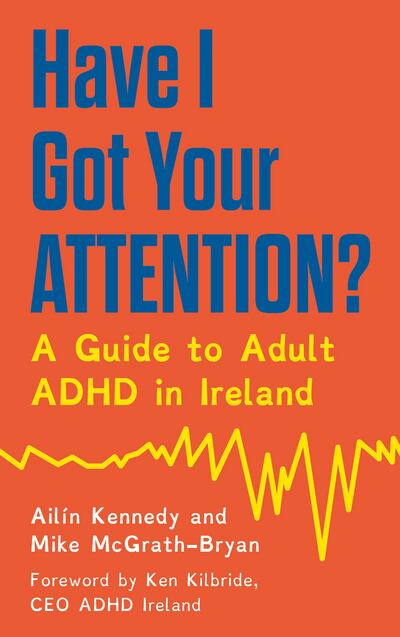
Other similar themes include the aforementioned PMS, PMDD, sometimes postnatal depression, overwhelm as a parent, impostor syndrome and trying to spin 13 plates with two hands.
Many of my clients are seen by the people around them as “really organised” and “together” but they don’t really see the tremendous effort they have to put in, and the overly dysregulated woman at the end of the day. The guilt they feel when they lose their patience, when they snap due to sensory overload. Still, these women want to please others, do it all, and find it hard to slow down even when they know burnout is approaching.
Another theme I see is perfectionism. Women with ADHD are particularly self-critical and hard on themselves. Many of my clients are surprised when I point out that they are perfectionists.
“Are you joking?! I’m a mess! Far from perfect!”
“But you’re also telling me that you are frustrated that you’re not meeting the impossible standards you have set?”
“Yes, I’m trying to compromise for my flaws. I have to try harder.”
I often have to grant them “permission” to take their foot off the pedal of the pressure they feel, and help them see that it’s okay to do the same for themselves.
Recognising these patterns and unrealistic expectations as a late-diagnosed ADHD woman can help you to alleviate that shame and pressure, and start establishing accommodations for yourself to feel more in control and meet your needs.