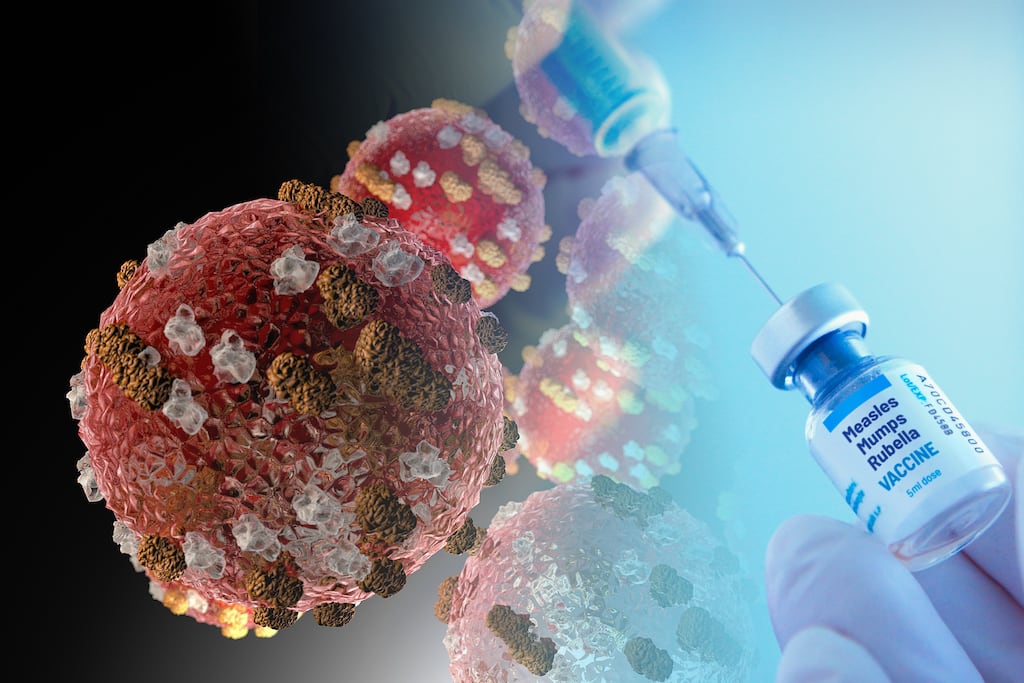
Uptake of the measles jab has been “lower than anticipated”, despite efforts to increase vaccine coverage in light of the “rising threat” of the disease worldwide, the infectious disease watchdog has said.
The measles national incident management team (NIMT) was established in 2024 due to a significant increase in measles across the European Union and United Kingdom, combined with suboptimal measles, mumps and rubella (MMR) vaccination coverage in Ireland.
The Republic achieved measles elimination status in 2017, but vaccination coverage has remained below the World Health Organisation target of 95 per cent. The national MMR1 uptake at 24 months was 87.6 per cent in the second quarter of 2025.
The NIMT met throughout 2024 and 2025 to tackle the challenge, before being stood down in May this year.
READ MORE


In an update on maintaining the State’s elimination status, the Health Protection Surveillance Centre (HPSC) acknowledged steps taken by health officials to combat the threat of the disease, including the MMR catch-up campaign.
“From February to September 2024, more than 11,500 MMR vaccine doses were administered through GP practices and HSE vaccination clinics,” the watchdog said.
“HSE vaccination teams delivered a large number of clinics nationwide, including outreach services for colleges and universities, underserved communities and areas with lower vaccine uptake.”
The body also acknowledged the “substantial” communication campaign which “reached millions of people”.
“Despite these efforts, vaccine uptake remained lower than anticipated,” it concluded.
The HPSC said the management team also highlighted “several challenges” encountered during the response.
These included “limitations” in public health staffing, particularly out of hours, difficulties with complex contact tracing and “inconsistent availability” of preventive treatment pathways for vulnerable individuals who come into contact with measles.
“The absence of a national immunisation information system and outbreak case and management system, both in development, were also noted as additional challenges,” the HPSC said.
The watchdog said there were a number of key recommendations, including continuing public awareness campaigns, establishing permanent vaccination and surge response capacity, and ensuring “robust” national pathways for diagnostics, contact tracing and treatment.
“Sustained vigilance, continued efforts to improve MMR vaccine uptake, and cross-sectoral collaboration remain essential to prevent future measles outbreaks in Ireland.”
[ The urgent need to combat vaccine hesitancy in Ireland and abroadOpens in new window ]
Between January 2024 and December 2025, 258 measles cases were notified in Ireland, including 232 confirmed, 25 probable, and one possible case.
There were 40 outbreaks involving 173 cases, with cases occurring across all HSE regions.
Fifty-two cases required hospitalisation, five developed pneumonia, one case developed meningitis, and one death occurred. Children and young people were disproportionately affected, with the highest incidence observed among infants and preschool children.
Case numbers and outbreaks had reduced considerably by mid-2025, with only two cases notified in the second half of 2025.


