On a warm August day, Kieran Harnett’s home honeybee apiary in south Dublin is abuzz with activity.
Harnett has been beekeeping for 20 years but explains he became serious about apiculture – as it’s formally known – during Covid lockdown when his work dwindled almost overnight.
“The beekeeping saved me,” he says of this period when he was kept busy tending to his hives.
Harnett now manages hives all around Dublin. That task has been more strenuous this summer following one of the hottest, driest and sunniest Julys on record.
READ MORE


The drought situation that July brought to most of the country means that Harnett’s bees are not collecting as much pollen as usual.
He says the bees typically gather less pollen in August, but this has been worsened by the lack of rainfall as plants have struggled to produce pollen and nectar. “If they’ve no moisture in the ground, they (plants) shrivel up,” Harnett explains.
The Dublin native can gauge how much pollen his bees collect by watching the entrances to the hives, where honeybees can be spotted with their pollen baskets.
“If you look at the entrance to the hives, there’s hardly any coming in [with full baskets],” he says. Pollen is vital for the bees as it provides them with the protein needed to reproduce.

Despite the challenges faced, the warm weather is delivering an excellent honey crop. This harvest is the “best year ever in 20 years”, according to Harnett.
He typically harvests his spring and summer crops at the same time in August and says the hot spells mean both crops are excellent.
“Normally you’d get a great spring crop and not a great summer crop or vice versa. But this year we got both because the weather kept getting better and better,” he says.
Harnett explains that the wet spring contributed to this harvest as it meant moisture stayed in the ground for a long time even when the weather was hot.
To combat the dry conditions in July and since, he ensures there is a readily available water source nearby for the bees to drink from.
“I’ve a couple of garden ponds that I’ve let go really overgrown so that the bees can land on the vegetation and drink,” he says.
As bees are prone to drowning, Harnett says people who want to help should provide a basin of water containing sticks or straw. This will allow the bees to land on something while they drink.
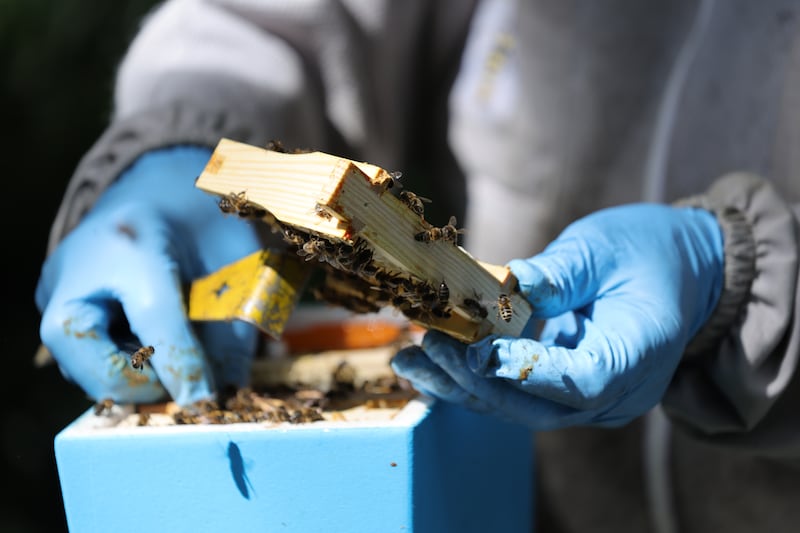
Honeybees also need water for hive cooling as well as drinking. The beekeeper says the temperature in the hive needs to remain at about 34 degrees. The bees collect water and spread it on the combs. It then evaporates and cools the hive.
“If it gets too hot, they start diverting foraging bees to water-collecting, so they stop collecting pollen and nectar because they have to collect water ... Then, obviously, they stop producing honey and they start getting hungry and quite stressed.”
Deep-rooted plants that are drought tolerant also help honeybees stay hydrated in hot weather. Harnett encourages people to plant deep-rooted vegetation as “in a drought, all the shallow-rooted plants stop producing nectar”.
In his own garden, he plants trees that have deep roots and produce nectar at this time of the year, even when it is hot and dry.
Harnett works with the Dublin Beekeepers’ Association (DBA), which runs a beginners’ course in beekeeping every year. The DBA’s annual honey show is scheduled for the first weekend of November in Taney Parish Centre in Dundrum, south Dublin.
He encourages anyone interested in beekeeping to participate in a course from their local association.


