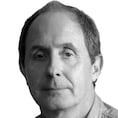
Eddie Henderson has played many of the world’s most famous concert halls and jazz clubs. The 85-year-old trumpet and flugelhorn maestro has appeared at Jazz at Lincoln Center, in New York, and Ronnie Scott’s, in London, as well as at leading jazz festivals, from Newport to the North Sea.
The last time he was on stage in Ireland, however, in 2023, Henderson performed in front of just 40 people – in a converted calf shed in rural Co Down. “Oh, that gig really stands out in my memory,” he says from his home in Mamaroneck, a suburban town just north of New York City.
The venue was Magy’s Farm, an intimate performance space at the home of the trumpeter Linley Hamilton and the author Maggie Doyle.
“I thought I was going to be playing in a big city club or something, but we just kept going farther and farther out into the countryside – I didn’t know where the hell I was,” Henderson says. “But the reception I got was so heartwarming, everybody was so attentive to the music, and Linley sat in with our band – he sounded wonderful and was so personable. It was all a really pleasant surprise.”
READ MORE


Next month Henderson returns to Ireland to play a more conventional room: the auditorium of Mermaid Arts Centre in Bray, as part of the Co Wicklow town’s international jazz festival. He is bringing his Miles Legacy project, which this year marks the centenary of the birth of the revered trumpeter and bandleader Miles Davis, who died in 1991 but remains Henderson’s foremost musical role model.
It’s a headline concert that will build both on Henderson’s long-standing commitment to performing and interpreting Davis’s music and on his personal connection to one of the most creative forces in 20th-century music – Henderson first met Davis in 1957, when he was 17. There is also a sense that, as a respected elder, Henderson is a living embodiment of jazz, that, to borrow from the title of his most recent album, he has been a remarkable “witness to history”.
Henderson was born in New York City in 1940 to parents who were both, he says, “in the show business – it’s as if music was in my blood and my life predestined”. His mother, Vivian Brown, danced at the Cotton Club in Harlem and was filmed singing Ain’t Misbehavin’ to its composer, Fats Waller; his father, Edward Jackson, sang with Billy Williams and the Charioteers, the most popular African-American vocal harmony group of the 1940s.
When he was nine Henderson’s mother took him backstage at the Apollo to meet Louis Armstrong. Satchmo showed Henderson his trumpet and taught him how to make a sound on the horn. “I was so young that it didn’t really register with me that it was actually Louis Armstrong showing me this,” he says. “But after that my uncle Lou, who was also a dancer at the Cotton Club, gave me a trumpet, and I started taking private lessons every week and practising every day.”
After only a year he could play Rimsky-Korsakov’s frantic and famously challenging Flight of the Bumblebee – and his mother took her son back to Armstrong to show him. “I remember he screamed and almost fell off his chair,” Henderson says. “Louis gave me a book of his transcribed solos, and he wrote on it, ‘To Little Eddie. This is to warm your chops [lips] up by. You sound beautiful. Keep playing. Love, Satchmo.’ What a jump-start!”
In his teens, though, Henderson also discovered a passion for figure skating. His father died when he was nine, and his mother remarried – to Herbert Henderson, a wealthy doctor in San Francisco, who legally adopted Eddie and changed his surname. Dr Henderson also bought his stepson tickets to the famed Ice Follies skating shows. Both beguiled and determined, he started taking figure-skating lessons and again quickly progressed – despite facing racism in the sport.
“I thought skating was going to be my life, so I wanted to join the San Francisco Figure Skating Club,” he says. “But the president of the club told me he wouldn’t even give me an application form. Eventually I showed them. I became the first black person on this planet to compete in the national figure-skating championships, where I won a bronze medal.”
Meeting Miles Davis steered Henderson definitively back towards music. His stepfather was a doctor to many noted jazz musicians passing through San Francisco, from Duke Ellington to Count Basie and Sarah Vaughan; some, including Davis, would even stay with his mother and Dr Henderson while performing in the city.
“I came home from high school one day and Miles was sitting there, and that night he took me to the Blackhawk, the club where he was playing,” Henderson says. “I’d kept up my trumpet playing; I was having private lessons with the first chair of the San Francisco Symphony. But I’d never really heard jazz, at least not live. Hearing Miles play with a band that included John Coltrane and Cannonball Adderley was like a musical tsunami – overwhelming. That’s when the light went on and I knew music was my real calling.”
In the meantime, encouraged by his stepfather, and following periods in the US air force and studying zoology, Henderson trained to be a doctor. He studied medicine at Howard University, in Washington, DC, maintaining his connection to music by playing in local bands, and driving about 370km each way to New York every weekend to study with the jazz-trumpet giants Freddie Hubbard and Lee Morgan.
Hearing Miles play with a band that included John Coltrane and Cannonball Adderley was like a musical tsunami ... the light went on and I knew music was my real calling
— Eddie Henderson
“I learned discipline at an early age – and that talent without discipline goes nowhere,” he says. “I never missed a class in high school, college or medical school. When I was at Howard I’d go to school from 8am to 5pm, study from 5.15 to 9.15, and then go out to clubs until 2am, to try to play jazz.”
Following graduation, in 1968, Henderson moved back to San Francisco for his medical internship and a residency in psychiatry. Towards the end of that residency, in 1970, his life would change back to music again, when he received an offer to play in one of the most acclaimed groups of the period, Herbie Hancock’s forward-thinking fusion unit Mwandishi.
“I’ve been lucky all my life, in the right place at the right time, and Herbie was coming to San Francisco and he needed a trumpet player for a week,” Henderson says. His liquid and limpid tone, excellent sight-reading skills and prior knowledge of the music meant that Henderson fitted right in; after the week he was offered a permanent place in the band.
Henderson toured and recorded with Hancock for the next 3½ years, playing an essential role in such landmark albums as Crossings and Sextant; he also got to record his first two records as leader with members of the Mwandishi band.
“Herbie was the spirit that opened the door for the rest of my career,” he says. “By virtue of being in Herbie’s group, I then got to play with musicians that I revered – Art Blakey, McCoy Tyner, Joe Henderson, Dexter Gordon and many others.”
In 1975 he qualified as a doctor and, to supplement his music income, began working part-time as a GP. “I practised general medicine four or five hours a day – and played every night,” he says. “It wasn’t like a traditional doctor’s office, though. Most of my patients were from the [hippie] Haight-Ashbury district, and I’d often practise the trumpet in the back room between appointments. The head of the clinic would also let me go off on tours.”
Henderson worked as a doctor for the next 10 years, releasing the quintessential, and subsequently much sampled, late-1970s jazz-funk LPs Comin’ Through and Mahal along the way.
I’d often practise the trumpet in the back room between appointments
— Eddie Henderson
Mahal contained the track Prance On, a classic slice of dance-floor jazz that is a further example of Henderson’s serendipity: some UK DJs mistakenly played it at 45rpm, turning it into an unlikely hit. “It sounded sorry to me, but in the context of a disco, it was right in the pocket,” he has said.
Henderson moved back to New York in 1985 to look after his ailing mother, practised medicine for another couple of years, before committing himself full-time to music.
Since then he has released more than 20 albums as leader – records that fuse Henderson’s consummate postbop lyricism and drive with an overriding sense of clarity and space – and appeared as a sideman on myriad releases by such jazz masters as Kenny Barron, Gary Bartz and Benny Golson.
He has also toured extensively and taught at the Juilliard School, in New York, and, since 2014, at Oberlin College, in Ohio, where he is a professor. Even in his ninth decade, his love and enthusiasm for the music remain undimmed.
For the past 20 years or more Henderson has also been a member of swinging supergroup The Cookers, a septet of veteran jazz stars that includes the tenor saxophonist Billy Harper, the pianist George Cables and the drummer Billy Hart. The group made international news at the end of 2025 when they pulled out of a high-profile New Year’s Eve concert at the controversially renamed Trump Kennedy Center in Washington.
“After Trump attached his name to the centre I called the Cookers’ straw boss, David Weiss, the other trumpet player in the band, and I told him, ‘Get somebody else – I’m not going to do it under those circumstances’,” he says. “Because my moral integrity and dignity are worth far more to me than a $4,500 fee. After that, it was like a domino effect: eventually everybody in the band decided collectively to just bail out.”
The band Henderson is bringing to Bray has been specially selected to honour the music of Miles Davis, especially his classic quintets of the 1950s and 1960s – and convey a whole lot more. (For one thing, the group contains the versatile jazz and funk drummer Mike Clark, who was a member of Hancock’s legendary mid-1970s fusion-and-beyond group Headhunters.) I ask Henderson why he is always drawn back to Miles.
“Well, he was a complex person, and unpredictable – that’s a mild word for him,” he replies, smiling. “But that’s how his music was too. Miles was always trying to change, to knock down frontiers and open up new pathways of playing. And I learned a lot from him: always reinvent yourself; never rest on your laurels; emulate, not imitate. You know, I’m still trying to follow in his footsteps.”
Eddie Henderson plays Bray International Jazz Festival on Sunday, May 3rd
Bray International Jazz Festival: Solid Silver
Bray International Jazz Festival celebrates its 25th anniversary this bank holiday weekend, from May 1st to 3rd, with a characteristically diverse and adventurous programme of inspirational music from Ireland and abroad.
International headliners include three pianists: the lithe and lyrical American virtuoso Fred Hersch; the Cuban innovator Roberto Fonseca, with his powerhouse ensemble La Gran Diversión; and, also from Cuba, the highly gifted Harold López-Nussa, whose Blue Note album Nueva Timba was one of the finest Latin releases of 2025. Also appearing are the London-based Ukrainian harpist Alina Bzhezhinska and her HipHarpCollective, the offbeat French singer Leïla Martial and the Mongolian folk-jazz vocalist Enji.
Irish musicians, as in previous years, are also very much to the fore – sometimes supporting the main acts, at other times playing the new late-night venue Duff’s or the popular (and free) Harbour Bar. Highlights include the great guitarist Tommy Halferty with a top-tier quartet; the improvising vocalist Jenna Harris and her Dublin trio Berri; the highly interactive piano trio Origin Story; and Yurodny, a much-admired ensemble that “throws open the borders between jazz, Balkan groove and Eastern-European folk”.