A former attorney general’s legal challenge to the planning approval granted for a long-delayed bypass road in Co Meath has been dismissed by the High Court.
John Rogers, a senior counsel, argued that An Coimisiún Pleanála (ACP) did not have access to sufficient expertise required to examine certain environmental impacts of the proposed N2 bypass at Slane when it granted permission to Meath County Council for the development.
In a judgment on Tuesday, Judge David Nolan said he had “serious doubts” as to whether the commission had the expertise to deal with “important issues” raised by Rogers’s case.
However, he found Rogers’s case had not proven “on an evidential basis” a lack of expertise on the part of the commission.
READ MORE


In the circumstances, the judge found “without much enthusiasm” that Rogers had not discharged the required burden of proof. He dismissed the case.
Rogers, of Crewbane, Slane, argued that the proposed bypass would impact his lands.
In an affidavit, he submitted that petrifying streams in his lands would be particularly affected by the development. Crewbane marsh floods a number of times a year and the commission had not obtained expert hydrology advice about the impact of proposed deep trenching for the proposed route, he said.
[ Former attorney general to challenge Slane bypass planning approval in High CourtOpens in new window ]
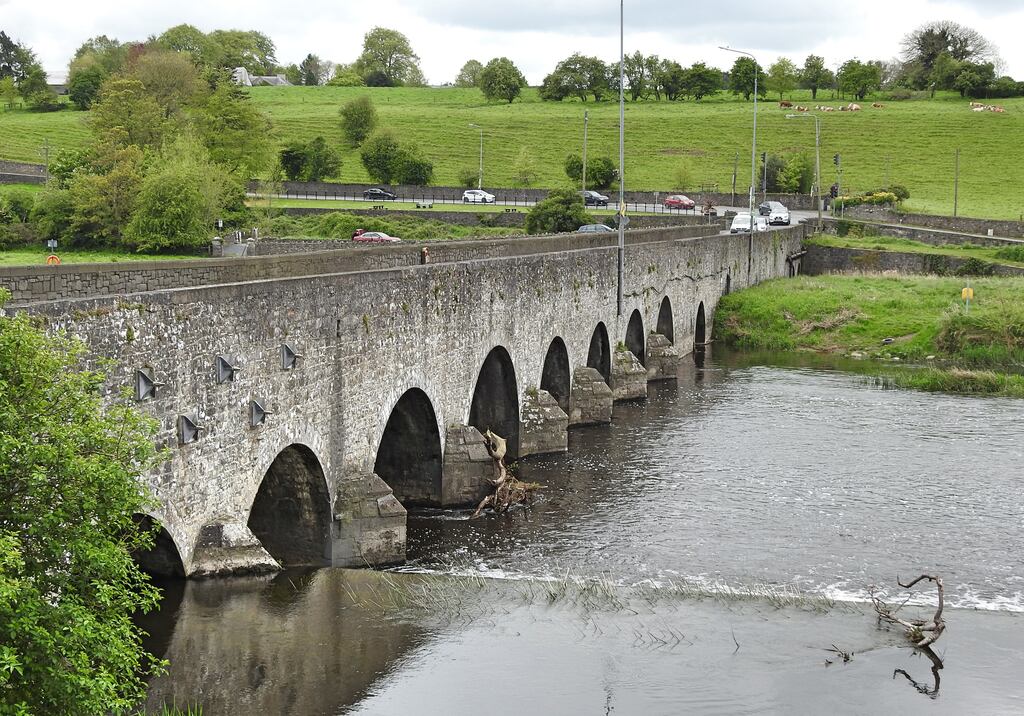
The road project would involve the construction of a 3.5km-long bypass around Slane village, and include a dual carriageway and a 258m-long bridge over the river Boyne.
The project would run adjacent to the Unesco Brú na Bóinne World Heritage Site of Outstanding Natural Value, which includes the Neolithic passage tomb at Newgrange.
In his judgment, Nolan identified the central issues in the case as Rogers’s assertion that the commission did not have sufficient expertise available to it to examine an environmental impact assessment report (EIA) filed as part of the council’s planning application. The onus of proof lay with the Rogers side, the judge said.
The judge noted that Rogers’s case did not demonstrate how the alleged lack of expertise undermined the EIA, or identify a defect in the EIA which the commission ought to have detected.
However, the judge said it was clear Rogers’s case was critical of issues relating to “the potential effect of water flows and the location of bridges crossing the Boyne”.
The judge also said it was notable that neither the commission nor the council had engaged with the substance of Rogers’s case. However, he ultimately found that Rogers’s case did not discharge the burden of proof required.
“While [Rogers’s] assertions carry some weight, assertion alone is insufficient. Recent decisions of the court make clear that where an alleged error turns on expert opinion, it must be substantiated by expert evidence,” the judge said.
“The [Rogers side] cannot simply contend, as he does here, that the commission lacked the requisite expertise ... That falls short of what is required.”


