An executive who was told he was being dismissed by video call just days before his one-year anniversary at work has won €180,000, in the largest award for unfair dismissal so far in 2025.
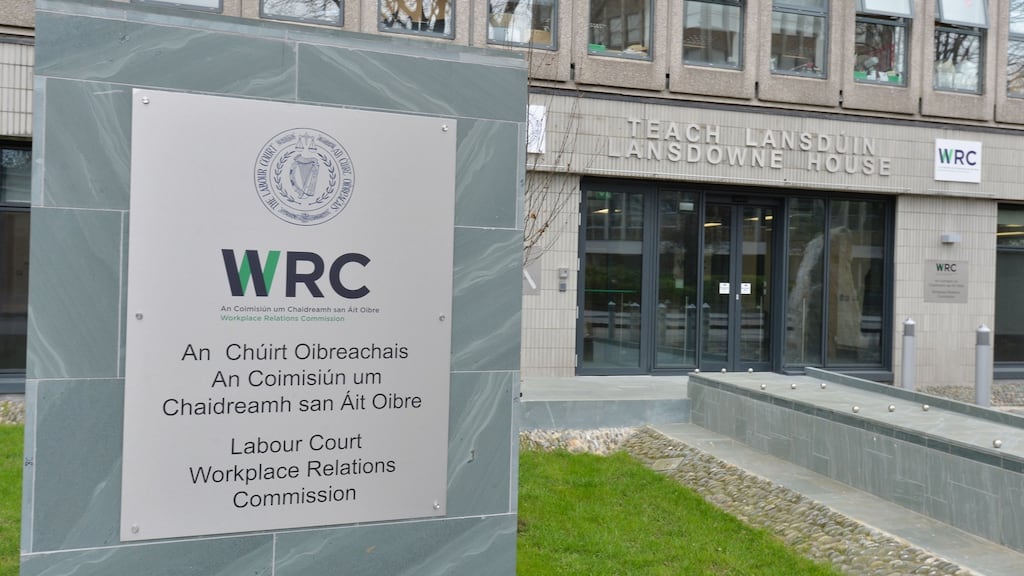
The Workplace Relations Commission (WRC) awarded the redress for loss of earnings on foot of a complaint by David Haran against HED Unity Limited, under the Unfair Dismissals Act 1977.
At a hearing last month, Mr Haran told the tribunal he joined the company on 19th April, 2021, as chief of staff on a salary of €160,000, but was told by his bosses he was being dismissed on 14th April, 2022, while he was out on sick leave.
He told the WRC he took a video call that day with Liliane Huguet, the company’s chief executive, and Tim Degraye, one of its directors, in which he was informed that his dismissal was on a “no-fault basis”.
READ MORE


Only four months earlier, Mr Haran told the commission, Ms Huguet had confirmed to him he would be receiving an €80,000 bonus, 50 per cent of his annual salary.
The tribunal heard it was the top rate of bonus payable under a contract of employment exhibited by Mr Haran’s solicitor, Simon Deane of Joseph T Deane & Associates.
The contract also provided for private healthcare, an employer pension contribution matching scheme worth up to 10% of salary, and a grant of 1 per cent equity on commencement.
The copy presented in evidence was signed only by Mr Haran, and not by his employer, the tribunal noted.
Mr Haran’s dismissal letter had been given to him five days short of his one-year work anniversary in work, the usual qualifying period for the protection of the Unfair Dismissals Act.
However, adjudicator Michael MacNamee ruled that since the complainant didn’t get the full pay he was due in lieu of three months’ contractual notice, the worker’s service for the purpose of the act was extended by three months to July 14th, 2022.
Mr Haran was left out of work for six weeks until taking up new work at €85,000 a year in September that year, the tribunal heard.
The adjudicator noted the company did not attend a hearing last month and as it provided “no evidence ... purporting to justify the dismissal”, he accepted Mr Haran’s “uncontroverted” testimony.
The dismissal was both “unfair” and “unlawful”, Mr MacNamee wrote, as he upheld the complaint, awarding €180,000.
In setting redress, Mr MacNamee noted that the complainant had made “reasonable” efforts to reduce his losses from the dismissal, but had been unable to find work at the same pay he had with HET Unity.
Mr Haran was down more than €1,400 a week and had “in theory” sustained losses of more than €250,000 up to last month, he noted.
However, Mr MacNamee wrote that the company seemed to have ceased trading and that the €160,000-a-year salary Mr Haran had been receiving “may have been unaffordable” for the firm all along.
While there was a bonus “promised” and equity “discussed”, there was “no evidence that any of these alleged entitlements were actually paid”, so they could not be included in the calculation of Mr Haran’s remuneration, he wrote.


