For Jason Arday, it has been a breathtaking climb to the top of the ivory tower. Raised in south London by Ghanaian immigrant parents, Arday says he was diagnosed with autism at age three, was non-verbal until he was nearly 12 and couldn’t read or write until he was 18. He went on to get his doctorate in education, and claims to have had to relearn the contents of his dissertation weeks before defending it after losing his memory following the removal of a benign brain tumour.
In 2023, when he was 37, Arday became the youngest black professor at the University of Cambridge in its history. That appointment, trumpeted by Cambridge, inspired a spate of glowing media coverage on both sides of the Atlantic highlighting his dramatic life story, including his claims to have once run 30 marathons in 35 days to raise millions of pounds for charity.
Arday has also told the press that his academic successes brought darker attention, including the delivery of a severed pig’s head to his parents’ home and repeated visits to his office by a masked intruder, once while wielding a knife.
Next week, Simon & Schuster is due to publish Arday’s memoir, Great and Unfortunate Things, under its 37 Ink imprint. In the lead-up to the book’s publication, Arday has found his academic integrity and claims about his biography increasingly under fire.
READ MORE


Concerns about some of Arday’s work had circulated quietly in scholarly circles since the appointment at Cambridge catapulted him to academic celebrity. But they exploded into public view late last month, after a scholar known for racist views about intelligence published a lengthy article in his newsletter questioning parts of Arday’s remarkable personal story and levelling extensive charges of plagiarism against him.
The accusations quickly drew widespread media coverage in Britain, which initially broke down along familiar culture-war lines. To the right-wing media, Arday was a “diversity poster boy.” To supporters, including prominent academics and politicians who signed a petition of support that quickly drew thousands of signatures, he was the victim of a racist smear campaign.
But last weekend, as questions about his work and personal story continued to mount, a different debate emerged. Was Arday a victim of a campaign to discredit black scholars? A fabulist whose tales of extreme adversity the academic establishment deemed too good to check? Or both?
Initially, Arday’s publisher and university stuck by him, even as the media kept surfacing other questionable assertions – such as an apparent claim in a 2022 interview that he had been part of the British documentary series that included the film Seven Up!, which began before he was born.
But on Wednesday, Cambridge announced it was opening an investigation, citing “new information about Professor Arday’s academic qualifications and honorary appointments”. It also acknowledged that “separately, there remains a number of ongoing complaints regarding academic misconduct,” which it said were being handled in line with its research policies.

“While we are fully aware of the public commentary and concerns around this matter, it remains vital that any process is thorough and adheres to both university policies and employment law,” the statement continued. “We also fully recognise that there is a person at the centre of this situation, and we continue to provide support to him.”
On Wednesday night, Arday resigned from the same institution that in 2023 celebrated him as the youngest black professor in its history.
“I no longer wish to feel as though I am living under a constant spotlight, where every aspect of my life is subject to public examination and judgment,” Arday wrote in a statement.
A representative of Simon & Schuster, which has so far stood by the book, said on Wednesday that the publisher had no comment beyond the statement about Arday it released last week, citing “the professionalism and integrity he has brought to every stage of the publication”.
The initial public charges made against Arday last month came from Nathan Cofnas, a postdoctoral researcher at Ghent University in Belgium who had previously been disciplined during his time as a fellow at Emmanuel College, Cambridge, after an outcry over a 2024 blog post in which he argued that in a meritocracy the number of black professors at Harvard University “would approach zero per cent”. (Cambridge concluded in an investigation that his writing did not violate the law or “contravene university regulations designed to uphold free speech.” Cofnas sued Emmanuel College for unlawful viewpoint discrimination, and lost.)
In his newsletter, Cofnas published dozens of excerpts from Arday’s 2015 doctoral dissertation that had been flagged by plagiarism detection software, presenting them side by side with passages from a 2009 dissertation by another scholar. The passages from Arday’s dissertation appeared to copy verbatim, or only lightly paraphrase, the other scholar’s work.
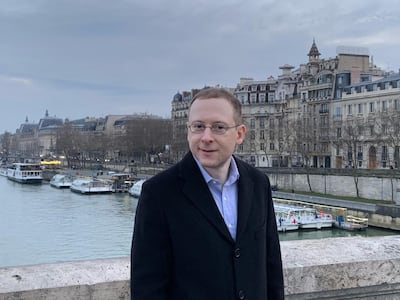
Cofnas asserted that Cambridge had tried to cover up and quash criticism of Arday’s academic record and also questioned the veracity of details of Arday’s life story, including his claim to have once run 30 marathons in 35 days.
Retraction Watch, an online publication that covers academic misconduct and research ethics, then weighed in with an article describing criticisms of Arday’s scholarship that scholars began raising privately in 2023. The corrections subsequently appended to some of Arday’s published work, the article claimed, did not fully acknowledge the extent of the changes made.
And over the weekend, British news outlets, including some that previously ran admiring coverage of Arday, raised fresh questions about possible anomalies in his published work and unsupported elements of his personal story, including his claims about the pig’s head and the masked intruder.
Arday’s supporters have said he is a victim of racially motivated attacks. A petition in support of Arday organised by the Good Law Project, a progressive non-profit, has drawn nearly 16,000 signatures, including from prominent figures such as Simon Baron-Cohen, who is the director of the Autism Research Center at the University of Cambridge, and five members of parliament from the Labour Party.
The petition calls the allegations of plagiarism against Arday “entirely false,” and part of a broader “attempt to undermine black people who hold positions of influence”.
Cambridge has said allegations of plagiarism in Arday’s thesis and some of his journal publications had already been investigated by Liverpool John Moores University and the journals.
In a statement, Liverpool John Moores University, where Arday earned a doctorate in education, said it received allegations of academic misconduct against Arday in September. “A confidential procedure was conducted in response to those allegations and Professor Arday’s PhD. still stands,” it said.
But some scholars who have independently examined Arday’s research and citations say they are seeking to uphold academic standards, and that the investigations and corrections so far have not been adequate.
John Preston, an emeritus professor of sociology at the University of Essex who has conducted research on the sociology of education and race, said in an interview he believed there were legitimate flaws that warranted attention and correction.
“The central question of similarities in the text cannot be excused as ‘a right-wing hit job’. There is a case to answer,” he said. “As academics we have a wider duty to standards, our field of study and the next generation of students. That means admitting if we get it wrong and doing the right thing.”
Martyn Hammersley, an emeritus professor of educational and social research at the Open University in Britain and an expert on research methodology, contacted Cambridge in 2023 with questions about what he said was significant plagiarism in some of Arday’s work. In an interview with The New York Times last week, he lamented that the political and racially charged debate has overshadowed important questions about academic rigour.
“We now have a public scandal in which right and left confront one another, so that there is not much space for sensible discussion of the issues,” he said.
The allegations against Arday come amid broader concerns about the ways accusations of plagiarism are being weaponised, particularly as widely available plagiarism-detection software makes possible infractions easier to identify.
In late 2023, conservative news outlets highlighted plagiarism allegations against Claudine Gay, the president of Harvard. The university then announced that it had identified several instances of “duplicative language without appropriate attribution” in her scholarly work, which would be corrected.

Gay, a political scientist and Harvard’s first black president, resigned soon after, calling the campaign against her, which she said was driven in part by “racial animus”, an effort to undermine the university. After Gay’s resignation, one of her chief critics, conservative activist Christopher Rufo, began highlighting what he said was plagiarism in the scholarly work of several black women employed by Harvard.
At the time, some observers saw a targeted effort to discredit the work of black scholars, particularly those whose work focused on race and diversity.
Arday’s work, according to his website, focuses on race, education, neurodiversity and mental health. His 2025 book We See Things They’ll Never See, written with Chantelle Jessica Lewis and published by Princeton University Press, challenged “neurotypical hegemony” in the educational system and in society at large.
In a 2023 interview with the BBC, Arday spoke about his first exposures to the rigours of scholarly research as a new graduate student who had learned to read and write only a few years earlier.
“Everything I submitted got violently rejected,” he said. “The peer review process was so cruel, it was almost funny, but I treated it as a learning experience and, perversely, began to enjoy it.”
The imminent publication of Great and Unfortunate Things, meanwhile, has put a spotlight on Arday’s scholarship and biographical assertions, including his claim to have once run 30 marathons in 35 days while raising as much as £5.5 million (€6.4 million) for charity and that he was visited twice at his office by a masked intruder, once while wielding a knife.

Arday has attempted to clarify or defend many of his claims. But at times his responses have added to the controversy.
He has said previously that mistakes in his early work were the result of his autism and inadequate supervision from professors, and that the current accusations of plagiarism are part of a racist smear campaign.
In an interview with The Times of London published last Friday, Arday appeared to acknowledge some errors in his early work, but in part blamed his autism and what he said was insufficient support from academic advisers. And he said he was the victim of a long-running “dark arts” campaign to oust him from Cambridge.
As for his personal life, he said he “had no reason to lie or fabricate” and reiterated that he was the victim of “a wider campaign, motivated by racism, to discredit me in every single way possible”.
“There is a well-documented playbook for discrediting black academics in high-profile positions, and it’s been used to devastating effect in the US and now with me in the UK,” he said in the statement. “My greatest hope is that what is happening to me now will serve to further expose these actors and forces.”
In his note of resignation on Wednesday, he did not acknowledge any wrongdoing, and reiterated his belief that much of the criticism was unfair.
“While criticism is an inevitable part of academic life, what I have experienced has gone far beyond scholarly disagreement,” he wrote. “The relentless accusations, speculation and public commentary have taken a profound toll on me and on those I love.”
– This article originally appeared in The New York Times.
2026 The New York Times Company


