Syrian refugees in Lebanon say they are facing “unbearable” suffering, with 62 still waiting to travel more than three years after hundreds were promised resettlement to Ireland.
Taoiseach Micheál Martin visited Lebanon this weekend, where he did not meet any of them, but said he was aware of their plight and “certainly we will do everything we can to accelerate” their resettlement.
In November 2022, around 375 Syrian refugees in Lebanon were approved by an Irish delegation for travel to Ireland, and given a document saying they could expect to relocate by the end of 2023.
Last year, The Irish Times reported on how hundreds put their lives on hold following this news, but only four families travelled by October 2024. By then, many of those affected had been displaced again by the war between Israel and Lebanese militant group Hizbullah.
READ MORE


One three-year-old girl died waiting, with her parents – who lived in a camp – saying they believe she might have survived if the family travelled to Ireland earlier and she had received adequate medical care.
Of the 62 who still have not travelled, 42 are supposed to travel under a community sponsorship programme and 20 under a standard resettlement programme, a spokesperson for the Department of Justice, Home Affairs and Migration said. Refugee resettlement is aimed at giving some of the world’s most vulnerable people a new start in a safe place.
While Bashar al-Assad’s regime fell in neighbouring Syria last year, the country remains devastated by nearly 14 years of war. There have been outbreaks of sectarian violence since then, and the future remains uncertain. The Syrians The Irish Times spoke to say their homes were destroyed and they have nothing to return to.
In Lebanon, they are frightened that Israel will increase attacks, after a deadline for Hizbullah to disarm passes. They say travelling to Ireland is their only chance at a secure future for them and their children.
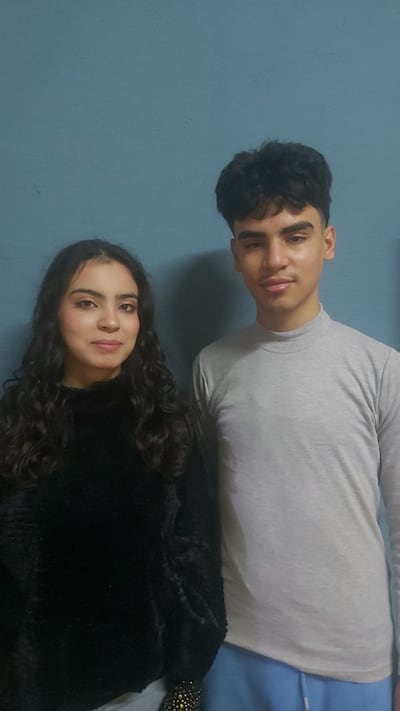
Among those waiting is Khetam Sorour (43), her husband and three children, aged between 17 and 8 years old. The family has undergone two medical examinations, which normally precede travel, but nothing happened afterwards, she said.
“My family and I are still suffering. We are so tired,” she said. “Life has completely stopped for us.”
She said they face discrimination and harassment because they are Syrians, and people are hesitant to offer her husband even poorly paid work, because they believe he is about to leave. “We have accumulated debts, especially rent, and now the landlord is threatening to evict us if we don’t pay up ... We fear being forcibly deported to Syria, which is impossible for us to return to. Death would be more merciful.”
Her children are out of education, because – like other children waiting – Lebanese schools require residency permits, which they do not have. She said they have had no new clothes in two years, and sometimes only eat one meal a day. Her children have “reached a point where they can’t bear a single word any more. They feel disappointed, or like they’re living a lie,” Sorour said. “We were so optimistic, but our hopes have been dashed. We feel like we’re under horrific psychological torture.”
“What worries me, and makes me and my family feel trapped in this waiting game, is the lack of a specific or defined time ... Since meeting the [Irish] delegation, they have been giving us open-ended and indefinite dates. We are going through horrific and terrible events, but we endure them because we have hope of salvation and of leaving for Ireland to live there in safety and peace.”
Speaking to reporters in Camp Shamrock on Saturday, Mr Martin said: “I will engage with the Minister to make sure that we can try and accelerate this.” He said there were many variables. “In terms of resettlement, our refugee resettlement programme has largely, over the years, been successful and effective, particularly in terms of integration, and I do acknowledge that it has been slow in respect to those families, but we certainly do everything we can.”
In 2019, Ireland committed to resettling up to 2,900 refugees between 2020 and 2023, most of whom were supposed to be Syrians coming from Jordan and Lebanon. Only 576 were actually resettled, 486 of whom came from Lebanon, according to UN Refugee Agency (UNHCR) figures.
A spokesman for the Department of Justice, Home Affairs and Migration, told The Irish Times that the Irish Refugee Protection Programme (IRPP) was “working to ensure the arrival at the earliest opportunity of the remaining families” but could not share further details. The spokesman said 189 more refugees, currently in Turkey, Bangladesh and Ethiopia, were also waiting to travel after they were approved for resettlement in 2024 and 2025.
Abdul Rahman Al-Sulaiman (26) said he was waiting to go from Lebanon to Ireland with his mother, sister and young brother. This would give them a “chance at life again,” he said.
They have been practising English, learning about Irish culture and have grown to “love this country”. But “the situation [in Lebanon] has become unbearable for us. We are stuck and don’t know what to do,” he said.
“The Irish Government needs to make a clear decision for us: are we allowed to travel or not? They shouldn’t leave us like this without any answers or communication ... We want a clear answer: Is there travel, or are we looking for another opportunity in this wretched, ugly world?”
Another couple, waiting to travel with three teenage children, said they did not want to be named but also called the situation “unbearable from all sides”.
Nine of the waiting families are supposed to travel under a community sponsorship scheme, managed by the Irish Red Cross on behalf of the Government.. It allows groups of individuals in Ireland to welcome families, including through fundraising a minimum of €10,000 of support, and sourcing accommodation with a two-year lease, before assisting the family with integration.
While 15 families were originally assigned to travel like this, only three have left Lebanon through the scheme. Two more were resettled through the regular Government programme, one family left the programme completely, and nine more are still waiting.
A spokeswoman for the Irish Red Cross called it a “desperate situation”. She added: “We are doing all we can to bring the families here as soon as possible. I don’t have a specific date but the remaining nine families are due to come here in early 2026.”
Yet more than three years after the refugees were screened and selected, those welcoming groups are still in the process of being formed, a spokeswoman said.
She said they are very conscious of the urgency “and are working hard to make that happen ... Community sponsorship relies on a network of people coming together and the availability of accommodation. In today’s environment this can take time to align ... However, a lot of progress has been made in recent months.”
For the families waiting in Lebanon, this sounds far from reassuring.
“If there is no one to sponsor us, what will become of us?” Sorour asked. “If the esteemed Irish Government could place us in a hotel, we would accept any available option and have no objection. I told you, we are even willing to stay in a [single] room if our children’s safety is guaranteed ... We want to escape the hell we are in.”