

A week ago, Berliner Tugay Saraç was one of 200,000 people on the streets of the German capital for Saturday’s Pride parade with the motto “Taking a Stand is Hot”. A week later, Berlin – and Germany – are wrestling with a painful question: which stand to take?
Like many, Saraç was partying at the closing Pride concert at the Brandenburg Gate on Saturday evening when a white van raced at speed into a crowd outside protective barriers in the nearby in the Tiergarten park.
A 65-year-old woman died at the scene, 29 people were seriously injured; 20 hours later a 21 year-old Berlin man with reported Islamist motivations was shot dead by police.

Police ordered the concert cancelled and the party area evacuated. Saraç rushed north with the crowd, away from the crash scene with a sinking feeling that something terrible had happened.
READ MORE


“It was all very emotional and heavy, we were crying, I was trying to reach everyone I know,” he said.
What emerged next morning was worse than even Saraç feared.
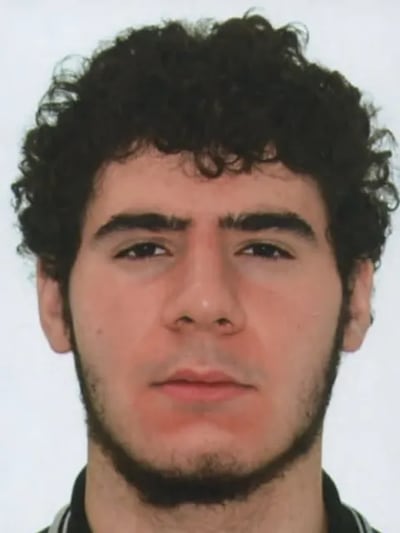
The chief suspect, 21-year-old Berlin-born Abdul Ballout, had links to Berlin’s extremist Salafist scene.
The road to last weekend’s tragedy is paved with red flags: parental neglect, school struggles, teenage delinquency, petty crime and, finally, his parents’ separation. Ballout spread Islamist propaganda online and failed, twice, to join so-called Islamic State. In connection with that, a Berlin court gave him one more chance before jailing him.
[ Why was Berlin’s Pride attacker still free to strike?Opens in new window ]
Tugay Saraç lost six years to Islamist extremism, triggered by a double catastrophe aged 13: his father’s sudden death and the realisation that he was homosexual.
Unlike Ballout, however, Saraç escaped. His family accepted him and he is now a Pride parade committee member and head of queer community work at Berlin’s liberal Ibn Rushd Goethe mosque.
A week on from the attack, in the bright mosque prayer room where he married his husband a year ago, giant Pride flags still hang on the wall.
Saraç says he was still in shock last Sunday when he addressed a memorial service in Berlin’s St Mary’s church.
With chancellor Friedrich Merz in the front pew, Saraç had two simple pleas: resist a negative framing of the tragedy to the detriment of the entire Muslim community; and stop playing down the risk of Islamist extremism in Germany.
The congregation wept, applauded then joined him in a solemn procession to the crash scene. Along the route, Saraç saw the chief suspect’s face flash up on electronic bus-shelter displays.
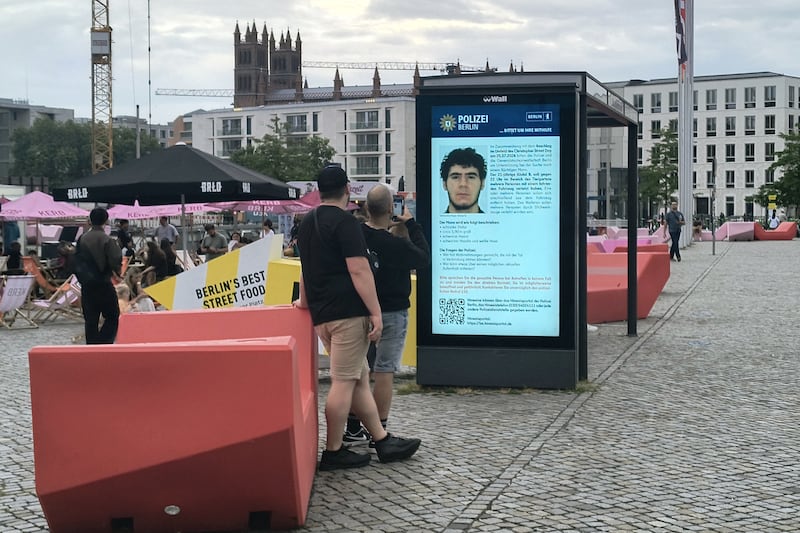
On his way home, emotionally exhausted and head spinning, Saraç’s phone buzzed to tell him that the 21-year-old had been shot dead.
“I don’t support the death penalty,” he said, “but it was such a relief to know I wouldn’t have to see his face again.”
A week on, however, Saraç is depressed that many German politicians are ignoring his pleas.
Merz and his Christian Democratic Union are demanding electronic foot tags and expedited deportations for extremists, even though the suspect was born in Berlin.
Meanwhile, leftist progressive parties, he says, are so fearful of serving racist, anti-Muslim narratives that they struggle to acknowledge the Islamist motive of the attack and its roots in home-grown extremism.
As a member of both queer and Muslim communities, with a detour into Salafist extremism, how does Saraç view the attack – and its political framing since?
“I believe the majority of Muslims believe homosexuality is a sin but a terrible attack like last Saturday is not something that majority of Muslims would do,” he said, drawing a clear dividing line between Muslims and the political ideology of Islamists, who use queer people as a “vulnerable projection screen for their own hatred of the West”.
Has Saraç reflected at all about the biographical echoes between the chief suspect and himself, who has experienced the slide into Islamist extremism?
After all, both young men, from families with non-German roots, channelled their personal conflicts into a determination to be a “better Muslim” and both found the wrong company in Salafist “brothers”, well able to manipulate their distress for their own, hateful ends.
The 28-year-old speaks carefully, making clear that “Islamists are perpetrators, not victims, and my primary thoughts are with the real victims here in Berlin”.
“But the suspect was also a person,” he said, “and in some way I am just sorry he didn’t live a life in which he could be happy.”

After a hellish week in Berlin, Saraç will attend Hamburg’s Pride parade on Saturday and keep lobbying for a mature response to last week’s attack. He wants more funding for extremism prevention work in schools; for German politicians to reach out beyond religious Muslim communities to civil society groups with more differentiated views; and for Germany’s leftist-progressive spectrum to wake up.
“I don’t expect anyone to say that Islamism is a bigger problem than right-wing extremism but that it is recognised as an equally grave problem, said Saraç. “We need to find a way for conservatives and progressives to meet in the middle to address a real problem – Islamist violence – that affects us all.”


