

The resonances with the Chile of 1973, when a reactionary general overthrew a Marxist president, will be unavoidable when Chileans head to the polls on Sunday in the second round of the South American nation’s presidential election.
For the first time since the coup that toppled Salvador Allende, the left is represented in the run-off by a communist, the former labour minister Jeannette Jara.
Her opponent is the ultraconservative José Antonio Kast, an unabashed admirer of Augusto Pinochet, the general who overthrew Allende and set up a murderous 17-year dictatorship in which Kast’s brother served as a minister.
At stake is a single four-year term in the La Moneda presidential palace, where Allende killed himself rather than surrender to forces under Pinochet’s command that were bombing the building.
READ MORE


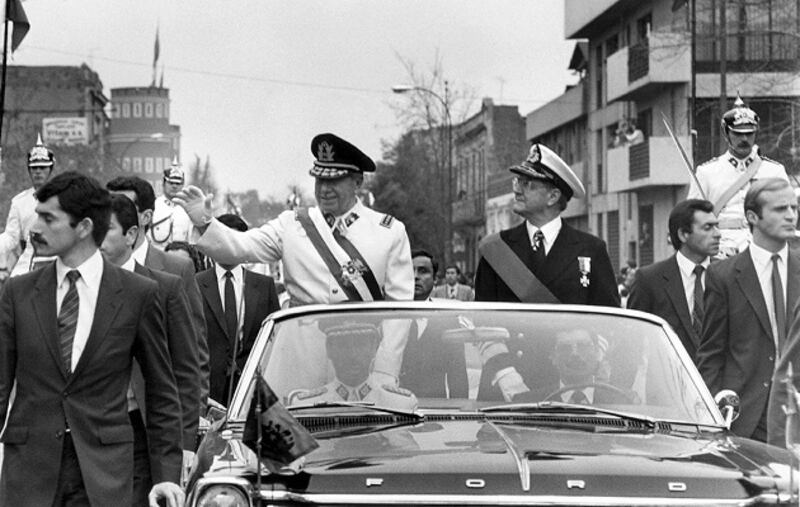
Despite such clear echoes of the violent polarisation of the 1970s, while tense, the final stretch of the campaign has struggled to engage voters.
In part this is because Kast holds a commanding lead in polls. Jara requires a big upset to prevent the far-right from returning to power for the first time since Pinochet stepped down in 1990.
It is a remarkable turnaround in a country that was convulsed by mass protests in 2019. These were widely interpreted as revealing a society no longer willing to tolerate the inability of democratic governments to undo the lingering legacy of the Pinochet regime, especially felt in entrenched inequality despite decades of strong economic growth.
Now, just six years on and following the implosion of an attempt to rewrite the country’s Pinochet-era constitution, the overwhelming favourite to become the latest hard-right president in the western hemisphere is the candidate who has boasted that if the old dictator were alive “he would vote for me”.
Jara actually placed first in last month’s first round with 27 per cent, ahead of Kast in second on 24 per cent. But the former congressman was immediately endorsed by two other right-wing candidates who, between them, polled another 26 per cent.
In contrast, Jara failed to win the endorsement of Franco Parisi, the populist economist who came in third place with 20 per cent and has called on his voters to spoil their ballots in the run-off.
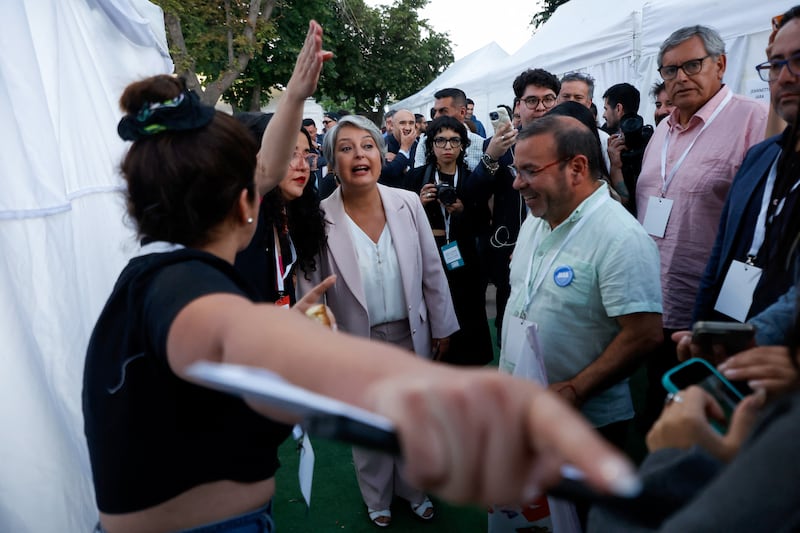
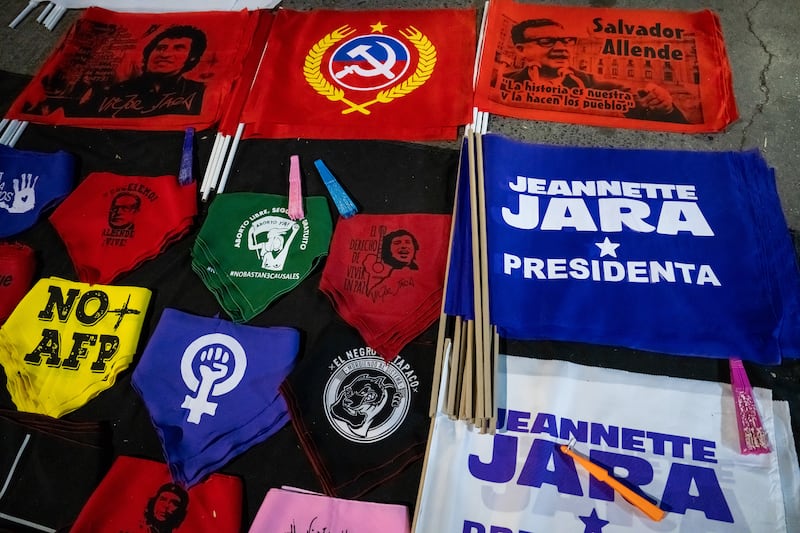
This antipathy towards her candidacy is even replicated within the main centre-left bloc that dominated Chilean politics in the first decades after re-democratisation.
Former president Eduardo Frei Ruiz-Tagle criticised his Christian Democrat colleagues for their decision to endorse a communist calling it a “betrayal” of their party’s principles. But Jara’s biggest problem is not that she is seen as a radical Marxist, but rather is associated with the unpopular government of incumbent leftist president Gabriel Boric.
After the briefest of honeymoons following his inauguration in March 2022, Boric’s approval rating has struggled to break 30 per cent right throughout his term.
On the campaign trail Kast makes less of his rival’s communist credentials than the fact she is the candidate of the outgoing administration.
“There are only two paths: continuity or change,” is his frequent mantra at rallies. Jara has been forced to defend the record of an administration most Chileans gave up on shortly after it took power.
“Chile is not a disaster,” she insists, pointing to important recent reforms such as the reduction of the working week from 45 to 40 hours. But Kast appears set for power because he has positioned himself as the candidate best placed to tackle the two issues that in recent years have come to dominate Chilean politics: crime and migrants.
His vow of a law and order crackdown is resonating in a society left shocked by the penetration of violent drug-trafficking networks as organised crime continues its spread across the continent.
Crime has also become associated with Chile’s migrant question, with Kast promising to expel the 330,000 unregistered migrants believed to be in the country and then seal the border to prevent future arrivals.
The vast majority of these migrants are from Venezuela, having fled the economic catastrophe overseen there by the country’s dictator, Nicolás Maduro.

Is Trump starting a war with Venezuela?
In a major military operation that began in September, the US administration continues to put pressure on Venezuela with navy warships massing in the Caribbean Sea.US president Donald Trump claims the air strikes on boats in the region are not acts of aggression but enforcement operations to prevent alleged drug trafficking.To date it is estimated that 83 people have been killed but it has not been made clear by the administration the intelligence that led up the attacks proving the boats were indeed carrying drugs.So is this a “war on drugs” or is it part of a broader plan to oust Venezuelan president Nicolás Maduro?And with Trump now saying the country’s air space should be shut down, is a ground offensive on the horizon?I speak to professor of Latin American history and migration studies at Vassar College, Daniel Mendiola.Presented by Bernice Harrison. Produced by John Casey and Andrew McNair.
Kast is capitalising on the domestic impact of two regional issues that president Boric could do little to control on his own. Indeed he was an outlier among the region’s left-wing governments in being an early and vocal critic of the Maduro regime, calling for his Venezuelan colleague to quit when other leftist leaders adopted a far more cautious approach despite the unfolding of the biggest refugee crisis in the western hemisphere’s history.
President Boric has also sought to combat the surge in criminality. He drew up Chile’s first national policy targeting organised crime and passed dozens of new laws. It was a tough response from a politician who has called for the international community rethink its failed decades-long war on drugs.
But while homicide rates are now declining the population remains shaken by the eruption of organised crime into their country. In this environment Kast’s claim that Chile is living through “one of the most profound security crises in its history” – while promising to deploy the military, toughen sentencing laws and build 100,000 new prison spaces – is resonating widely.
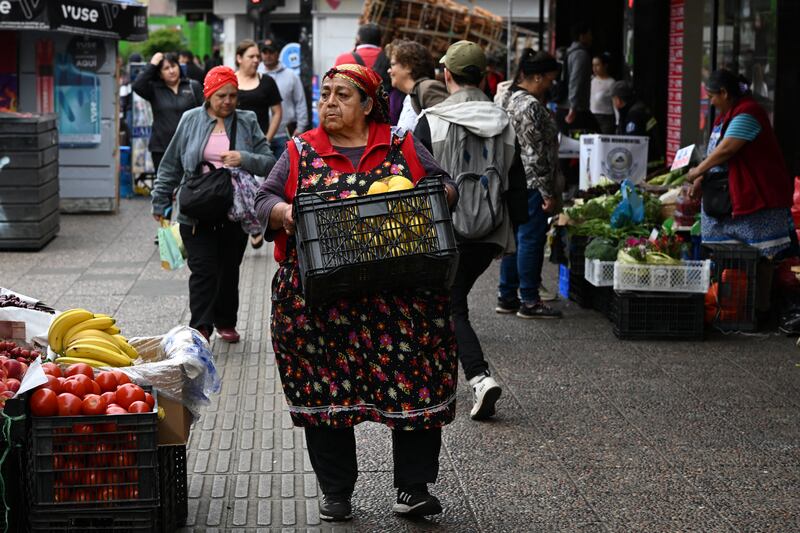
For some observers, Sunday’s election is just the latest example of how difficult it is for incumbents of all stripes in Latin America to win re-election against a backdrop of persistent high rates of inequality even decades after the region redemocratised.
These social frustrations are now being exacerbated by the growing impact of transnational crime syndicates on societies.
Until Claudia Sheinbaum in Mexico broke the sequence in June 2024, Latin America had witnessed 20 national elections since 2019 in which the president or ruling party failed to get re-elected, regardless of whether they were left or right leaning.
In Chile the only president to register lower approval ratings than Boric was his centre-right predecessor Sebastián Piñera.
In the first decade of the new millennium, an untested left was the new force in Latin American politics, then being swept by its “pink tide”.
Now that role is being filled by a new generation of far-right politicians as diverse as the libertarian Javier Milei in Argentina and authoritarian populist Nayib Bukele in El Salvador.
The ultraconservative Kast now aims to be the latest member of the club.
“People are frustrated and looking for something outside the traditional left and right. There are no new options on the left and the only ones offering something new are on the extreme right,” says Marta Lagos, director of Latinobarómetro, a regional research group based in Chile.
“I am absolutely sure they will fail too. But at this point we are still at the phase of the potential of the extreme right.
“There is no evidence otherwise against it yet, like there is against the left and the traditional right from their years in power, which is why it is now winning elections.”