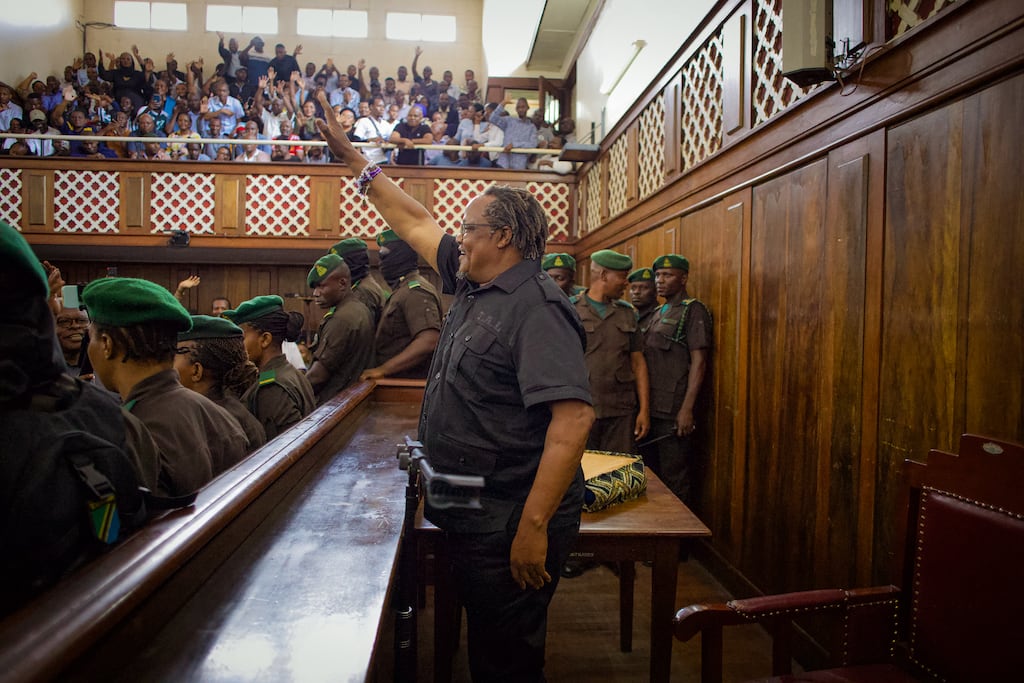


A year after a violent crackdown on antigovernment protesters left hundreds dead, Tanzania has jailed opposition leader Tundu Lissu for incitement, having failed to convict him of treason.
Political justice
In his speech from the dock at the end of his trial in Dar es Salaam last Friday, Tundu Lissu was unflinching in his evisceration of the conduct of the three judges who heard the case. They had failed to convict the leader of Tanzania’s opposition Chadema party for the capital offence of treason, they found him guilty of incitement, a crime he had not been charged with.
“I have said all along, and my evidence has proven this, that this was nothing but a political case. Turning the court into a political battleground, turning a criminal court into a political battleground: your judgment has proven this. It is political persecution,” Lissu said, according to a transcript from The Chanzo, an independent Tanzanian news site.
“I was not charged with incitement. Apart from treason, I was charged with spreading false information, and that has been forgotten. Honourable judges, you went looking for an offence that did not exist at all. And honourable judges, with all due respect, you have done this for political reasons.”
READ MORE


A former member of parliament and a lawyer who headed Tanzania’s bar association, Lissu (58) was arrested six months before the October 2025 general election after he called for electoral reform with the slogan “No Reforms, No Elections”. Lissu and other opposition leaders were barred from standing in the election, which Tanzania’s increasingly autocratic president Samia Suluhu Hassan won with almost 98 per cent of the vote.
The result triggered widespread protests that the authorities suppressed with the use of live ammunition against demonstrators, killing 518, according to official figures, although opposition and rights groups say the death toll was in the thousands.
Hundreds of opposition figures were charged with treason, a non-bailable offence, leading to accusations that the government was using the law to detain them although there was little chance of convicting them.
The European Union and some of its member-states condemned the crackdown and some suspended aid to Tanzania, but Hassan has, if anything, become more authoritarian over the past year and she has little to fear internationally. The country is rich in critical minerals and recent discoveries of new gas deposits have attracted international interest as the Norwegian energy giant Equinor and Britain’s Shell close in on a $42 billion deal with Hassan’s government.
Tanzania has long enjoyed a close relationship with China and has recently strengthened ties with Russia while negotiating with Donald Trump’s administration over mineral rights. The four-year prison sentence handed down to Lissu last week will keep Hassan’s most eloquent critic out of the way while others have been jailed, silenced or driven into exile.
Lissu this week appealed his conviction and sentence but in his speech from the dock last Friday he told the judges that he would not be asking for mercy.
“History has not been very kind to judges who have turned their courts into places for punishing the innocent in order to please those in power. History has never been kind to those judges, because I believe I am someone you know is innocent, and the world knows is innocent,” he said.
“The innocent, like me, do not ask for forgiveness. You ask for forgiveness if you are guilty, if you have done wrong. You don’t beg for mercy when you are innocent; you don’t ask for forgiveness when you know you are not guilty.”
Please let me know what you think and send me your comments, thoughts or suggestions for topics you would like to see covered to denis.globalbriefing@irishtimes.com