
Michael Carrick is the kind of coach who believes the real talk happens behind closed doors. There weren’t many moments when he allowed himself to speak in public with real feeling. One of them came last month, when he talked about the all-for-one, one-for-all ethos of Manchester United.
“The values of this football club have been etched for many years ... it comes down to humility, it comes down to being humble, it comes down to being hardworking, and being really proud to work hard and being proud to them values.” Thus did Carrick try to rally his players after the 4-1 thrashing in Como.
On Tuesday and Wednesday, Carrick dutifully took training even though the media had been reporting since Monday night that United had decided to sack him. The club, however, had not yet got around to telling him. Such are United’s current values: a club that leaves a legend to twist in the wind while the embattled executives dither over their next move.
Why did Carrick succeed at first, then fail? The main advantage he had taking the job was that he was not the histrionic Ruben Amorim, who had fallen out with too many people.
READ MORE
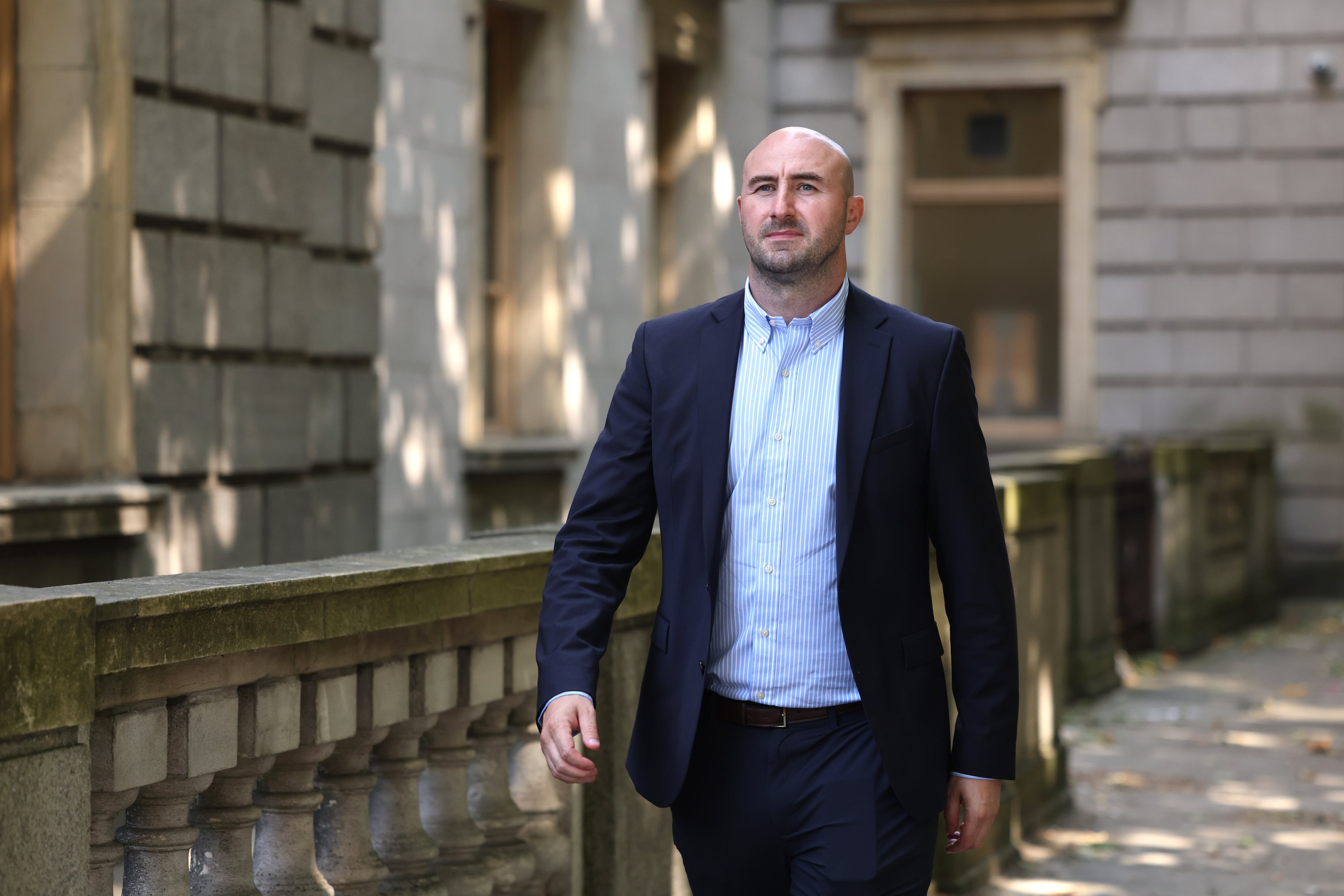


Carrick relaxed Amorim’s demanding training regime, reintegrated Kobbie Mainoo, and helped Bruno Fernandes and Casemiro rediscover their best form by returning them to their best positions. He earned Champions League qualification and a two-year contract.
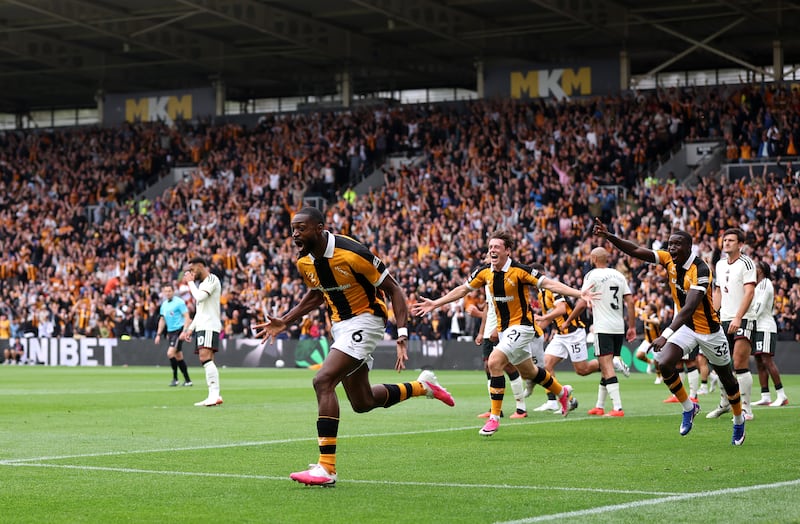
Entropy got to work over the summer. The enlightened executives decided not to sign new defenders despite the team having conceded 50 league goals. After a preseason of technical, enjoyable training sessions, United were brutally run off the pitch by Hull City in their opening game. The unpopular Amorim had at least left them with a squad in reasonable physical shape, but the legacy fitness seemed to have worn off.
Since then the team has slid into an identity crisis. Where Amorim imposed a too-rigid tactical ideology, Carrick espoused a vague cargo-cult Fergusonism largely made up of abstract nouns: humility, resilience, passion, togetherness, vigour, connection, spirit, sacrifice, hard work.
The lack of technical and tactical rigour was exposed when Fernandes delivered that infuriatingly specific dissection of the Como 4-1, explaining how Carrick’s pressing structure had led logically to United’s defeat.
His criticism provoked Carrick into one of the most revealing comments of his time as United coach: “This pressing thing, that suddenly everyone thinks about, pressing. Pressing is one small part of football ... What actually is it? What [are you] doing it for? Is it to your strength? Is it covering up other spaces? It’s just thrown about as a bit of a word at the minute, of pressing. You don’t necessarily need to press to win games of football.”
The tone of exasperation was familiar: the football man, steeped in the game, impatient with the Einsteins who spout jargon to disguise their lack of true understanding. Carrick was half-right. You don’t necessarily need to press to win games of football. But you absolutely do need to understand what the other team is trying to do.
It wasn’t really like that when Carrick was winning five league titles under Ferguson. In those days, managers who did pay a lot of attention to the opponent, like Rafael Benitez, were regarded as hyper-controlling and neurotic. When David Moyes came in at United and started discussing the opposition’s threats in team meetings, some senior players were puzzled, even insulted. “Why is he talking about them? We are Manchester United!”
The reason Ferguson’s United had the freedom to focus only on themselves is that, at that time, their opponents were all thinking about football the same way they did. Everyone was playing basically the same kind of game, trying to do the same kind of things. Since United had the best players and the strongest culture, they usually came out on top.
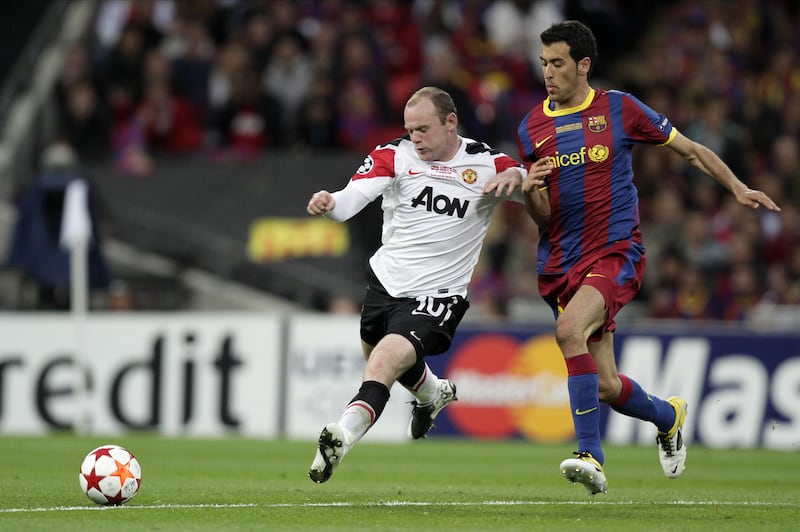
Towards the end of Ferguson’s time, they started to come up against teams that were thinking about the game in new ways. Pep Guardiola’s Barcelona destroyed United’s best-ever team in the Champions League final of 2009 and again, even more emphatically, in 2011.
Ferguson blamed Wayne Rooney for failing to stick to Sergio Busquets in that 2011 final, but the problem was much bigger than that. Barcelona had made much of football’s conventional wisdom obsolete. You could still beat them by the grace of God, as José Mourinho’s Inter did in the 2010 semi-final. But most teams who tried to replicate Inter’s approach found God had abandoned them.
In the years that followed, it was the coaches who developed new ideas about pressing that eventually found ways to combat and break down Guardiola’s once-invincible style. That’s why the word pressing “gets thrown about” so much.
The effect of these successive ideological revolutions is that top-level football has become incredibly complicated and tactical. Many feel it’s a poorer spectacle as a result. But if you want to compete and not just complain, you need to understand it and be prepared for what is coming at you.
Carrick’s United plainly didn’t. They were baffled by a succession of better-prepared opponents. Towards the end, Cesc Fabregas told his Como players to ease off because it was getting embarrassing. Even Carrick’s last win, against Roma, featured a shocking first half in which United clearly had no idea how to deal with the Serie A side’s aggressive man-to-man press, and went in at the break 0-2 down.

So Carrick has to go. The question now preoccupying United fans is: could Mauricio Pochettino, with whom United have apparently agreed terms, do any better?
The curious thing is that United are going for Pochettino now when, if they were really so convinced he was the man for the job, they could easily have done a deal to appoint him after he finished up with the US national team after the World Cup.
It’s not as though Pochettino only recently came to their attention. They had previously considered appointing him in 2016, 2018, 2021, 2022 and 2024.
Instead they appointed Carrick, and in August Pochettino signed a new contract with the Americans. As a result, they will have to pay $10 million to extract Pochettino from that contract, plus extra for his staff, plus however many millions Carrick will be due in compensation for his sacking. Probably more than £15 million wasted in a matter of months by executive mistakes. We can imagine how the roughly 400 United employees laid off in Jim Ratcliffe’s cost-cutting redundancy programme will feel about that.
Episodes like these feed into the doomer line of thought that the club is dysfunctional and beyond the ability of any manager to save. Drained by the parasitical Glazer ownership and now saddled with the incompetent Ratcliffe administration, Manchester United has become a place where the conditions for success simply cannot exist.
Amid the injuries and indignities United have absorbed in recent weeks, a note of insult was injected by the report that, at an investor conference in September, Avram Glazer had complacently repeated the line United have trotted out over the last decade: that their money-making capacity is independent of sporting success.
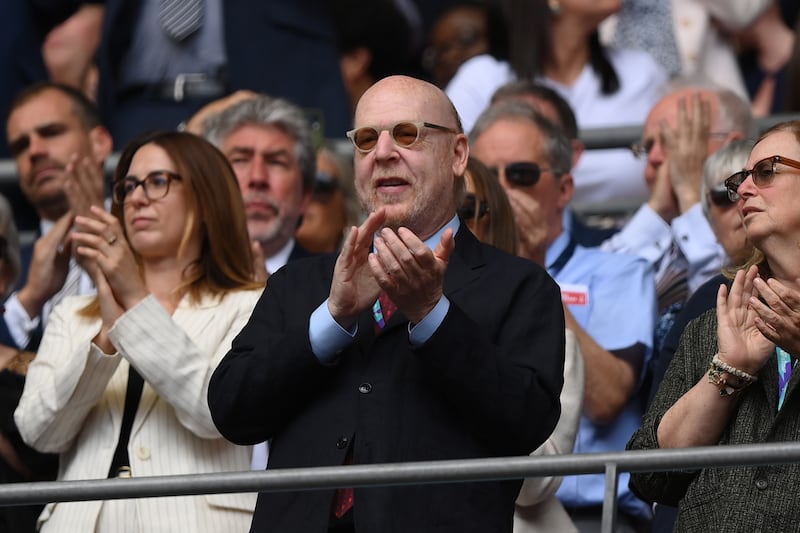
Glazer could point to the numbers showing that United’s turnover has doubled since 2013, when Ferguson’s departure marked the end of their period of success. Of course, he is ignoring how much more money they would be making if they had actually been successful in that time.
Liverpool and Arsenal have both enjoyed success since United’s downturn, and the impact can be seen in their much faster revenue growth. When Ferguson stepped down, United’s turnover was 170 per cent of Liverpool’s and 136 per cent of Arsenal’s. They have since been overtaken by both rivals, with turnover now 95 per cent of Liverpool’s and 96 per cent of Arsenal’s.
If United are themselves stagnant, the same cannot be said of the thriving media industry that has blossomed around them. United employ fewer than a thousand people since Ratcliffe’s job cuts, but many multiples of that number around the world now make a living talking about the club, which in practice usually means ridiculing it.
A vast ecosystem of posters and podcasts seizes upon every United microevent and processes it into lucrative ragebait and comedy. An ailing elephant trudges across the savannah, nourishing swarms of beetles that eagerly feed on its dung. The sicker the elephant, the better for the beetles.
The relentless flood of mostly negative coverage demoralises the players, who naturally spend their downtime staring at the internet like everybody else (Declan Rice revealed in his Man of the Year interview with GQ that he spends about six hours a day looking at his phone.) The strange bargain of playing for United: you will make millions of pounds a year but every matchday you risk becoming one of the most widely-ridiculed people ever to exist. Is this why Carrick’s lecture about the value of humility didn’t seem to energise his players?
Nobody is arguing that Pochettino would find it easy to turn United around. But neither should we forget that there have been some promising changes in the external competitive environment.
The team that replaced them as English football’s dominant force, Manchester City, have been found guilty of systematic cheating. The days when Abu Dhabi’s money powered City to title after title are over. Chelsea were stripped of their own oligarch-endowed superpowers a few years back. Liverpool are no longer led by the exceptional Jürgen Klopp. The road back to the top no longer looks quite so congested as it did three or four years ago.
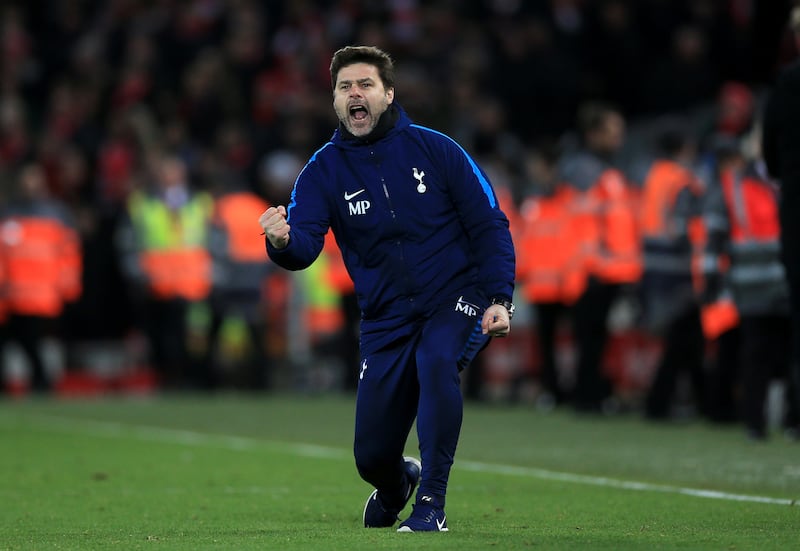
As a coach, Pochettino is all about energy, sacrifice and human connection. His best teams – Spurs 2016-19, Chelsea in the latter part of his season there, the US team in their early matches at the World Cup – were exuberant pressing machines that relentlessly outran and outworked the opposition. Not surprisingly, Pochettino’s methods had a cool reception at PSG in their Messi-Mbappé-Neymar phase.
The work rate he demands is underpinned by high intensity in training, and in fact, disagreements over training intensity were the main reason why he lasted only one year at Chelsea. The sporting directors thought players were being overworked, which was causing an unacceptable rate of injuries. Pochettino thought they didn’t know what they were talking about.
The idea of a high-octane style and high-intensity training would certainly appeal to the United fans. The problem for Pochettino would be how to actually implement it with a low-octane group of players. The immediate obstacle is not attitude but athleticism. This squad has not been built with “energy” in mind.
Could Pochettino last the couple of transfer windows he’ll need to bring in some guys who can run? Will the bungling executives find new ways to sabotage his best-laid plans?
Onwards, ever onwards plods the sickly elephant.