

Newspaper hacks know all about commercial superfluousness. An anxious whiff of redundancy lingers over lots of other businesses, too, and there’s no escaping a growing bang of irrelevance about betting shops. That’s bad news for those working in them and bad news for racing.
There were 684 betting shops in Ireland at the end of last year. There were close on 1,400 in 2008. In a betting world where every phone is a shop, cartoon representations of punters scrawling out betting slips with stubby pencils is a busted docket.
It’s an ominous trend and Irish racing’s misfortune is that its finances are intrinsically hitched to a betting-shop environment increasingly on its uppers. Fred Done, founder of Betfred, said recently he believed there would be no more High Street betting shops left by 2030.
The warning came in advance of the upcoming British budget as a cash-strapped Labour government seriously considers an increase in taxes on games machines. Various bookmaker corporations have warned that will result in shops being unviable.
READ MORE


British racing is tying itself in knots about that, worrying about the impact on levy turnover and prize money. Irish racing, albeit underpinned by a Government safety net, has a stake, too, through media rights sales. Live pictures aren’t as valuable if there are fewer places to show them.

The quid pro quo is that racing finds itself helping to fight the battle for a gambling sector that has a social and cultural reputation that makes the media’s popular standing look beatific in comparison.
Just how skeevy that status is was underlined by British prime minister Andy Burnham’s declaration that he plans to reclaim “hollowed-out High Streets” plagued by what he called an undesirable trifecta of vape stores, rogue businesses and betting shops. Instead, he wants grocers, bookshops and banks.
The latter are towards the bottom of the public popularity handicap, too, and a desire for bookshops smacks of wishful thinking. It’s also dirty pool to slot a regulated sector alongside dodgy business elements. Burnham, though, knows he’s on to a winner by bashing the bookies.
This is an industry that has long since proven any guarantees it provides about protecting vulnerable people from the worst excesses of gambling addiction are worthless. Their ruthless bottom-line priorities have been blatant for years.
It means the idea of trying to pay for more social services by taxing gambling is an easy political sell for any government. All of which leaves racing in a bind.
It can argue, on both sides of the water, that racing and betting are hitched together like a horse and carriage and always have been. But it’s an argument that boils down to wanting gambling firms to pay less tax on exploitative gaming machines that are apparently the only thing keeping their shops profitable. It’s a desperate rearguard action and one surely destined to fail.
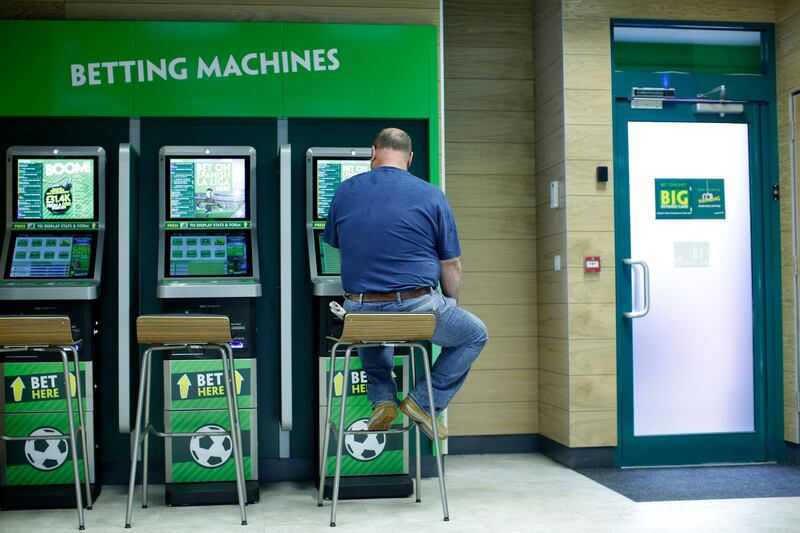
It shouldn’t be forgotten that there are lots of livelihoods tied up in shops. Theoretical logic is no comfort to anyone faced with the practical reality of looking for a new job. But some of the spiel trotted out by bookmaker executives to justify their arguments sticks in the craw.
The situation must be desperate if the virtues of betting shops are increasingly being sold as some social good, a place for people to meet and enjoy a sense of community in an impersonal world.
There is such an element to any business reliant on footfall. And the dangers of social isolation shouldn’t be minimised. But at a time when the market is awash with cod nostalgia there’s a danger in romanticising the past here.
Even in their pomp, betting shops were a profit-and-loss business exploited to the max at a time when they had the gambling market to themselves. Punters might have mixed, but only on the understanding that they gambled – and if they did so profitably on a consistent basis then they were usually invited to go mix elsewhere. The market has transformed, but the basics are the same.
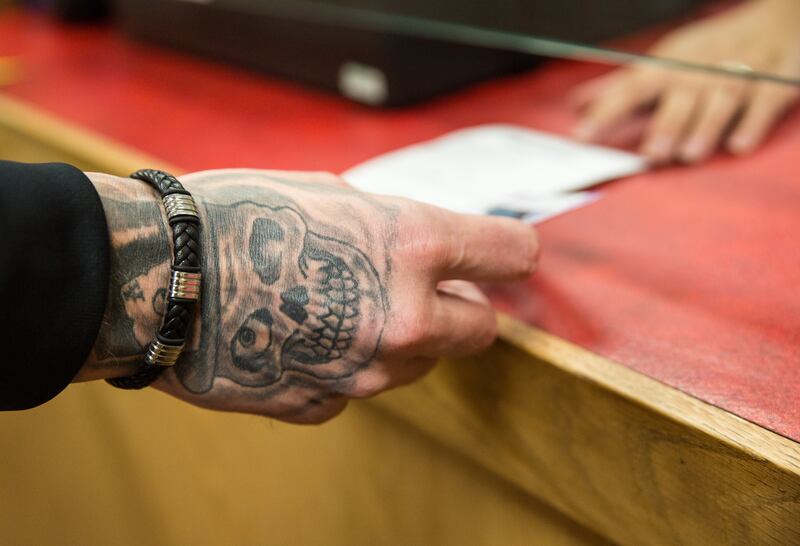
Speculation as to what might be done to retrieve a future for shops has included various ideas of commercial evolution. One William Hill official has predicted more of a “sports bar” atmosphere but without the alcohol. There have been suggestions, too, along a theme of France’s PMU cafe experience. They smack of desperate long-shot punts.
Economic Darwinism has the clock ticking already. For most people under 40 the idea of gambling in a shop rather than on a phone is akin to travelling to work on a steam train. If betting shops in Britain need low-tax machine games to be profitable then the countdown to irrelevance is only going to gather more momentum.
The question for racing, including in Ireland, will increasingly be how best to fill the financial gap left behind. There doesn’t appear to be any obvious answer.
Something for the Weekend
Sunday’s Qatar Prix de l’Arc de Triomphe looks like a renewal well up to par. Daryz will try to become the first colt since Vincent O’Brien’s Alleged (1977-78) to win Europe’s richest race back-to-back. Around Longchamp his record is all but impeccable. Unseasonably quick ground could even help him improve on that narrow defeat of Minnie Hauk a year ago.
Minnie Hauk is back, too, along with her Ballydoyle stable companions Diamond Necklace and Benvenuto Cellini. They could relish ground conditions more than Joseph O’Brien’s Oaks winner Thundering On.
Kalpana (3.05) was seventh last year, but looks transformed in 2026. A case can be made for her King George defeat of Calandagan being the most impressive mile-and-a-half performance of the year to date. Provided a subsequent Yorkshire Oaks slog in the mud hasn’t taken the edge off her, she can supply jockey Colin Keane with a first Arc success.
The weekend builds to the Arc and it can start with a Listed Hurdle success at Gowran Park on Saturday for Gaucher (1.20). It looks a head-to-head with El Cairos, who is proving expensive to follow.