

Mayo man Damian McHugh joined Claremorris Men’s Shed soon after it opened in 2012.
It was a time of recession when many, in sectors such as construction, were feeling the consequences of the financial crash. Damian was working part-time in hospitality, which was feeling the pinch too.
“It started out as a men’s support group, because at the beginning there were a lot of retired men that just wanted to meet up and do something, and it grew into a Men’s Shed,” says Damian, who went on to become its chairman.
The Irish Men’s Sheds Association was set up in 2011, based on a movement that had begun in Australia some years earlier, which aimed to improve the health and wellbeing of retired and socially isolated men.
READ MORE


The idea took off across Ireland, with today more than 400 Sheds registered with the association, and at least 12,000 men visiting one each week. It also led to the creation of Women’s Sheds.
Part of the rationale behind the Men’s Sheds is that working side by side, on joint projects, is conducive to conversation among men. “It’s about being shoulder to shoulder,” says Damian. “But it’s also about the chat and the banter over a cup of tea.”
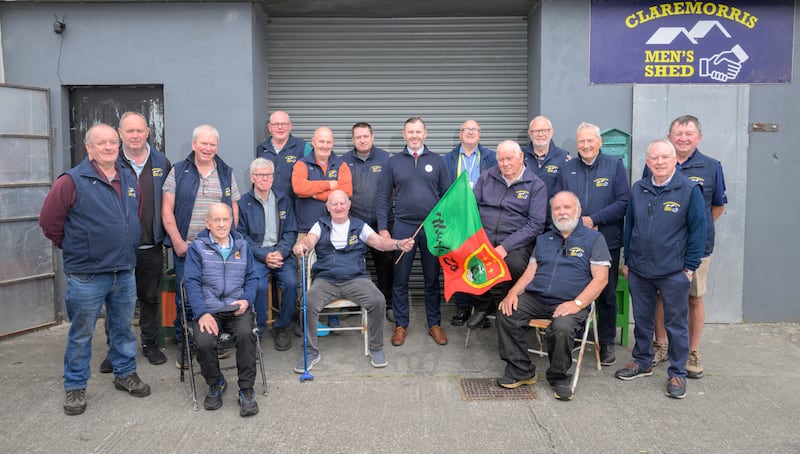
Initially a group of about eight to 10 men would meet regularly at a local family resource centre. “It was somewhere comfortable we could sit down and have a cup of tea,” he says.
Build it, and they will come
As the group grew, it secured the use of an actual shed nearby, a bigger space they could equip with tools and turn into a proper workshop, sharing and teaching a range of practical DIY-type skills.
“Lots of men had lost work at the time and they had all these skills but nowhere to go with them, because everyone was unemployed,” he says.
“Everyone in here has their own skills, whether they were chippies, or lads doing construction, or metal work, and everyone teaches everyone how to do things. That’s a huge part of the Men’s Sheds; they are teaching sheds. I work in hospitality, for example, so I didn’t know how to use an electric chop saw. Now I do. Over the years I’ve picked up all sorts of skills.”

When not working on specific projects they cut down wood for kindling which they sell to raise funds.
“Sheds are non-profit, so everything raised and all donations go back into paying the bills, whether it’s for electricity, tools – or tea,” he laughs.
Having projects to work on, and the purpose that comes with that, helps to support good mental health too, he points out.
Today there are 23 men in Claremorris Men’s Shed, which recently moved into its biggest premises yet, in the town’s old bacon factory.
“This one was a ready-to-go unit, which is great. We’re still in the process of moving in. At the moment we’re trying to set up a canteen area,” he says.
Drop in on any weekday between 10am and 2.30pm and you’ll find about a dozen members gathered there. Some might be making kindling, others enjoying a game of cards, a singsong or simply a cup of tea and a chat.
“You leave feeling great, not just because of something you might have worked on but just because of the lads. Everyone gets on,” he says. That’s not to say there aren’t disagreements, he says, but that’s all part of the fun.
“We always have the chats and a bit of craic. It’s a great way to get all the local news.”
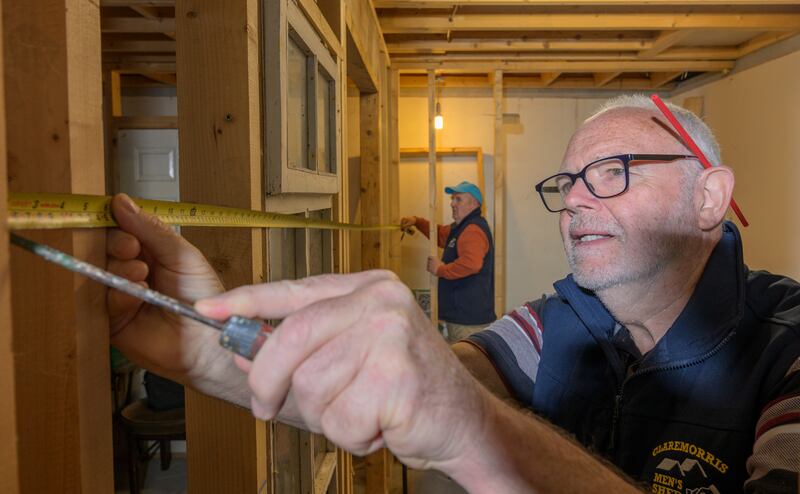
Working for the community
The Shed provides a range of services for the local community, such as fencing for the town’s Christmas tree, running initiatives for Men’s Health Awareness Week, and regularly volunteering as marshals at local events such as the Claremorris Agricultural Show and the town’s parkrun.
“We’ll always try and help anyone we can,” he says.
The Shed has become a lifeline for men who are retired, living alone or rebuilding their confidence after illness and the group is always open to new members, something Damian is very solicitous of.
He knows it can be daunting to join a club of any sort, which is why he makes sure to introduce joiners to a few members at a time, reducing any feelings of stress and putting them at ease.
That includes his own father, who recently retired after a long career in a poultry factory.
“He’d been in the chicken factory for 30 years but had nothing to do after that, in retirement,” says Damian, who, of course, encouraged him to join the shed.
He did and hasn’t looked back since. “Now it’s something for him to do for an hour or two every morning,” he says.
The group’s profile in the town has been helped enormously over the years by being a beneficiary of Tesco Ireland’s Community Fund.
On three separate occasions, it has featured as one of the three local voluntary and charity groups to which shoppers in the town can donate the blue tokens they receive at the checkout.
This has raised valuable funds for the group, about €400 on each occasion, which has helped pay for new equipment, such as a table saw, and contributed towards general overheads.
Tesco’s Community Fund is a core part of the retailer’s That’s Every Little Helps campaign, alongside strong support for Irish suppliers, recognition of the hidden disabilities sunflower and reduced packaging, to name a few. Blue Tokens have helped more than 27,000 community projects secure €10 million since it launched in 2014.
The group depends on public donations for everything.
“The most recent Tesco Community Fund money we got will go towards rent and, the way I look at it, every little helps. The support from Tesco customers really does make a difference and helps us continue providing a place where local men can come together, learn new skills and enjoy each other’s company,” says McHugh.
- Members who couldn’t be present on the day include: John Fallon, ex-chairman, Dave Donellan, Michael Warde, Jim Nally, PJ Codd, Brendan Grealy, Henry Garvey, Martin O’Malley and Brendan Smith
For more information on the Tesco Community Fund, or to nominate a cause close to your heart to receive funding, visit tescoireland.ie


