

The very nature of organisational leadership is undergoing profound change. Yesterday’s approaches no longer apply in an ever more complex world. As a result, leadership development is evolving, and two flagship programmes from UCD Smurfit Executive Development are designed to offer practical, flexible pathways for professionals looking to build future-ready leadership capabilities.
The diploma in leadership development helps participants to become better leaders by developing an understanding of how they contribute to their own success and that of their teams and organisations.
The programme is part of the UCD Smurfit Masters pathway where people can achieve a MSc in business (leadership and management practice) by completing three of 12 diploma programmes within a five-year period, UCD Smurfit Executive Development director Tim Wray explains.
“A significant proportion of the people who complete the Masters pathway do the diploma in leadership,” he adds.
READ MORE


Future-Fit Leadership programme
The six-month Future-Fit Leadership programme combines innovative theory with practical, real-world applications to equip leaders with the mindsets, practices, and skills required to navigate and thrive in a dynamic, interconnected world.

“The nature and challenge of leadership is shifting in a number of different ways,” says Wray. “It is becoming increasingly complex with multiple dimensions to consider. There is much greater uncertainty and ambiguity and it is not always clear there is a right answer. Leaders need to develop tolerance for ambiguity.”
That requires different qualities in leaders and the challenge is to develop those qualities, he adds.
“Today’s leaders need more than traditional skills, they need new ways of thinking and acting,” says Future-Fit Leadership programme faculty lead Marianne Roux. “That’s what the programme is about. For some leaders dealing with ongoing transformation, what they have learned in the past is no longer appropriate. There is a shift from having the answers to asking better questions and a move to collective intelligence and to more human, ethical, and collaborative leadership styles. Artificial intelligence (AI) will bring challenges in terms of workplaces which have teams of humans and machines. The programme is about enabling leaders to lead well in a complex environment.”
Today’s leaders need more than traditional skills, they need new ways of thinking and acting
— Marianne Roux, faculty lead, Future-Fit Leadership programme
The nature of leadership development programmes is changing as well. According to Wray, it is no longer about “doing a course” with an end point of a qualification.
“Leadership development takes time,” he says. “We see it as a process. It’s about unlearning as well as learning, challenging assumptions and expectations, and adopting new ways of thinking and acting. It’s also about ownership, and we challenge individuals to own their development. They are not outsourcing to us; they have to own and drive it themselves. Also, development does not happen in isolation. The cohorts on our programmes are made up of people on the same journey who provide support and challenge and peer coaching to one another.”
The Future-Fit Leadership programme commences in June and comprises a blend of interactive virtual modules, podcasts, in-person workshops, and real-world projects. Participants will explore and develop the key mindsets and practices required to lead effectively in the future of work.
The programme looks at five core leadership mindsets and practices. The first is contextual intelligence, which enables leaders to understand what different developments in areas such as AI or ESG mean for their organisations, without necessarily having expertise in them.
The second is personal agility. Participants learn what Roux describes as the “human superpowers of personal agility including growth mindset and curiosity, self-awareness, grit, emotional agility and focus to lead in the future world of work.”
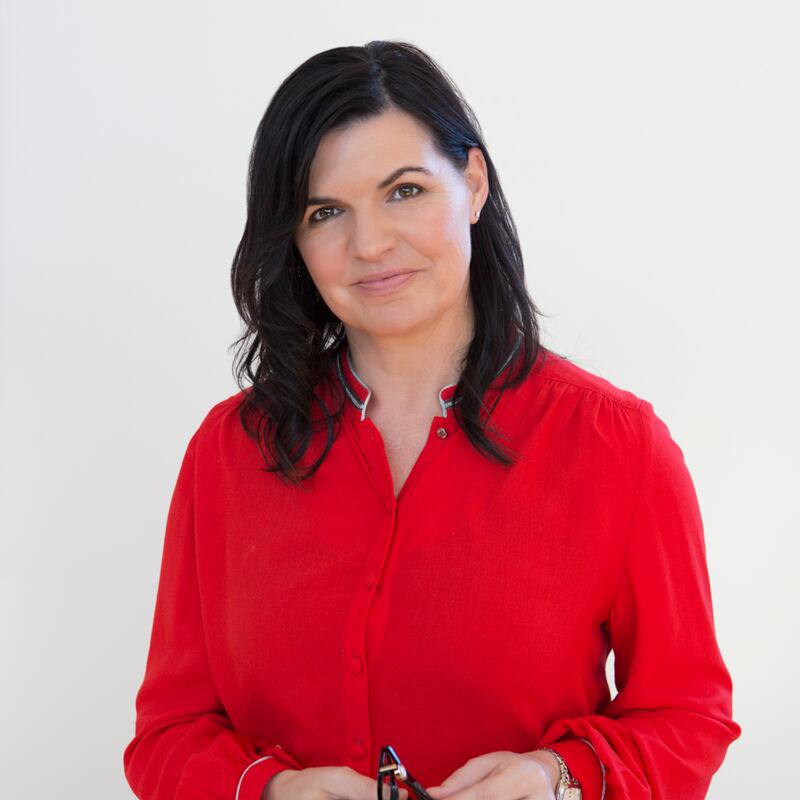
Next is ethical maturity. “Organisations need principled values-based leadership, and participants learn frameworks that help with the ethical and moral dilemmas they are likely to face in the future of work,” Roux explains.
The fourth element is learning how to network, build the right relationships, and become deliberately collaborative. Finally, there is comfort with complexity and ambiguity, which helps leaders to solve more difficult challenges that require them to use collaborative systems thinking, generative change and human-centred design.
The programme is aimed at people in leadership positions just below the C-suite or at the top in smaller organisations, says Roux. “People in these positions need to learn to thrive and lead in a complex and ambiguous environment, and drive growth and transformation,” she says. “That’s very difficult, and this programme will transform their ability to lead in those circumstances.”
Diploma in leadership development
The diploma in leadership development, which commences in October, is challenging and highly experiential, and built on strong theoretical principles that are brought to life and tested in participative module sessions. Participants develop insights into their current leadership style, actively shift any leadership obstacles, and bring about a renewed sense of leadership empowerment and purpose.
And nothing stands still. “We redesign 20 to 30 per cent of the programme each year, the pace of change is so fast,” says Wray. “Never in 30 years working in this area have I seen the world change so fast. Skills and knowledge become obsolete so quickly – it’s quite a challenge for leaders and we help them to meet it.”
To learn more about both programmes, people can attend the UCD Smurfit Virtual Open Week from May 25th to 28th, with lunchtime webinars and masterclasses. Visit smurfitschool.ie/events to register.


