

Even when harsh Irish weather can make you feel like the car is the only option, staff at Sligo University Hospital (SUH) are still opting to walk, cycle and take the bus to work.
That’s because the hospital is one of many organisations enhancing their cycling facilities or organising walking initiatives in a bid to promote active travel and reduce single‑occupancy car use, in line with Government climate objectives to reduce transport-related carbon emissions by 50 per cent by 2030.
Not only is this resulting in healthier workplaces, but it is also being recognised in the form of the Smarter Travel Mark, a three-tier system resulting in a bronze, silver or gold award from the National Transport Authority (NTA). The Smarter Travel Mark rewards organisations and campuses that champion sustainable and active travel options for their workforce, students and visitors on their commute and beyond, resulting in a tangible decrease in single-person car use. Funded by the Department of Transport, the Smarter Travel Mark is focused on reducing carbon emissions in the transport sector.
At SUH, staff are encouraged to consider Local Link bus routes, while many are already taking advantage of the Cycle to Work scheme, the tax incentive that allows employees to save a considerable amount of money on the purchase of a new bike.
READ MORE


“Staff definitely feel more supported around maintaining their own health while at work, or commuting from work,” says Georgina Kilcoyne, assistant hospital manager. Kilcoyne includes herself in this as she chooses to commute to work via a Local Link bus. “Staff feel very considered in all our messaging around this and they are picking up that we are taking every opportunity to create a better environment for them, which is obviously going to help their own wellbeing.”

SUH has been working hard to offer its staff more sustainable travel choices, as well as promoting increased physical activity via walking routes, participation in step challenges and the Cycle to Work Scheme and also investing in cycling facilities. There is no cost to apply for the Smarter Travel Mark, and it is open to workplaces and campuses of any size from the private or public sectors. Organisations are supported by the Smarter Travel team throughout the process.
SUH was awarded the coveted bronze Smarter Travel Mark in January last year. However, Martin Casserly, environmental and waste management co-ordinator at SUH, says that its commitment to sustainable and active travel had begun many years earlier. But while the hospital’s sustainability journey had been well under way, the Smarter Travel Mark was a means of bringing it to the next level. “The mark acts as a kind of toolbox at a local level, allowing us to implement initiatives that are independently assessed and then we are given the recognition for our efforts,” Casserly says. “It also acts as a driver for further improvements, given there are gold, silver and bronze awards.”
Morna O’Hanlon, health promotion and improvement officer at SUH, noted that the hospital had already signed the NTA’s Smarter Travel Charter and used the Smarter Travel Survey to identify the various modes of transport that staff were using and the barriers they faced when choosing more sustainable and active travel options.
“We became really committed to highlighting and promoting all of the different Smarter Travel options,” O’Hanlon says. These active travel and behaviour change programmes include the Ready Set Cycle programme and the Light Up Your Bike campaign, as well as step challenges and other movement initiatives.
Not only were these efforts beneficial from a sustainable travel perspective, but they also closely aligned with the hospital’s ongoing work in promoting health and wellbeing on site in line with the strategic priorities of the Health Services Healthy Ireland Implementation Plan (2023-2027).
“It’s about enabling individuals to live longer and healthier lives by supporting them to adopt healthy behaviours,” O’Hanlon says, “while also promoting the development of environments that make those behaviours easier to adopt. The benefits of physical activity for health and wellbeing are well evidenced – not only for preventing and managing chronic disease but also supporting mental health and wellbeing.”
Staff have readily embraced the various physical activity challenges, with many noting “that they will be continuing the habits they’ve picked up with each challenge,” O’Hanlon says. “This long-term behaviour change piece is really, really important from a health promotion perspective.”
Some initiatives were simple but hugely effective: “We have local walking routes that were developed a few years ago,” O’Hanlon adds, “but we’ve now installed a display outside of the hospital that shows five different walking routes, ranging from 1km to 3.5km, and ... key messaging from the National Physical Activity Guidelines – Every Move Counts.”
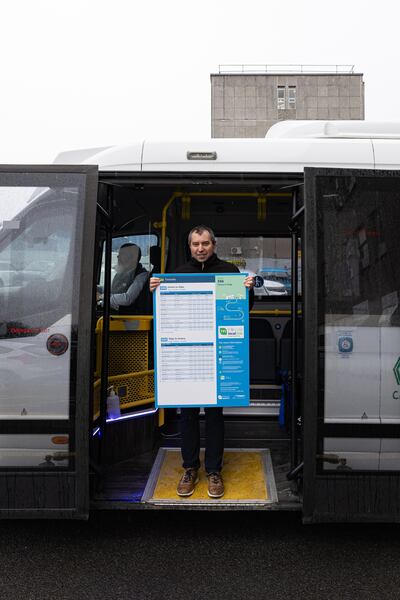
The hospital also began highlighting Local Link bus routes.

Casserly says that better bike shelters will be installed and a permanent bicycle repair stand will soon be in use. They also managed to have a Bolt Bike parking bay located on the hospital grounds – these e-bicycles offer an alternative mode of transport that is cheap and environmentally friendly. Additionally, the hospital also offers a bicycle clinic on site annually where staff can get their bikes serviced or repaired for free, and they can also avail of free cycling equipment such as lights, repair kits and gloves by participating in the Smarter Travel initiatives. This all occurred in tandem with meaningful promotion of the Cycle to Work scheme.
These efforts clearly translated into action: between 2021 and 2025, there were more than 250 applications for the Cycle to Work scheme, Casserly says. “There were always staff that cycled, and it’s been important for us to recognise those staff members and give them the facilities to make it easier for them to cycle but also then promote it to people who might not necessarily cycle.” Indeed, staff feedback has been overwhelmingly positive.
O’Hanlon recommends that any organisation on their own sustainable and active travel journey considers applying for the Smarter Travel Mark. “We were guided through the whole process by the Smarter Travel team at the NTA and they were so helpful,” she says. “For other organisations, I would say it is really worth doing – it provides a structure for exploring existing active [and] sustainable travel facilities, and promotions; helps identify areas that may be lacking; and highlights opportunities for improvement.”


