

The State’s electricity grid is under increasing strain. Surging energy demand and the ongoing transition to renewable resources is necessitating a major upgrade of the existing grid and the delivery of critical new infrastructure within ambitious time frames.
The grid has served the State well for decades, but it is now being asked to deliver far more than it was originally designed to, says David Carroll, energy transition director at EY Ireland.
“Decades ago, power flowed from a relatively small number of large fossil-fuel power stations to homes, farms, towns and businesses,” he explains. Demand was concentrated in predictable locations, particularly along the east coast, and the job of the grid was relatively straightforward. “Today, that model has changed completely.”
Electricity now comes from a plethora of sources, including onshore wind farms, solar installations and batteries, while, for future supply, large-scale offshore wind projects are in planning. Carroll highlights that electricity demand is rising as Ireland electrifies transport, heating and industry.
READ MORE



“The existing grid has been pushed remarkably hard, but bottlenecks are becoming more common,” he says. “In some locations, renewable electricity is being generated far from where it is needed, and the network does not always have sufficient capacity to transport it efficiently.” The challenge, he says, is no longer simply generating clean electricity; it is moving that electricity around the State when and where it is needed.
“The good news is that both EirGrid and ESB Networks have ambitious plans to reinforce and expand both the transmission and distribution networks to support Ireland’s climate and economic ambitions.”
This means the grid is being strengthened, modernised and expanded to transport power from where it is generated to where it is needed while maintaining reliability and security of supply, says Rodney Doyle, managing director, energy transition, KPMG.
Both the transmission and distribution grids need to be updated and expanded to deliver on the energy transition, and Doyle notes there has been “significant progress” in recent years.

“EirGrid’s Shaping Our Electricity Future roadmap provides a clear and co-ordinated plan for the infrastructure, operational and market changes required to deliver Ireland’s energy transition,” he says. “This vision is now being underpinned by the approval of the capital investment plans of ESB Networks and EirGrid.”
The Commission for the Regulation of Utilities Final Determination on Price Review 6, covering the period 2026 to 2030, provides for substantial capital programmes for both ESB Networks and EirGrid. This, Doyle says, is enabling the largest programme of electricity network development in the State’s history.
“Alongside major strategic projects such as the Celtic Interconnector and the continued growth in renewable generation, these investments will support the reinforcement, expansion and digitalisation of the electricity system required to accommodate increasing electrification, renewable integration and economic growth.”
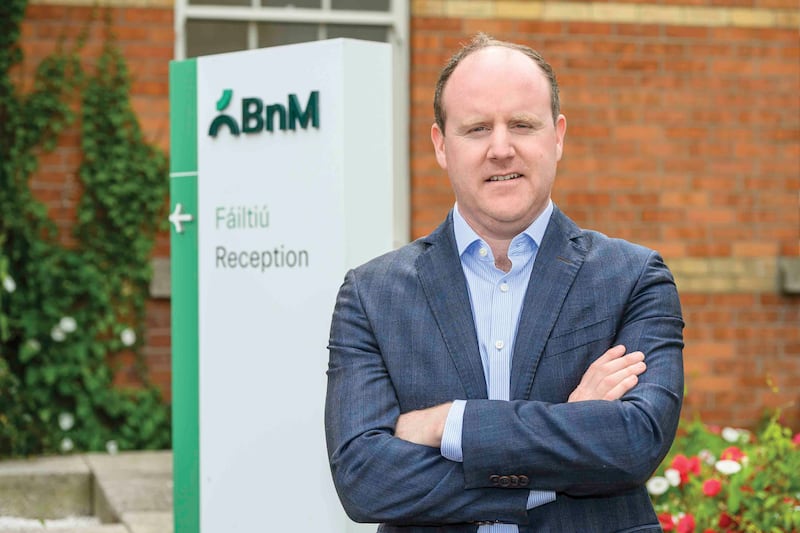
Brendan Kelly, head of commercial at BnM, says the company now has a clean energy portfolio of approximately 1GW and is also advancing a renewable energy pipeline of 6.5GW across onshore wind, offshore wind, solar, battery storage, biomass and flexible backup capacity.
“Ireland has world-class renewable resources and strong project pipelines, but the grid must be developed at the pace and scale needed to connect that energy and make it available to homes, businesses and communities,” says Kelly.
Significant renewable generation has been connected over the past decade, he says, with extensive work having been undertaken to strengthen, refurbish and reinforce existing infrastructure.
But the next phase of the transition will require a step change. “To support full electrification, decarbonisation and demand growth, Ireland will need new strategic transmission infrastructure as well as continued investment across the wider network.”
According to Kelly, strategic projects such as the Coolnabacky 400kV grid project in Co Laois and the Rathcobican 400kV grid project in Co Offaly demonstrate the type of infrastructure that can open up big new potential for renewable generation and demand, without necessarily requiring the same scale of new transmission corridors as other options.
“From BnM’s perspective, the focus must be on delivery that unlocks renewable energy at scale,” he explains. “Our Energy Parks initiative reflects that approach by bringing renewable generation, storage, grid infrastructure and big energy demand together in the right locations.”
This can improve system efficiency, reduce pressure on the wider grid and support balanced regional growth, he adds.
While grid investment requires significant upfront spending, Carroll says that failing to invest would ultimately cost consumers more. “Network constraints can increase system costs, limit access to lower-cost renewable electricity and create inefficiencies that are paid for by customers.”
But alongside investment in new infrastructure, greater flexibility will be increasingly important. “By shifting electricity demand away from peak periods and towards times when renewable generation is abundant, flexibility can help manage network congestion, reduce overall system costs and improve utilisation of existing assets,” says Carroll.
While the strategic direction is clear and the necessary funding has largely been secured, Carroll warns that the pace of delivery will be critical. “The scale of the approved capital programmes presents a significant execution challenge, with planning and consenting processes, community engagement requirements, supply chain constraints and competition for skilled resources all posing potential risks,” he says. “Success will depend on the ability of not just the industry and their delivery partners to accelerate project execution over the remainder of the decade.”
Doyle also highlights that lead times for critical components have increased as countries around the world accelerate investment in energy infrastructure. “For Ireland, where we are undertaking the largest grid expansion programme in the State’s history, maintaining secure access to equipment and specialist contractors will be essential.”
Grid, generation and demand have to move together, says BnM’s Kelly. “If renewable projects are ready but cannot connect, or if demand cannot access secure and affordable clean electricity in the right locations, the transition becomes slower and more expensive. That has consequences for consumers, businesses, investors and communities.”
Ultimately, the national grid is about people, and there is broad agreement that public understanding and engagement will be critical. “Communities, landowners and farmers will host the infrastructure that enables Ireland’s energy transition,” says Carroll. “Without their understanding and support, projects will face delays and targets will become harder to achieve.”


