
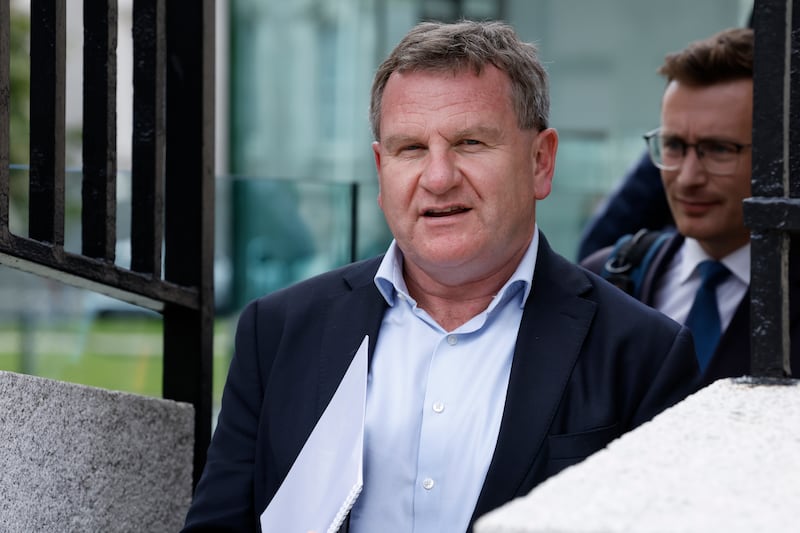
If Jack Chambers was wearing a cape, top hat and waving a magician’s wand he couldn’t have done a better job in making the potentially most fractious political issues of this Government’s term vanish into thin air.
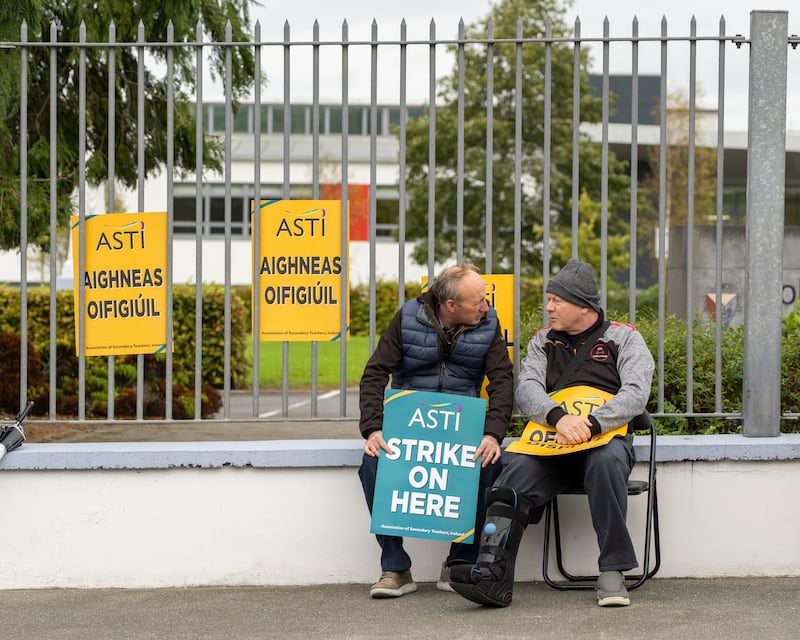
Until last weekend, it seemed that the breakdown of a generation of industrial peace in the State would happen in the most public and mortifying way, with national industrial action happening on the biggest moment of Ireland’s six month presidency of the council of the European Union, with 50 world leaders arriving in Dublin.
But then over the weekend a “landing zone” was found between negotiators from the Department of Public Expenditure and from public sector trade unions. If paved the way for the final deal, worth €5 billion, that was hammered out in the early hours of Wednesday morning, giving a headline pay rise of 10.75 per cent between now and early 2029.
And abracadabra! A large political crisis became a total political non-issue. To employ Tommy Cooper’s catchphrase: “Just like that.”
READ MORE


The deal has attracted very little negative commentary from any political quarter.
The left are happy with it. The centrists are happy with it. The veering-rights are happy with it. And private sector and business interests are not jumping up and down about it either.
“I’m sanguine about the pay deal,” said Danny McCoy, chief executive of Ibec, Ireland’s largest business organisation.
“It’s not going to take the State down, or anything like that. It has a lot of resources. It wants to use those effectively. The deal should have been done three weeks ago, rather than having people on edge in the run up [to the European meetings]. Why bother go through that dance.
“There’s a realism here that we actually do have a functioning economy,” he said. “We have a functioning society. We have a functioning public sector. The reality is we have the resources.”
All of the Opposition parties have broadly welcomed the agreement, with the exception of People Before Profit, which said an immediate 10 per cent pay rise this year was the minimum needed to make up lost ground. Most of the criticism of the Government in Leinster House has been on its approach to the negotiations.
“I think it would have been far easier if the Government had just been willing to meet in summer,” said Sinn Féin spokeswoman on public expenditure and reform Mairéad Farrell. “The could have sat down and agreed to a deal on the basis that pay would have to come first, because people are really struggling.”
Ged Nash, finance spokesman for the Labour Party, said: “Since the last deal lapsed in June, the Government sleepwalked into a mess of their own making. The proposals which emerged from talks represent a significant improvement on the less than credible proposition previously tabled by the Government.”
Cian O’Callaghan, acting leader of the Social Democrats, similarly, criticised the delays. “The Government should have made a credible pay offer back in May. They have wasted a lot of time. This has taken up a lot of space where other issues could have been getting resolved.”
Smaller parties like Aontú and Independent Ireland, the latter seen as right-of-centre, also welcomed it.
Independent Ireland’s finance spokesman Cllr Michael Sheahan said the agreement was fair and balanced overall, although he voiced concern about gains being quickly eroded by price rises.
“Given that inflation is 4.3 per cent projected, I would be concerned that the best description of the deal will be running to stand still.”
The Government can make the case it is being fiscally prudent on the basis that the deal is being rolled out over five fiscal years between 2026 and 2030.
“I think it is a good deal when you compare it to elsewhere in Europe, where we have protests and strikes and dissatisfaction,” said Chambers.
“I think at least it anchors Ireland into a piece of, or to a place of, industrial stability and gives certainty around budgetary planning as well.”
The basis of the disagreement earlier this summer revolved around the sequencing of the talks. The unions insisted on pay first, Chambers wanted productivity and efficiency to be included at the outset. In media interviews this week, representatives from Siptu and the Irish National Teachers Organisation suggested concessions, if any, were minimal.
However, there is some detail included in the agreement on changes such as seven-day rostering in hospital, and workforce redeployment of staff.
It is unlikely to be a cause of major friction, with Chambers praising the public service for its flexibility.
“There has been an exceptionally strong uptake of AI and digital innovation in the public service – much more than people realise,” he said.
“The evidence shows that workers are embracing and driving much of this. In PER [public expenditure and reform] we have built the building blocks to properly integrate AI and digital across Government, to give that single point of contact, break the silos and not have to deal with what I call the acronym soup of different areas of Government.
“We are making it easier for citizens to access services, information, and requirements through AI and digitalisation. It will get rid of the frustration that citizens have of waiting weeks or months for decisions because the process is very administrative or paper-based.”
One point of political disagreement surrounds the role of industrial action and whether this was key to deciding the pay deal. Opposition TDs Farrell, Nash, and O’Callaghan believe so but Chambers rejects the suggestion.
“It wasn’t determined by any of that although it’s in everyone’s interest to avoid the disruption that a strike would cause. What’s most important is that over the last number of weeks, we worked to come to a conclusion which was acceptable for all sides. That’s the very essence of collective bargaining.”
Edgar Morgenroth, professor of economics at DCU, is of the view that the deal will not lead to any significant tension between public sector and private sector workers, saying some of the latter have seen significant pay rises.
“In construction, for example, in three years, they’ve had around a 20 per cent increase. In some sectors of the private sector, but not everywhere, there has been faster wage growth.
“The second thing, and this is important, and it’s a big difference between the private and the public sector, every euro that the Government gives to its own employees in wages, 50 per cent of that more or less comes back [to the Exchequer]” through tax and pension contributions.
Morgenroth says the threatened strike had put the Government “a bit over a barrel” as a shutdown on Thursday would have been “really unpleasant for the Government”.
“It comes at a cost. Can we afford it?” asked Morgenroth.
“If the net expenditure is higher than the €1.15 billion that was in the Budget, then something else will have to give, or else we don’t meet our budget [targets]. But that has been done in the past.
“As economists, we’ve warned about baking in permanent expenditures on the basis of non-permanent corporation taxes. Last weekend, we learned Apple has booked more of its profits and paid more of its taxes in Singapore than in Ireland. That should ring a few alarm bells.”