To get an idea of what the Dublin cityscape was like when the Derelict Sites Bill, published in 1989, was debated in the Dáil, look at the video for Thin Lizzy’s song Old Town. Lead singer Phil Lynott stands on-board a boat on the river Liffey and Dublin around him looks grim.
During the debate, the then minister of the environment Padraig Flynn said: “Dereliction has, unfortunately, become a growing problem in many towns and cities of Ireland.”
Of dereliction in Dublin in particular, he said: “The total land area derelict within the canal ring is some 160 acres – or almost seven times the size of St Stephen’s Green, and it numbers some 600 derelict sites in all.”
Flynn’s speech, made 37 years ago, could be just as easily made today.
READ MORE


Despite the lofty aspirations of the Act, the problem remains embedded and the implementation of the legislation has been fitful at best over the past three decades.
Former Irish Times environmental editor Frank McDonald wrote extensively on planning and dereliction in Dublin for decades.
“It was a time when there were vast swathes of dereliction in Dublin and throughout the State,” he said. “People were hoarding property with grand plans that often never materialised. It wasn’t that councils didn’t have the resources; they did not allocate the resources.”
His verdict is the Act was never effective. “There are lots of examples of legislation that was introduced with the best of intentions but turned out to be useless.”
During the 1990s and for the following decade, generous urban-renewal schemes lowered dereliction. But that reduction was reversed once the Celtic Tiger imploded from late 2008. Abandoned “ghost estates” became common across the State. They included the notorious 77-house Waterways estate outside Castlebar, Co Mayo, which still lies derelict two decades after planning permission was granted.
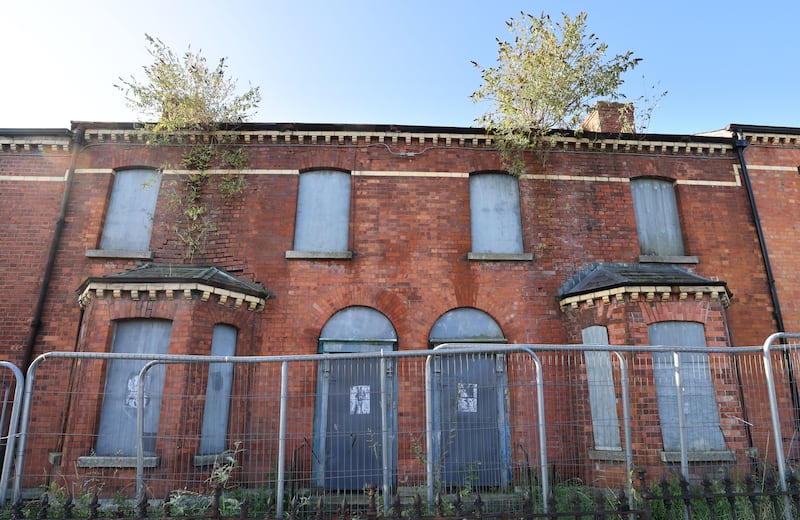
Extensive dereliction during a full-blown housing crisis starkly exposed the limitations of the legislation but also revealed serious shortcomings within local authorities and within central Government to deal with the problem.
The Act only applied to urban areas and did not capture rural sites or property so a register would never fully capture the full story of dereliction.
Moreover, there were huge variances in the performance of the 31 councils in implementing the legislation. In some the register of derelict sites was almost non-existent.
Some did not impose levies, which had now risen to 7 per cent of a property’s mark value – a charge that applies until the site is no longer deemed derelict.
There were substantial shortfalls in the collection of levies. The most recently published annual figures, for 2024, show that 11 councils collected no levies that year. It also showed that, cumulatively, €26 million in levies had yet to be collected.
Local authorities themselves own large tranches of derelict property – and have paid €11 million in levies, effectively to themselves.
This week Minister for Finance Simon Harris confirmed that the Revenue Commissioners will be given responsibility for collecting the levies in future. The Tánaiste suggested the councils had “badly failed” in collecting levies. The Opposition and many councillors were enraged by that portrayal.
[ Harris says councils need to do more on dereliction as he prepares new taxOpens in new window ]
The Association of Irish Local Government, which represents the State’s 949 councillors, argued that it had raised concerns regarding difficulties in tracing ownership, lengthy statutory procedures, complex probate and how hard it was to enforce and collect levies.
That said, there was unanimous support for the new collection role for the Revenue Commissioners by those contacted by The Irish Times.
Independent Mayo councillor Michael Kilcoyne said it was “the right body” to collect levies.
“When somebody gets an envelope with a harp on it they are inclined to open it,” he said.

Most of those contacted argued that collection was only one component of a complex challenge.
William Durkan straddles two worlds when it comes to dereliction; he is a lecturer in geography at UCC with an academic knowledge of this area and is also a county councillor in Kildare.
“It’s not something that’s unique to Ireland, but the dereliction numbers spiked massively in the years following the recession. It was difficult to address because so many elements were left to the local authorities, who were quite disparate and quite different in their approaches,” he said.
“Revenue’s involvement will standardise how it’s dealt with. But it will still be the responsibility of the local authorities to actually update the register so that issue will remain.”
Compiling a register is no easy task, said Durkan.
“You need to have the resources to actually put boots on the ground ... because there’s so many different types of dereliction and lots of different reasons that properties can be derelict.”
There have been significant disparities between councils in their application of the legislation. For example, in 2024, Limerick City and County Council recorded 403 derelictions and imposed €500,000 in levies. This compared to only 14 registered cumulatively for Galway city and county councils. The anomaly is hard to explain.
Under-resourcing is certainly a factor. Within two years, Galway City Council had obtained extra resources. It registered 111 derelict sites in 2026 and imposed €2.3 million in levies, up from no levies collected two years earlier.
Even near the main streets of the city, we are reliant on members of the public to be looking out for things and reporting them
— Janet Horner
And three other local authorities – Monaghan, Tipperary and Cavan – that collected no levies in 2024, have also recorded large increases in registrations and levies after extra resources were pumped in.
Tipperary now has 136 derelict sites registered, with €1.1 million in levies imposed in 2026.
It seems that a growing number of councils are getting their acts together and become more proactive in tackling dereliction, but gaps remain.
Mayo, for example, has a comparatively high number, more than 270 properties, on its register.
“I’d say that’s not even half the dereliction in Mayo,” said Kilcoyne. “It only covers big towns. Small towns are excluded, so is the countryside.”
Geraldine Donoghue, a councillor in Loughrea in Co Galway, said she counted 13 derelict houses along a 2km stretch of road in her area but the Act does not allow them to be included on the register. Nor is the long-defunct Shannon Oaks Hotel in Portumna, one of Galway’s most high-profile derelict buildings, included.
In other instances, it’s the lack of resources that has led to deficits.
“The register has been run on a shoestring in Dublin city,” said Green Party councillor Janet Horner.
“It’s not proactive. The old Frank’s building on North Frederick Street has been derelict for years. I was amazed when I checked that it was not on the register. Even near the main streets of the city, we are reliant on members of the public to be looking out for things and reporting them.”
For Horner, one of the worst things is that it’s not just private landlords who are letting buildings decay and rot – the State is doing it too.
“I think it’s particularly egregious when it’s in public ownership.”
Frank O’Connor and Jude Sherry moved back to Ireland in 2018 after three decades abroad, most recently in Amsterdam.
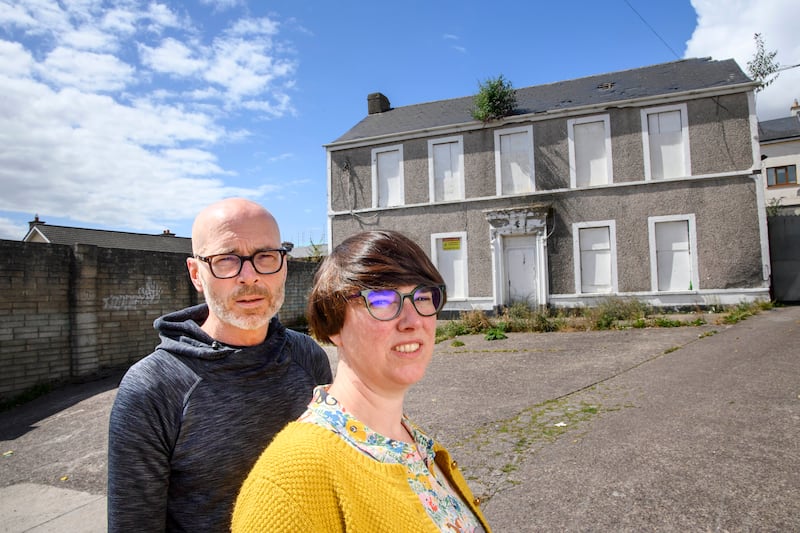
“What really struck us when we came back to Cork was seeing decaying derelict empty houses everywhere in the middle of a housing crisis,” said O’Connor. “What we noticed was the contrast between Amsterdam, which tackled the issue in the 1970s.”
They set up Derelict Ireland, a grassroots campaign to tackle dereliction through an efficient registration process, appropriate levies and other mechanisms.
“In our first two years back we surveyed a 2km radius of [Cork’s] English Market and found 700 derelict properties, whereas only 95 were registered by the council,” said O’Connor.
Since then, they have posted pictures of thousands of derelict buildings on their Instagram page and have travelled the length and breadth of the country with their message.
Both believe Revenue’s involvement will be beneficial but argue the money raised should go back to councils. Beyond that, there are other issues.
“There is a lack of consistency across councils for a law that has been in place for 36 years,” said Sherry.
“We can argue about the definition of dereliction but at this stage I would have thought there was legal advice to all councils from the Government on how to apply the law.”