
On foot of my story about a despairing garda posted to the “Godforsaken” village of Rearcross in 1940 (Diary November 5th), an occasional correspondent who signs himself “Éamonn an Chnoic” has written with a related tale.
The original Ned of the Hill was a Tipperary folk hero of the early 18th century, descended from Gaelic nobility and intended for the priesthood until the broken Treaty of Limerick condemned him to life as an outlawed “rapparee”.
But his latter-day namesake tells me the story of a man who did become a priest, circa 1810, and like the poor garda 130 years later, was dispatched to the hills between Thurles and Limerick.
In his case it was to Kilcommon rather than Rearcross. The resultant despair, however, was similar.
READ MORE


Fr Edmond Walsh was a late vocation, having previously worked as a carter. This may have denied him early promotion to a better posting, although not for want of asking.
He was known to preface his plaintive letters to the Archbishop with the Latin E Carcere Montium (“From my prison in the mountains”), and dating them for example, “the 10th year of my exile”.
He did get a transfer eventually, to Kilteely in Co Limerick, but not before his mountainy exile earned a footnote in the history books, and some geography ones.
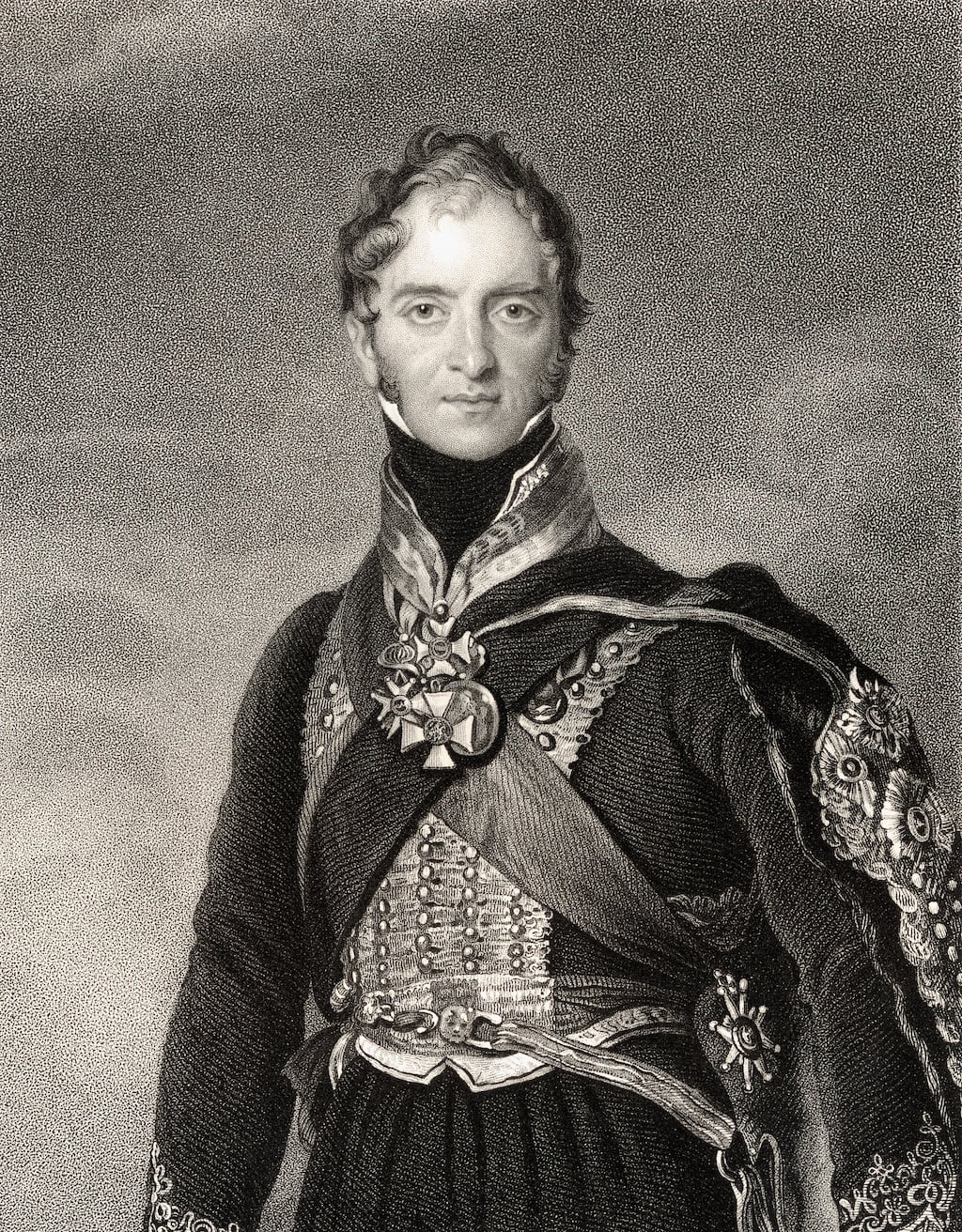
One foggy night in about 1828, he found himself hosting a party of aristocrats who had left Dundrum House on a shooting expedition earlier in the day and got lost. Among them, by a happy chance, was the Earl of Anglesey, aka Henry Paget, then Lord Lieutenant of Ireland.
So impressed was Paget with the hospitality – which included punch made from local poitín – that first he attempted to knight the priest, then, before leaving next day, asked him to name his reward. Father Walsh refused all personal gain but, pointing to the remoteness of the location, pleaded: “Give my people a road to civilisation”.
The Lord Lieutenant obliged. In the years following, he made thousands of pounds available to build roads from Thurles to Newport and Nenagh to Tipperary, thereby linking West Tipp to “civilisation”, if not to an extent that would ease the loneliness of a 1940s Garda.
Paget (1768 – 1854) was in general one of Ireland’s more enlightened Lords Lieutenant. He supported Catholic Emancipation at a time when it was neither popular nor profitable in London, a leaked letter on the subject precipitating his recall for a time.
Later, on his second stint as Viceroy, he introduced the National School system, providing state-aided education for 400,000 children.
Not the least interesting thing about the man who met Fr Walsh was his Cork leg. No, that wasn’t an extension of the Tipperary roads project. It was a prosthetic leg, to replace the one he lost at the Battle of Waterloo.
That was and remains the subject of a famous but probably apocryphal exchange with the Duke of Wellington, much repeated ever since as an example of military sangfroid.
According to the legend, when hit by one of the last cannon balls of the battle, Paget exclaimed: “By God, sir, I’ve lost my leg!”. To which Wellington replied: “By God, sir, so you have!” Alas, contemporary accounts suggest the real exchange was more prosaic and less worthy of a Monty Python sketch.
The two men had a wary relationship thanks to another thing Paget was known for – womanising – and specifically for an adulterous affair he had with one Lady Charlotte, wife of the Duke’s brother Henry.
That put Paget’s military career on ice for several years from 1809. Under the social rules of the time, it might also have cost his life. Charlotte’s brother was an army officer too and believing the affair had dishonoured the family, challenged Paget to a duel on Wimbledon Common.
Whether they fought under the influential “Irish Code” is unclear. That was drawn up by lawyers at the Clonmel Assizes in 1777, to address certain perceived malpractices that had crept into duelling.
It dictated that in matters pertaining to a woman’s honour, the two parties had to make genuine attempts to kill or injure each other, and not to engage in “dumb firing”. In any case, both men discharged their weapons in the 1809 affair, and both missed, but the demands of honour were deemed to have been met.
Whatever the truth of his exchange with the Duke of Wellington, Paget took the loss of his leg well. During the amputation, he reflected stoically on the end of his “long run” as a ladies’ man, saying: “I have been a beau these 47 years and it would not be fair to cut the young men out any longer.”
If not a beau, he remained a skilful horseman, even with one leg, long after that night he got lost in Kilcommon. His name lives on locally today, where Fr Walsh’s is forgotten. Nearly two centuries later, the remains of his Tipperary road project are still sometimes referred to as the “Anglesey Line”.
[ Catholicism may be raising its head high but the body underneath is ailingOpens in new window ]


