

Do Irish people have a particular way of thinking? The question has engaged writers and anthropologists over the years. Our colonial history, our geographical location on the edge of the Atlantic Ocean, and the centuries-long influence of the Catholic Church are typically cited as factors in shaping “The Irish Mind”.
William Desmond, one of Ireland’s most decorated philosophers, explores the issue afresh in his latest book. Wayward and Homebound: Irish Betweenings, Philosophical Thought, and Writing examines “family resemblances” in Irish intellectuals ranging from the ninth century monk John Scotus Eriugena to modernist novelist James Joyce.
Desmond belongs to that school of philosophy known as metaphysics. He investigates “what lies beyond physics” – stuff like “the meaning of life”. So – readers brace yourselves! – he is not in the business of giving pat answers to big questions.
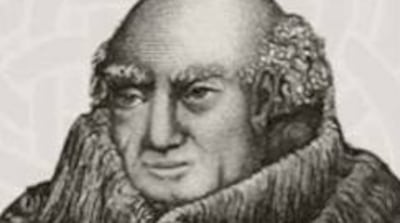
His work is rich with sly observation, and among the many fascinating vignettes in his book is a meditation on Eriugena’s view of the sexes. The monk – famous for featuring on the Irish £5 note – has “an idea of the original human being as one whole prior to the fall which divides the original unity into male and female. Bisexuality is an outcome of the fall, a fall into division”. Now there’s an answer from the Middle Ages to contemporary gender wars. We are all different but the same.
READ MORE


On the nature of Irish thought, it cannot be reduced “to one defining property”, says Demond. Rather, there are distinct ways in which Irish thinkers have navigated “being between” – between science and religion, between parochial and cosmopolitan, between home and exile. The latter is particularly resonant for Desmond as someone who was born in Ireland but spent most of his academic career in the United States and Belgium. “My sense of being Irish is bound up with this saturated sense of doubleness.”
The “interplay between sameness and difference” informs what he calls his “metaxological” philosophy – coming from the Greek “metaxu”, meaning “between”. Some might see this as a weakness, or as a very Irish form of sitting on the fence. But Desmond sees it as a positive.
Dualistic thinking divides problems into opposed and irreconcilable camps. He says “the Irish are not immune” from doing that. “But they are not without reserves of what dialectical thinking promises.
“Dualistic thinking is related to the understandable impulse to determine precisely the identity of this thing or that: to fix this or that as univocally as possible. Dialectic is a mode of thinking which tries to mediate between differences, not only in their opposition but also in their togetherness.”
Which mode of thinking has the upper hand in Ireland?
[ Enoch Burke v Glen Hansard: Where is the line when it comes to protest?Opens in new window ]
“I am old enough to remember when the catchword of judgment in politics and public life was ‘sinister left-wing elements’ rather than ‘far-right extremism’. To paraphrase Yeats about politics in his poem The Great Day: a beggar upon horseback lashes a beggar on foot; the beggars change places but the lash goes on.
“There is not enough finesse for equivocity in public life, and paradoxically also not enough straight talking. There is also not enough listening to what comes up from below. There can come a curating of public communication that over time is trust sapping,” Desmond says.
In the book, “I have tried to offer a kind of philosophical album of different faces in the family ... The challenge: not quite the game of ‘Spot the philosophical Paddy’.” Rather, he says, the aim is to identify “idioms of how we find ourselves in the midst of things, how we inhabit the middle space”.

It’s tempting to characterise the Irish mind by what it’s not. It’s non-imperialistic, non-colonial, militarily non-aligned, politically non-ideological – as illustrated by the absence of UK-style left-right politics – and so on. To this we might add, it’s not part of mainland Europe.
“We do not reflect often enough on how an island is double-edged: bounded with an inward face, and open with an outward space of passage beyond. A landlocked nation tends to engender a metaphysics different to islanders who know winds from the beyond, coming surprisingly off the surrounding seas,” says Desmond.
Not being one thing or the other has served us well in many respects. But let’s not flatter ourselves. A reluctance to pick sides may have more to do with moral cowardice than openmindedness. We may find Donald Trump repugnant, but we’re not going to say that to his face if he comes to the Irish Open in September.

Then again, let’s not be too hard on ourselves either. Why not apply some dialectic thinking to the Irish propensity to apply dialectic thinking? A bias towards moral compromise – towards seeing the answer in grey rather than black or white – is good but also bad.
Desmond points out that a common motif in Irish art is the circle, or sphere. It’s there in the curved stones of Newgrange, the Celtic crosses that populate our land, in sean-nós singing and in circular storytelling exemplified by Joyce’s Ulysses and Finnegans Wake.
Rationalist philosophers condemn circular arguments. But, says Desmond, “there are other senses of circularity that are not vicious. One might have a more meditative thinking that circles around a recurrent perplexity”.
In this spirit, we might say a distinguishing feature of the Irish mind is to be in two minds, although I could be wrong about that.


