Sonny Rollins, one of the greatest jazz saxophonists of all time, has died aged 95.
His death was announced on his website on Monday, “with deep sorrow and profound love”. His publicist Terri Hinte also confirmed the news.
No cause of death was given but the statement said “the Saxophone Colossus” died at his home in Woodstock, New York, on Monday afternoon. The statement quoted Rollins reflecting on death: “I think when the creative person ends, he continues in the next existence. I’m a person who believes this life isn’t the be-all and end-all of everything. A spiritual person doesn’t feel like that.”
With more than 60 albums released from the late-1940s onwards, including collaborations with Miles Davis, Thelonious Monk, John Coltrane and others, Rollins was one of the last living stars of the bebop generation, who took jazz from a predominantly dance or ballad form into startlingly expressive new territory.
READ MORE


Rollins himself was a genius of melody, whose bright, catchy lines – whether jazz standards or self-penned – would be unpicked, extended and refashioned in improvised and sometimes epic solos. Saxophonist Branford Marsalis has called him “the greatest improviser in the history of jazz” alongside Louis Armstrong; when presenting him with the 2010 National Medal of the Arts in 2011, Barack Obama said Rollins had inspired him to “take risks that I might not otherwise have taken”.
He was born Walter Theodore Rollins in New York City in 1930, and raised in its Harlem district, earning the nickname Sonny from his grandmother. Inspired by a piano-playing sister and violin-playing brother, as well as jazz heroes such as Louis Jordan and Fats Waller, he started learning the saxophone when he was seven. Such was the vibrancy of his area’s jazz scene that one of his first bands, in high school, featured future stars Jackie McLean, Kenny Drew and Art Taylor; just after leaving school he began playing with local talents such as Bud Powell and touring stars such as JJ Johnson, and started composing his own work.
Rollins once described himself as “primitive … I’m going with my feelings more than my brain”, and it was this willingness to break with convention and embrace improvisation that helped chart a new course for jazz alongside Davis, Charlie Parker and others in the bebop scene that soon loosened further into hard bop and post-bop.
He was sidetracked by heroin, though, and in 1950 committed an armed robbery to raise funds to feed his habit, later describing himself as “really a despicable character … I alienated everybody except my mother”. He was jailed for 10 months on Rikers Island in New York, but managed to kick his habit with a rehab programme in 1955.

Getting clean helped spur an astonishing burst of creativity: Rollins released his debut album as bandleader in 1953, and recorded 17 more by the end of the decade including landmarks such as Saxophone Colossus (1956), which featured signature tune St Thomas, nodding to calypso and named after his mother’s Caribbean place of birth; the piano-free “strolling” style explored on Way Out West (1957); and Freedom Suite (1958), where his emancipated composition on the 20-minute title track became an elegant argument for freedom in the midst of the growing civil rights movement. Collaborators in this period included Dizzy Gillespie, Max Roach, Art Blakey and others.
In 1959, Rollins took a three-year break from recording and on-stage performance, honing his craft by practising for up to 15 hours a day on the pedestrian walkway of the Williamsburg Bridge, partly so as not to disturb his neighbours – it inspired his 1962 comeback album The Bridge.
Outside of another sabbatical between 1969 and 1971, when he travelled to an Indian ashram to study yoga, philosophy and meditation, these two decades saw him join the avant-garde and fusion directions in the jazz scene.
In the 1980s, he continued to fuse his playing with funk and calypso, and added uncredited soloing to the Rolling Stones’ 1981 album Tattoo You. He focused his live performances away from “smoke-filled, cash-register-banging night clubs” and on to larger stages, and campaigned around the growing climate crisis with benefit concerts.
Rollins married twice, first (and briefly) to Dawn Finney in 1957. He met his next wife, Lucille Pearson, that year, and they married in 1965, remaining together until her death in 2004. The couple were at home just six blocks from the World Trade Centre on September 11 – they evacuated to upstate New York with Rollins carrying only his saxophone. Three days later, he drove to Boston for an acclaimed live set that would be released as Without a Song: The 9/11 Concert, which won him a Grammy for best jazz instrumental solo.
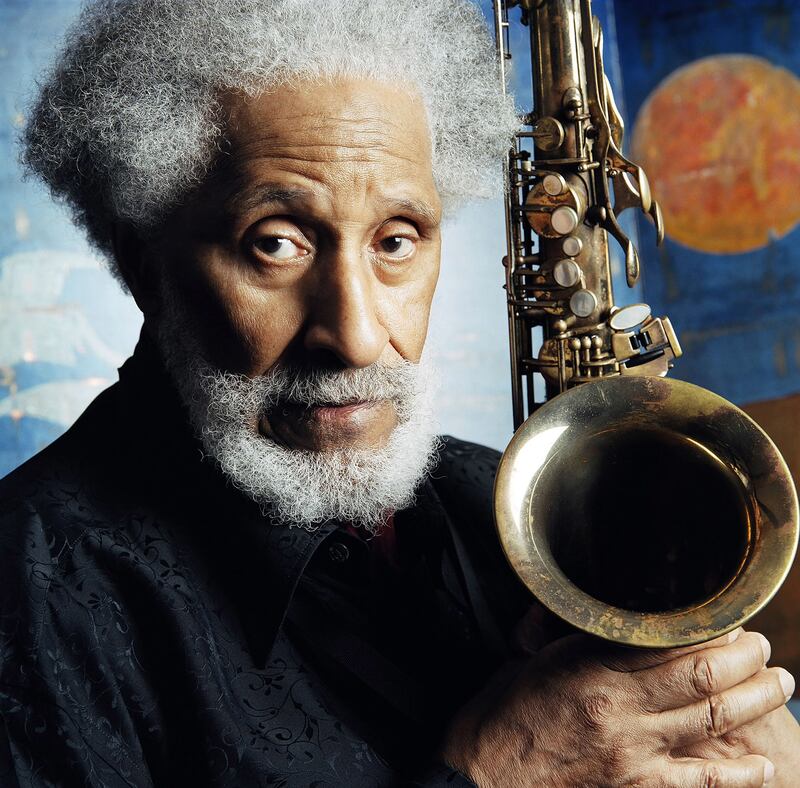
He once said that his aim was “to reach a level where I will never cease to make progress” and even in 2013, just before his retirement, he was arguing he still had much to do: “People say, ‘Sonny, take it easy, lean back. Your place is secure. You’re the great Sonny Rollins; you’ve got it made.’ I hear that and I think, ‘Well, screw Sonny Rollins. Where I want to go is beyond Sonny Rollins. Way beyond.’” - The Guardian