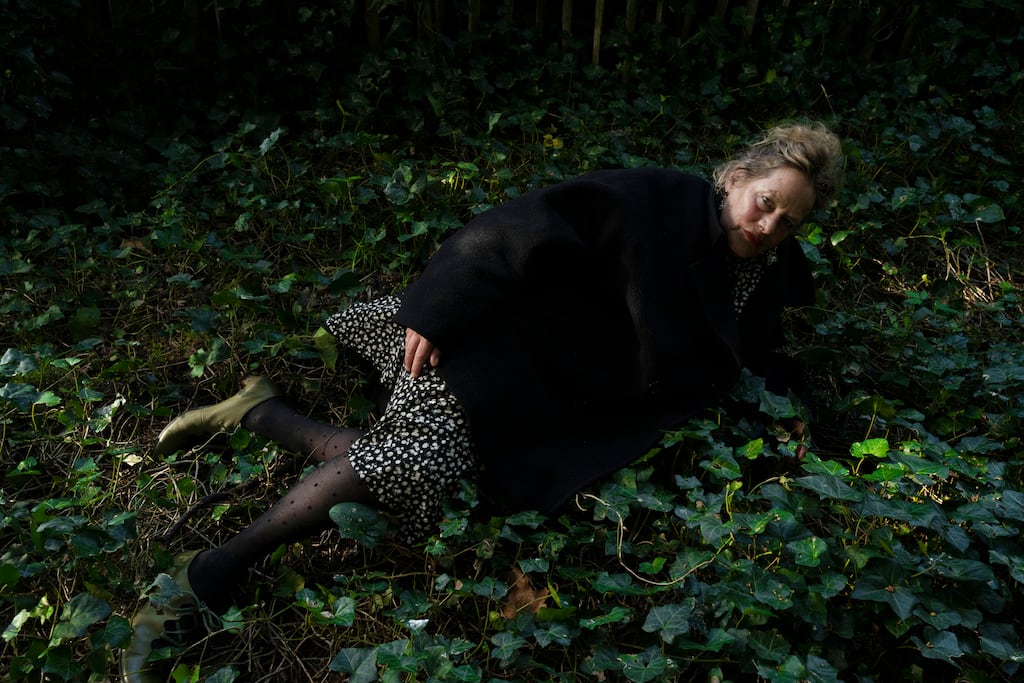
Deborah Levy has made no secret of her lifelong gravitation towards France and French literary culture. Esteemed French writers such as Colette, Marguerite Duras, Antonin Artaud and Simone de Beauvoir flit through her inventive, formally elastic novels and trilogy of “living autobiographies” as muses and sparring partners. Of the feminist scribe of The Second Sex, Levy writes in her autobiography Real Estate, “she was my muse but I was certainly not hers” before proceeding to “disobey Beauvoir” by perusing a local supermarket “to stock up on plates and cutlery”.
Levy’s new novel, My Year in Paris with Gertrude Stein, combines her Francophilia with her fascination with one of the United States’s most notorious expatriates and writer of modernist prose. Stein was famous for moving to Paris from California at the dawn of the 20th century and, via her legendary left-bank “salon” that she hosted with her partner Alice B Toklas, nurturing artists and writers such as Hemingway, Picasso and Cézanne.
Levy’s narrative begins however, not with Stein but a lost cat, vanished one night from a Parisian friend’s flat in the Latin Quarter. This domestic “drama”, the narrator tells us, furnishes “relief from writing my essay on Gertrude Stein, about whom I knew too much and nothing at all”. The line, as well as establishing the premise of the novel – a woman trying to complete an essay about Stein in Paris, increasingly waylaid by the city and by life’s various contingencies – seeds Levy’s intentions to create an enigmatic, rather than exhaustive or intensely academic portrait. Her desire is to keep Stein, like her writing, “baffling and beguiling”, or as an animate and effervescent presence on the page.
The straitjackets of fixed literary genre have always eluded Levy, yet My Year in Paris with Gertrude Stein proves particularly sly at slipping between categories. Though it volleys between erudite passages describing Stein’s career and life and the architecture of her sentences, it is not a work of biography nor a conventional work of criticism. It is a novel, yet, other than its short percussive paragraphs and poetic charge, it does not resemble Levy’s other works of fiction, which teem with allegories and psychoanalytic tropes.
READ MORE


Closer to 2024’s hybrid work of essays and reflections, The Position of Spoons, this book oscillates between observations gleaned from lived experience and critical reflection. It is closer to the French understanding of the term “novel”, where a literary roman can hold anything and everything germane to a writer’s interests.
[ The Cost of Living review: A truly joyous second instalmentOpens in new window ]
Levy’s pact with Stein is forged on the premise that the latter was invested in the athletic reach of words and in putting them to work. “What did she want words to do and what did they do for her?” she asks, before offering the possible response that Stein desired, via her books, to “dismantle coherence” and to question “how we put ourselves together”. This project, Levy suggests, is not linear, and we never become ourselves in a vacuum. Rather we collage our identity from different scraps and timelines.
As Levy writes a present-day account of living in Paris, tracing Stein’s footsteps on the Rue de Fleurus or the bustling cafes of Montparnasse, residues of present-day crises – wars against Ukraine and Gaza – leak into the fabric of the prose. “The streams were flowing through the nineteenth century into the twenty-first and all over the place,” reports her narrator. If this simultaneity feels at times disjointed for the reader, Levy is aware of the sensory onslaught. “I wanted my essay to be a clear stream, but there was so much going on,” she notes.
[ Deborah Levy: ‘Did you notice when you said the word feminist an alarm went off?’Opens in new window ]
Two of the narrator’s other “muses” – the friends she makes during her stay in Paris, named Fanny and Eva – help to ground the capering, ambitious enterprise of Levy’s novel. They provide flashes of colour and comic relief, a counterpoint to the solemnity of Stein’s literary forays. Fanny is a near-mythical sketch of a sensual Parisienne, serving raclette and attending to her voracious “menu” of male and female lovers. These characters strain credulousness, yet Levy uses them to tackle head-on the enduring cliche of the foreigner in Paris, with arch references to Serge Gainsbourg, La Ville Lumière and “arrondissement sex”.
Towards the end of My Year in Paris with Gertrude Stein, her essay still unfinished, the narrator observes: “Gertrude Stein was a big presence, but I don’t think anyone can ever get to the bottom of it.” To get to the bottom of our magnetism towards certain myths and writers is the impetus of Levy’s new electric book. Musing on charisma, aura and literary celebrity, it also asks what happens when we drift off-script and “disobey” our idols. Like the lost cat in its opening pages, it slinks out of grasp and does not ask anything as obvious as to be found.