One of the longest-running conflicts in world history has just entered a new phase. European soccer fans, accustomed to convivial neighbourhood venues, are threatening to walk from Manhattan to the MetLife Stadium in New Jersey for games in the forthcoming Fifa World Cup.
This has generated a combination of outrage and ridicule among locals. A spokesperson for the Port Authority of New York and New Jersey announced that any such odyssey was “not safe or actually feasible”.
TikTok videos were less measured. “Europeans think they can walk to MetLife Stadium,” one yelled. “Have Europeans ever seen what that route looks like? It is literally just freeways and swamps. Europeans once again think they can impose all their rules and systems.”
Yeah, all right. Keep your baseball cap on, mate. If you’re used to, say, having a pint in Drumcondra before strolling to the similarly sized Croke Park, then the MetLife NJ experience will come as something of a jolt.
READ MORE


It is not just (or even mainly) that the home of the New York Giants is in a different state from the city it alleges to serve. “NJ Transit announced that a round-trip train ticket will cost $150, a significant increase from the normal day-to-day price, which is $12.90,” The Hill tells us. I beg your pardon! How much?
In truth, it’s hard to find evidence of many Europeans seriously planning to take the 15km hike. Such a journey, in a New Jersey summer, would be a challenge through even the leafiest of glades. Across layers of baking asphalt it might be a literal killer.
The dispute is, however, an enormously generous source of ammunition for an endless spat between the United States and the rest of the world.
The story plays into a European perception – not entirely unfounded – that American cities are less “walkable” than those in the old world. Some years ago the Institute for Transportation and Development Policy rated London – a vast sprawl – as the fifth most walkable large city in the world.
This looked at closeness to a “car free” space, closeness to healthcare and education, and the smallness of the blocks. Take a bus or tube to most of London’s urban villages and you can then walk to most of the services you require. A more recent study for the journal Environment International revealed that the 100 least walkable cities were all in North America.
[ We must radically reduce dependence on the private carOpens in new window ]
This stuff is irresistible to those online Europeans who love to caricature Americans as soda-guzzling philistines who would drive from the couch to the lavatory if only the carpet were paved over. Americans, in turn, make endless TikToks about how, in Europe, air conditioning is scarce, customer service is poor, portions are small and (a weirdly common one) free drinking water is unavailable.
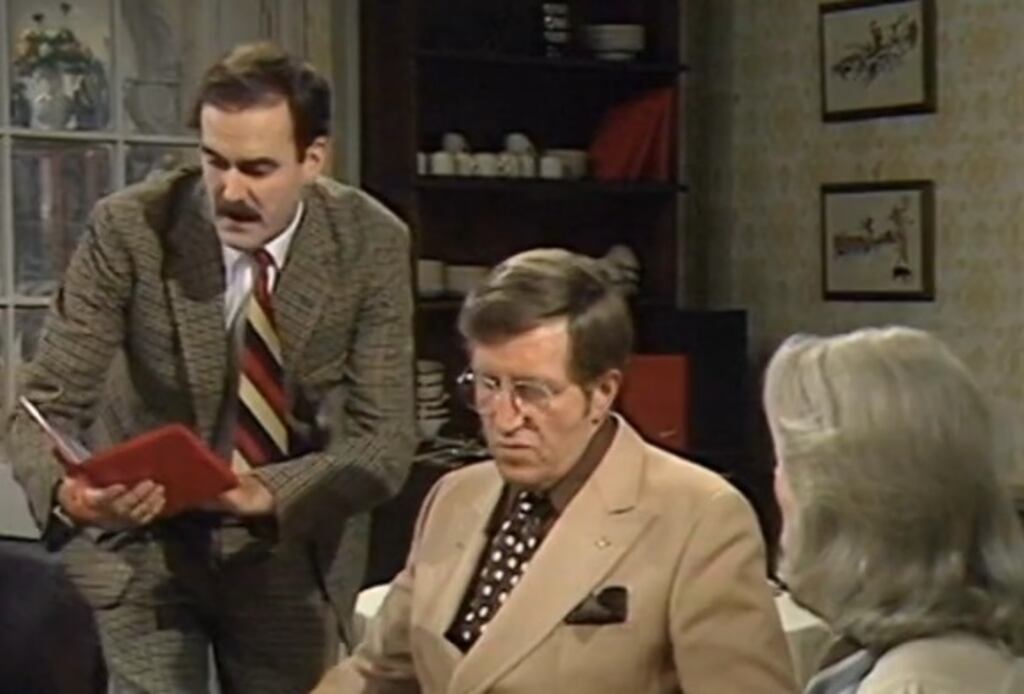
It’s as if we are forever trapped in the Waldorf Salad episode from Fawlty Towers. The United States is Mr Hamilton in his tan blazer. Europe is the reliably irritable Basil Fawlty. “I shall of course refund your money. I know how important it is to you Americans,” the hotelier says pointedly towards the close.
The rivalry was already up and running when, in 1883, Charles Dickens took key characters from Martin Chuzzlewit to the US. There they encountered a nation poisoned by vulgarity, violence, self-importance and – foreshadowing Mr Fawlty – an obsession with money. “Men were weighed by their dollars, measures gauged by their dollars,” Dickens writes. “Life was auctioneered, appraised, put up, and knocked down for its dollars.”
The tensions were certainly still around when the United States hosted the World Cup in 1994. Nativist Americans scowled at all this kowtowing to a foreign sport. It was in the run-up to this event that “soccer”, hitherto a word in common usage throughout Britain and Ireland, was finally demonised as a filthy Americanism. It has remained such ever since.
None of this was, however, preparation for the scale of the bickering that ensued in the digital age. Dip into social media at any point over the past 10 years and you’ll discover some unimaginably insignificant transatlantic dispute over food, clothes, music or manners.
Just this week, X has been much taken up with three classic examples: unwalkable American cities (see above), the supposed horribleness of American bread (out of nowhere) and divergent definitions of lemonade (clear and fizzy or yellow and flat).
Everybody is certain their region is correct. Nobody is prepared to budge a centimetre. It’s all enormously childish. And, on the European side, it is flavoured with just a twist of jealousy.
Mr Hamilton was largely right about the awfulness of contemporary England in Waldorf Salad. If he were still with us and by his phone when the World Cup begins next month, he’d be all over the #soccersucks hashtag.