

Raphaël Glucksmann, the MEP who this week decisively won the primary to choose a centre-left candidate for France’s 2027 presidential election, has worked more than most politicians on the issue of genocide.
In his former life as a documentary maker he made Kill Them All!, a film that argued France held some blame for the 1994 genocide of Tutsis in Rwanda.
He became a leading voice against the persecution of the Uyghur Muslim minority in China after entering politics and winning election to the European Parliament in 2019. His efforts to organise boycotts against goods made with forced Uyghur labour saw him sanctioned by China.
“I hope the National Assembly will rise to the occasion of this historic moment and recognise the genocide targeting the Uyghurs in China,” he said as he campaigned, successfully, for the French parliament to recognise Beijing’s actions as a genocide in 2022.
READ MORE


The topic of genocide is once again prominent, but in a very different way, as he campaigns to become French president in April elections representing a coalition of moderate left parties including the faded but still-powerful Socialist Party.
Glucksmann refuses to use the term genocide to describe Israel’s killing of Palestinians in Gaza, and was repeatedly cornered on the issue by rival candidates who used the term in the centre-left primary debates.
“It would have been easier if I had used it, honestly,” Glucksmann said after his win, when a journalist asked him whether the young Glucksmann who made Kill Them All! would find his older self lacking in courage.
Glucksmann explains that he takes the stance based on decisions of the International Criminal Court, which has issued arrest warrants for Israeli prime minister Binyamin Netanyahu and former defence minister Yoav Gallant for war crimes and crimes against humanity – but not for genocide.
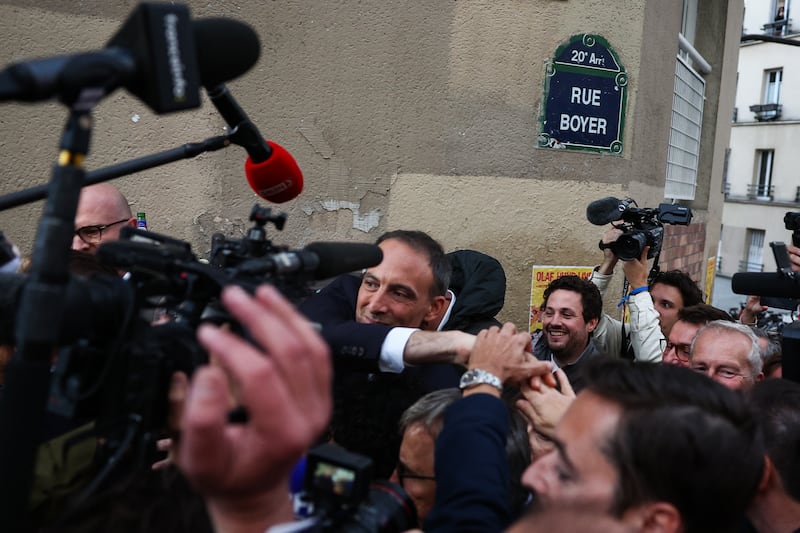
“I’ve denounced the Israeli government, I’ve campaigned for sanctions, I’ve campaigned for the suspension of the EU association agreement with Israel ... but regarding genocide itself – and undoubtedly this is linked to my history with Rwanda – I don’t use that term,” he recently said.
“Genocide – it’s the total extermination of a population. That’s the aim.”
The word is likely to continue to haunt his presidential campaign as it will be a dividing line between Glucksmann and his most bitter rival.
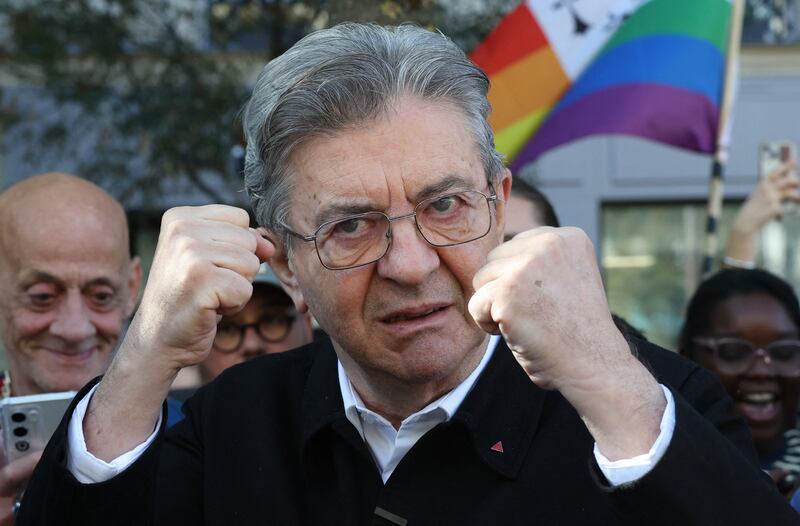
The charismatic hard-left veteran Jean-Luc Mélenchon (75), who is running his own, separate campaign in his fourth shot at the presidency, uses the word “genocide” readily. He was one of the first in French politics to do so, raising concerns about a possible genocide in Gaza in December 2023 and declaring that Israel’s actions were “not self-defence, but genocide” as early as February 2024.
The divisions are both highly sensitive and electorally significant in a country that has both Europe’s largest Jewish population and a Muslim minority estimated to number about 10 per cent of its overall population.
Whether to co-operate with Mélenchon’s fiery France Unbowed (LFI) movement is one of the most contentious issues among the centre-left.
[ America has been brought to the brink by Trump’s delusion and Hegseth’s barbarismOpens in new window ]
All sides are aware that splitting the electorate has been disastrous for the French left in the past, but their differences appear to have become too deep to repair.
Glucksmann acted partly from a desire to create a moderate pro-EU alternative to Mélenchon’s movement when, then a columnist, he decided to co-found the Place Publique political movement in 2018.
Staunchly pro-Ukraine and a former adviser to the Georgian ex-president Mikheil Saakashvili, Glucksmann has long been the target of ire by Mélenchon and his movement for being too “centrist” for his support of Nato and for a perception he is an out-of-touch Parisian.
The scorn is mutual. “The French left isn’t about playing on Jewish names at rallies to get a cheap laugh,” Glucksmann said last week, a reference to persistent accusations of anti-Semitism against Mélenchon.
Mélenchon joked about the name “Epstein” at a rally earlier this year and later mispronounced “Glucksmann”, a surname that reflects the MEP’s Ashkenazi Jewish heritage on the side of his father, a well-known French philosopher.
Glucksmann ruled out any deals with Mélenchon during the primaries and has said his victory – in which he defeated four other candidates to win with a comfortable 66 per cent – is his last word on the matter.
“There will be no alliance with LFI. That’s decided,” he told French radio after his win. After someone dumped a bag of flour over him on the street in Paris following his victory, he told media that Mélenchon and his supporters were to blame.
[ Crime, terror, immigration: France through the eyes of its 'Fox News'Opens in new window ]
Glucksmann now faces the task of closing the gap in polls, which show him in fourth place on about 11 per cent, with Mélenchon on 15 per cent, the centre-right Édouard Philippe on 16 per cent, and hard right front-runner Marine Le Pen leading the field on 32 per cent.
The candidate has asked the Green party to back him – though his pro-nuclear stance alienates some of their members – saying his campaign will be “deeply ecological”. He has insisted repeatedly that he won’t seek allies to the right.
On one of the other dividing lines of the campaign, immigration, he describes his stance as “realistic”. “Zero immigration means the collapse of the French economy,” he said during primary debates.
Glucksmann believes that his platform of reforms to education, building a strong common European defence, and a rejection of extremes can shake off the pall of the humiliating performance of the centre-left in 2022, when the Socialist candidate was eliminated in the first round after winning just 1.8 per cent.
“We have a democratic left that is regaining strength and vigour, that believes in its principles again, and that can win the presidential election,” he said. “Finally, we are banishing the spirit of defeat.”


