
General Charles de Gaulle was in Ireland in June 1969, seeking peace on a Kerry beach a few months after his resignation as French president. French voters had rejected his proposed regionalisation and senate reforms.
Well might de Gaulle have sought solace on the edge of Europe; the previous year had produced remarkable scenes of defiance in Paris and other French cities, as students and workers protested, occupied and defied. De Gaulle struggled to make sense of it all.
As the historian Tony Judt, author of the 2005 book Postwar: A History of Europe Since 1945, saw it, in France “the Fifth Republic had accentuated the long-standing French habit of concentrating power in one place and a handful of institutions. France was run, and was seen to be run, by a tiny Parisian elite; socially exclusive, culturally privileged, haughty, hierarchical and unapproachable”.
Yet de Gaulle was able to rally the Gaullist political movement, stressing the danger of a communist, revolutionary coup; it was a choice, he insisted, between anarchy and legitimate government. The Gaullists won the ensuing national assembly election handsomely, but the sting came the following year.
READ MORE


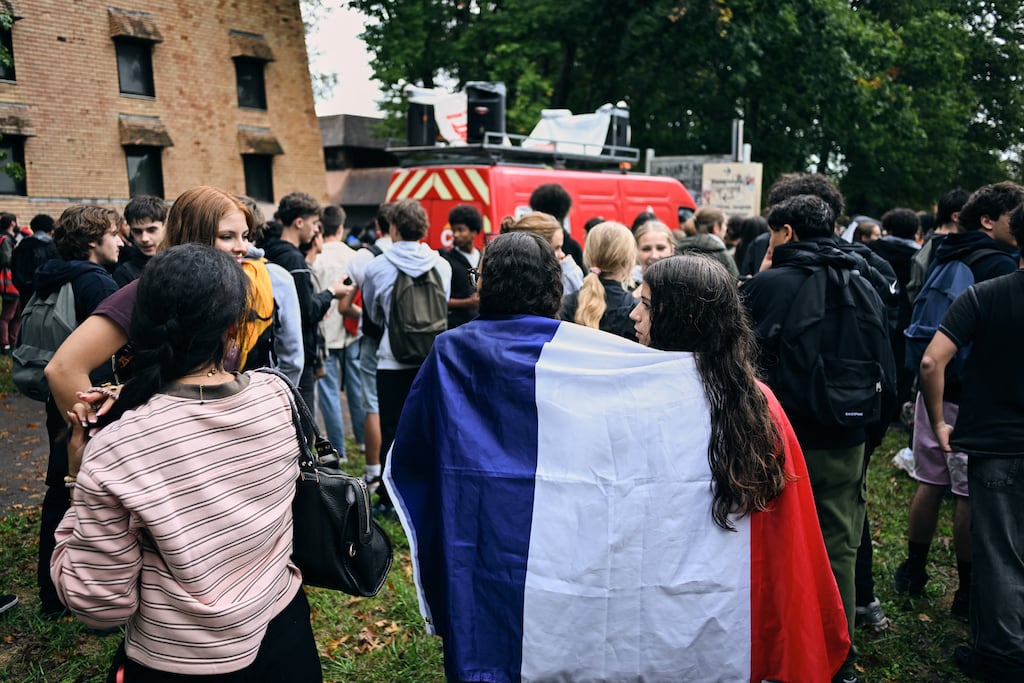
Because of 1968, but also the older French tradition of barricades on French streets, and the reach of French cries of liberty, the current protests carry much historic weight and symbolism.
But they also come as France has embraced the de Gaulle legacy and mythology, reflected in the success of La Bataille de Gaulle, Antonin Baudry’s two-part epic film based on British historian Julian Jackson’s biography of de Gaulle. It is estimated five million people have seen it in France, and for all its artistic licence, it raises intriguing questions about the state of France and its identity now.
De Gaulle recorded in his memoirs: “All my life, I have had a certain idea of France.”
This was about recovery from humiliation during the second World War, the renewal of French grandeur and removing the stain of the Vichy collaboration with the Nazis. But it was also about authoritarianism, by creating an exceptionally powerful office of president, and de Gaulle was sustained, writes Judt, “by his institutions, his record, his personality and French memories of the alternative”.
The contemporary question of the alternative is also of great significance amid a frayed social contract and fractured politics. Emmanuel Macron, on his last lap of power, has at various stages attempted to channel the haughty de Gaulle gravitas. He has also been vocal about French international influence and leadership and the tensions about the Atlantic versus European alliances, faultlines magnified in the recent films as de Gaulle grappled with exile, a disdainful US president Roosevelt and a more sympathetic Winston Churchill.
[ French students at forefront of global stirring of disaffected youthOpens in new window ]
In May 2018, Macron told a French literary journal, “What makes me optimistic is that the history we are living through in Europe is becoming tragic again.” But this now reads as delusional and he has lost the domestic battle.
In June 2024, he made a television address to capture the gravity of his centrist coalition losing elections to the European Parliament; it secured just 15 per cent of the vote, less than half of far-right National Rally’s 31 per cent. He announced he was dissolving the French National Assembly and finished with a rhetorical flourish: “To be French is always to rise to the times when they demand it ... It is choosing to write history rather than be subjected to it.” But what France now faces, two years on, is the strong possibility of a far-right presidency.
Macron did much to upend the traditional two-party system in France but has fallen between stools. According to the Sorbonne sociologist Nathan Sperber, “Macron branded himself as a figure transcending the supposedly obsolete divide between right and left, blending technocratic expertise, disruptive entrepreneurialism and youthful optimism. To the more discerning public, what he appeared to offer was a deepening of neoliberal reforms under a sheen of cultural liberalism.”
The gilets jaunes protests of late 2018 and early 2019 were one measure of the anger, as were massive protests against pension reform; now we are witnessing the latest phase, ensuring, in Sperber’s phrase, that much of Macron’s time in office has been about “the politics of emergency”. Those emergencies can facilitate nostalgia and extremism, a potent cocktail. Appeals to “The Republic” become increasingly desperate, and a strategy of voting tactically to block far left or far right is hardly sustainable, given that it requires sufficient numbers not to embrace a movement they identify with but to voter en se bouchant le nez (“vote pinching their nose”).
According to French journalist Agnès Poirier, the interest in the de Gaulle film piques interest because it raises this fundamental question: “What kind of people do we believe ourselves to be?” In answering that, the number of nose pinchers could reduce dramatically.


