South Korea’s president Yoon Suk Yeol has been removed from office, four months after his short-lived attempt to impose martial law sparked a prolonged political crisis.
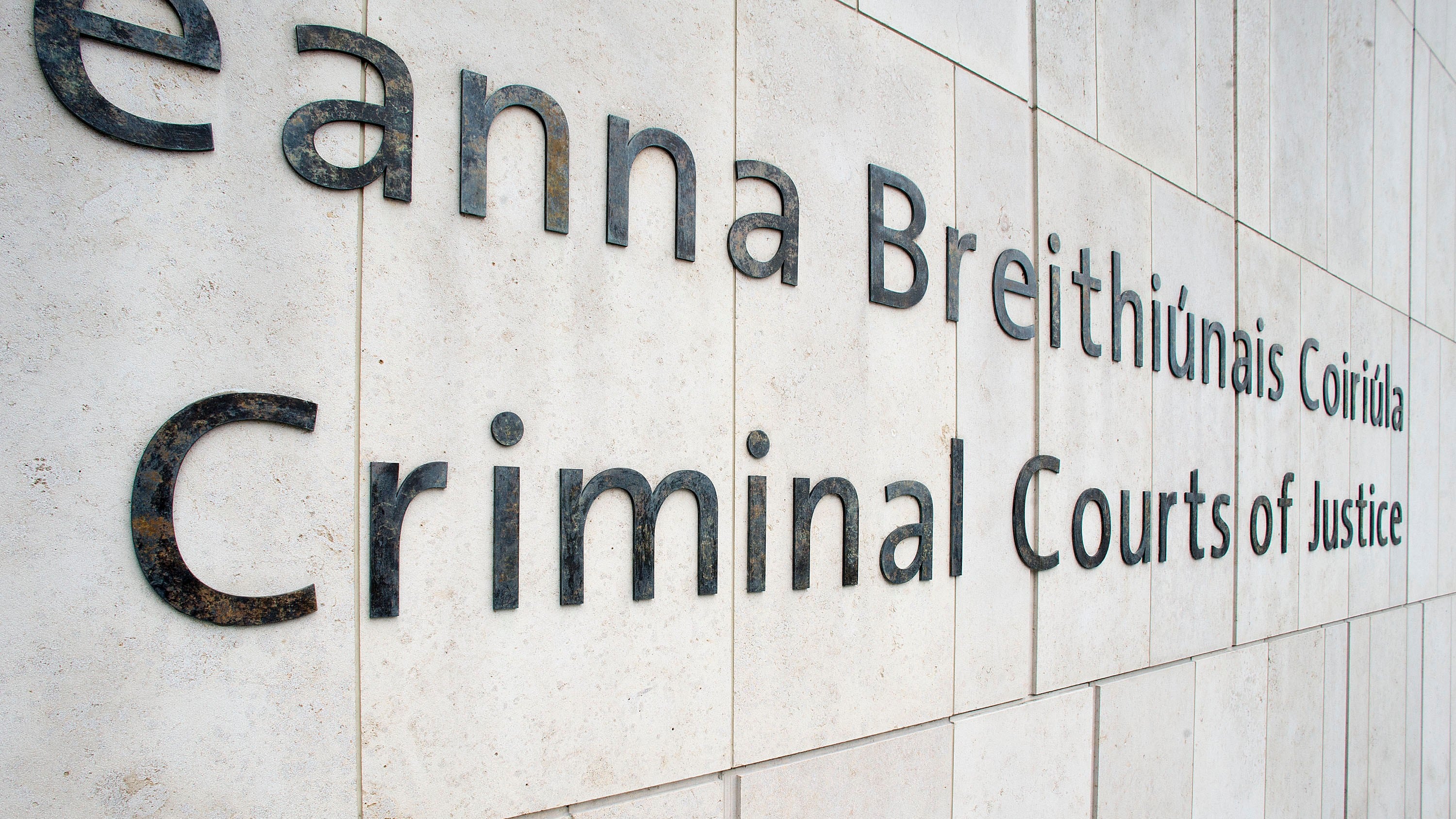
The constitutional court on Friday announced in a unanimous verdict that it would uphold parliament’s vote to impeach Mr Yoon last year over his failed power grab, stripping him of office and ending his presidency less than three years into his five-year term.
A presidential election will be held within 60 days. Han Duck-soo, a Yoon appointee and long-serving technocrat, will serve as acting president until then.
The hardline former prosecutor’s move to impose martial law in December triggered South Korea’s most severe political crisis since its transition to democracy in the late 1980s, leading to his suspension and subsequent arrest on a criminal charge of insurrection.
READ MORE


Mr Yoon told the constitutional court in February that his overnight martial law decree and decision to deploy troops to storm the country’s parliament had been necessary to “alert the public” to the “wickedness” of the leftwing opposition.
But, announcing the court’s ruling on Friday morning, acting chief justice Moon Hyung-bae said Mr Yoon had “violated the basic principles of a democratic state”.
The judge described how in an attempt to prevent lawmakers from voting to reject his martial law decree, Mr Yoon had dispatched soldiers to the National Assembly with orders to “break down the door and drag the lawmakers out”.
Mr Yoon’s defence minister also instructed counter-intelligence services to monitor the location of the National Assembly speaker and the leaders of the main political parties – including his own – on the night of the martial law decree as a precursor to arresting them, Chief Justice Moon said.

Military officials also illegally inspected the electoral commission’s computer systems and monitored the locations of senior members of the judiciary, including a former supreme court chief justice, said the judge.
“[Mr Yoon] mobilised military and police forces to dismantle the authority of constitutional institutions and infringed upon the fundamental rights of the people,” said the chief justice. “In doing so, he abandoned his duty to uphold the constitution and gravely betrayed the trust of the Korean people.”
In a statement released several hours after the court’s verdict, Mr Yoon said he was “deeply grateful to all of you who have supported and cheered for me, despite my many shortcomings”.
“I am so sorry and regretful that I could not live up to your expectations,” he added. “I will always pray for the Republic of Korea and its citizens.”
The former president faces separate criminal charges of insurrection. He denies any wrongdoing.
The landmark verdict, which marks the second time a South Korean president has been impeached and removed from office in under a decade, comes as Asia’s fourth-largest economy wrestles with sluggish growth and deepening political polarisation.
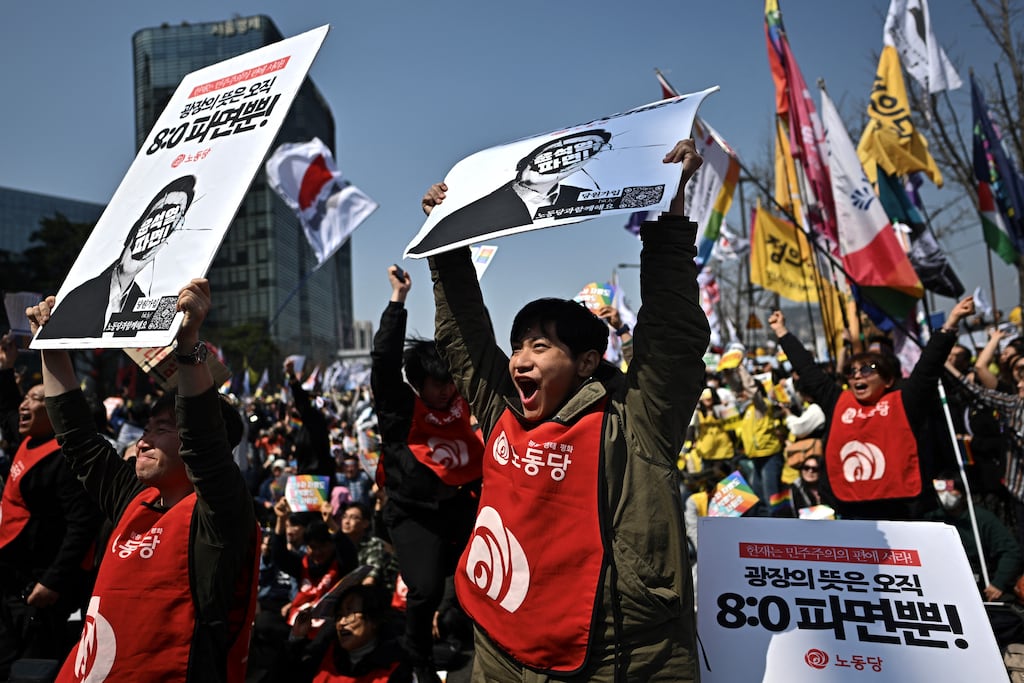
In light of heightened tensions in recent months and violence at some pro-Yoon protests, there was a heavy police presence on the streets of Seoul on Friday.
The verdict was met with loud cheers from anti-Yoon demonstrators gathered outside the court. “There is hope for this country as we overthrew a dictator and will elect a new leader,” said Ahn Eung-soo, a 72-year-old retiree. “People will have a better life.”
But Kim Young-kyu, a 61-year-old retiree and Yoon supporter, described the court as “politicised” and its ruling as “not logical”.
“I will continue to protest for our country,” he said. “Yoon should be at the forefront of our efforts to evict anti-state forces.”
Near the court, some Yoon supporters vandalised police vehicles, while others chanted death threats against Lee Jae-myung, the leader of the leftwing opposition Democratic Party and the frontrunner in the race to succeed Yoon. In a statement, Mr Lee described the verdict as “a new beginning for Korea”.
Jung Chung-rae, head of the opposition-controlled National Assembly’s impeachment committee, described the ruling as a “victory for the constitution, democracy and the people”.
Kwon Young-se, the interim leader of Mr Yoon’s conservative People Power Party, said the PPP would accept the ruling and that he “sincerely apologises” to the public.
Mr Yoon’s lawyer, Yun Gap-geun, told reporters outside the court that he felt “deep regret” over the ruling, which he said “appears to be nothing more than a political decision”.
Analysts noted that the political turmoil had added to a difficult time for South Korea.
Seoul is braced for the economic impact of US president Donald Trump’s protectionist trade policies. There is also concern over the Trump administration’s commitment to deterring North Korean aggression as the US president publicly muses about renewed diplomatic engagement with Pyongyang.
Mr Han, the acting president, said: “We will do our utmost to prevent any disruptions in areas such as trade and defence, uphold public order and remain fully prepared for all kinds of disasters.” − Copyright The Financial Times Limited 2025