Bodies are piling up at morgues and Venezuelans are digging through rubble with their hands, as state services collapse and the country’s US-backed leaders face growing anger over their response to last week’s twin earthquakes.
The 7.2 and 7.5 magnitude earthquakes that hit Venezuela on June 24 have left 1,943 people dead, the Venezuelan government said on Tuesday, with more than 10,000 people injured and 15,000 displaced.
More than 42,000 reports of missing people have been sent to a website set up by the Venezuelan opposition, as the country’s US-backed authoritarian government has not given figures for those missing.
The UN is procuring 10,000 body bags in anticipation of a rising death count, in a country mired in a years-long economic crisis.
READ MORE


“Basic services have broken down,” the UN’s refugee agency said on Tuesday.
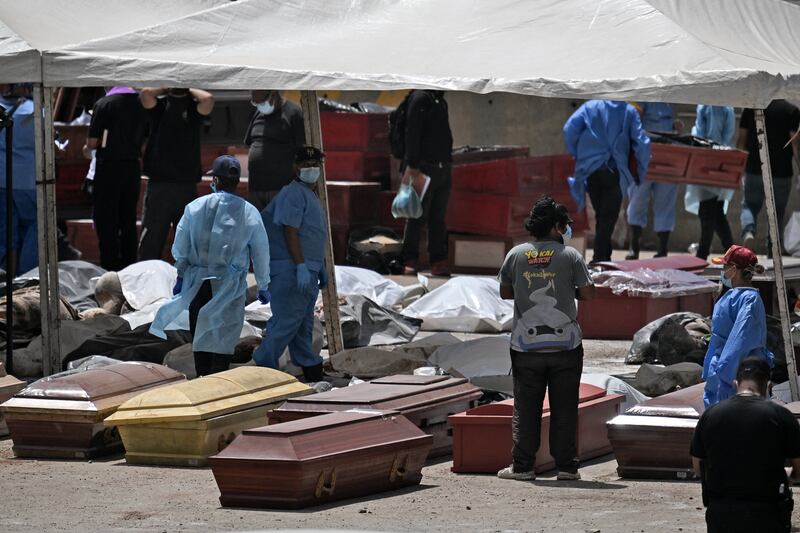
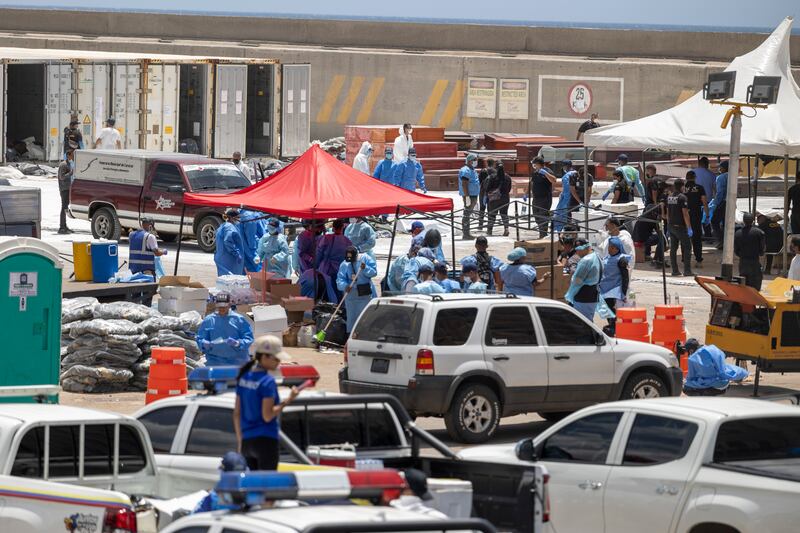
In hard-hit La Guaira province, authorities have erected a makeshift morgue beneath grain silos at a seaport complex, where a near-constant stream of bodies has been arriving.
From the gates, medical personnel could be seen moving bodies, unloading coffins and carrying bags of lime to help cover the putrid smell. Outside, relatives desperately awaited news of loved ones.
In the absence of a serious government search-and-rescue operation, residents have been saving neighbours themselves, removing chunks of rubble with their bare hands, as teams from more than 50 countries arrive to help.
Among the missing are more than 100 Venezuelans who were deported from the US hours before the earthquake struck. The hotel they were believed to be staying in collapsed during the earthquakes.
At the silos in La Guaira, Maikol Heredia found the body of his cousin Jorge Luis González, who was deported to Venezuela on June 24. “He hadn’t been back to Venezuela in nine years,” said Heredia, who is trying to raise the $850 needed to transfer the body to his home 720km away.
Alicia Mendoza has searched hospitals and the makeshift morgue at the grain silo in search of her 38-year-old son, Alejandro Bisbal, one of the missing deportees. Authorities showed Mendoza a corpse with her son’s name attached, but she said it was not him.
“I don’t understand all this chaos or why they can’t treat people with dignity,” she said.
Hospitals and clinics have been overwhelmed by trauma patients, with “chaotic service delivery”, “overcrowding”, “growing surgical backlogs” and a “breakdown in biosafety measures”, the World Health Organisation warned.
The haphazard response has piled pressure on interim president Delcy Rodríguez, who served as authoritarian leader Nicolás Maduro’s deputy before he was arrested and exfiltrated by the US. Rodríguez has received US president Donald Trump’s backing to open up the country’s oil sector.
“[Interior minister] Diosdado Cabello and Delcy Rodríguez have shown their hatred towards us,” said one La Guaira resident, who withheld their name out of fear of reprisals. “All they’ve done is mess with the response.”
When Rodríguez surveyed the remains of a collapsed tower in Caracas last week, she was heckled by residents, shouting “we want you gone!”
[ Venezuela earthquake: Model homes with views of the sea – now reduced to rubbleOpens in new window ]
On Monday, a video circulating on social media appeared to show Cabello arguing with a member of a US rescue team. The US has pledged $300 million in relief funds and is deploying military assets and 900 people.
Nobel Prize-winning opposition leader María Corina Machado has pledged to return from exile to help with the recovery, though on Monday she said the Rodríguez government had closed airspace ahead of her flight from Panama.
“I’m going to do what it takes to come together there,” she said.
In Caracas, which was spared the large-scale devastation in La Guaira, firefighters and volunteers are inspecting buildings to determine whether residents can safely stay inside, as hundreds of people continue to sleep in shelters or out on the streets.
The central Plaza Venezuela is packed each night with tents housing families afraid to return home amid ongoing aftershocks.
At the capital’s main morgue, relatives anxiously waited for news of loved ones.
“It’s been days and we haven’t heard anything,” one person said. “They’ve told us that 17 bodies are being brought in from La Guaira, so we can only hope our loved ones are among them.”
- Copyright The Financial Times Limited 2026