

Competitiveness is mission critical for Europe as trade headwinds continue across the globe. Prompted by the diagnoses of ex-Italian prime minister and former president of the European Central Bank Mario Draghi’s report on the future of European competitiveness, the EU is responding.
“The EU has started to move from political rhetoric into the implementation of some of the suggestions included in Mario Draghi’s report,” says Massimiliano Mascherini, head of the social policies unit at Eurofound.
In 2025 the European Commission’s Competitiveness Compass was launched to execute Draghi’s recommendations over a five-year roadmap.
“The compass represents an overall strategy to serve as an institutional framework to close the global innovation gap, to formulate a roadmap for decarbonisation and industrial competitiveness, and to build a strategic independence while boosting our economic security,” explains Mascherini.
READ MORE


The Draghi Observatory, an online tool that tracks how Europe is delivering on its competitiveness reforms, shows that nearly 30 per cent of the report’s 383 core recommendations have entered full or partial implementation.
The programmes implemented include initiatives aimed at strengthening EU resilience and independence, while simplifying and reducing red tape.
They include the Clean Industry State Aid Framework, which aims to foster investment in clean energy; the Critical Raw Materials Act, which established a joint purchasing platform for critical raw materials; and the Omnibus simplification package aimed at making the single market easier to navigate for domestic scale-ups.
Additional initiatives reflect the prioritisation of cross-border financial instruments, including targeted funding via InvestEU and the European Regional Development Fund, as well as moves to simplify digital infrastructure compliance.
“Crucially, the ongoing political momentum behind the Savings and Investments Union aims to unlock Europe’s fractured capital markets, mobilising private wealth to scale up domestic innovation in clean technologies and artificial intelligence before high-growth firms are forced to seek capital overseas,” Mascherini says.
However, a purely financial or regulatory response is not enough.
“A robust social model is not an expensive luxury funded by economic growth; it is the infrastructure that creates and makes EU economic growth stronger,” he points out.
Bottlenecks, such as labour market exclusion and acute skills deficits, are not merely social issues but macroeconomic failures that cost the European economy hundreds of billions of euro annually in lost productivity.
“For Europe to withstand volatile global trade headwinds, social investment in adult learning, workforce transitions and high-quality jobs must be integrated directly into our core industrial strategy,” he says.
“By treating social infrastructure and capital market integration as mutually reinforcing pillars, the EU can close its productivity gaps while preserving its unique social model.”
Competitiveness is the number one issue Ibec hears about from member companies, according to its head of EU policy Neil Willoughby.
“It’s about ensuring conditions make it easier rather than more challenging for companies in Europe and Ireland to succeed, relative to their counterparts in other parts of the world,” says Willoughby.
Although many factors feed into that, one of the biggest is now the high cost of energy in the EU compared with the US and China.
Another is regulation, something the EU is strong on and which, thanks to the high standards it produces, brings a competitive advantage.
However, cautions Willoughby, “what we saw over the 2019 to 2024 period was a lot of new legislation, in a lot of different areas, that reached a saturation point and made it difficult for businesses to compete while also footing the compliance bill”.
He points to the EU’s Corporate Sustainability Reporting Directive, which introduced standards similar to financial accounting for sustainability reporting, as a case in point.

“That has since been revised positively, recognising the competitiveness challenges. But it’s a good example of where there was very strong legislation brought in, but there wasn’t enough consideration for the position our European businesses are in, and the knock-on effects it would have,” he says.
Current geopolitical instability also weighs on EU competitiveness. “It creates a very unpredictable situation, in which making investments and taking medium-term decisions, let alone long-term decisions, is very difficult for businesses,” he says.
Events in Ukraine and the Middle East alone underscore the importance of energy resilience.
“To deliver on its competitiveness agenda, the EU has to have access to secure, affordable and sustainable energy. The electrification of our economies is the most effective way to deliver this, reducing our dependence on expensive and volatile fossil fuels and building a system based on clean, homegrown power,” says Stephen Gallagher, managing director of SSE Airtricity.
“Through its presidency of the Council of the EU, Ireland has an opportunity to drive delivery by removing barriers to electrification and supporting the uptake of clean electricity across industry.”
Driving implementation of the soon-to-be-announced EU Electrification Action Plan would send a clear and credible signal of intent.
“A more electrified system, powered by domestic renewables, also creates the foundation for growth in the sectors that will shape Europe’s future. Nowhere is this clearer than in the digital economy, where demand for energy is rising rapidly,” says Gallagher.
“At the same time, the benefits must be felt in the everyday experience of households and communities.”
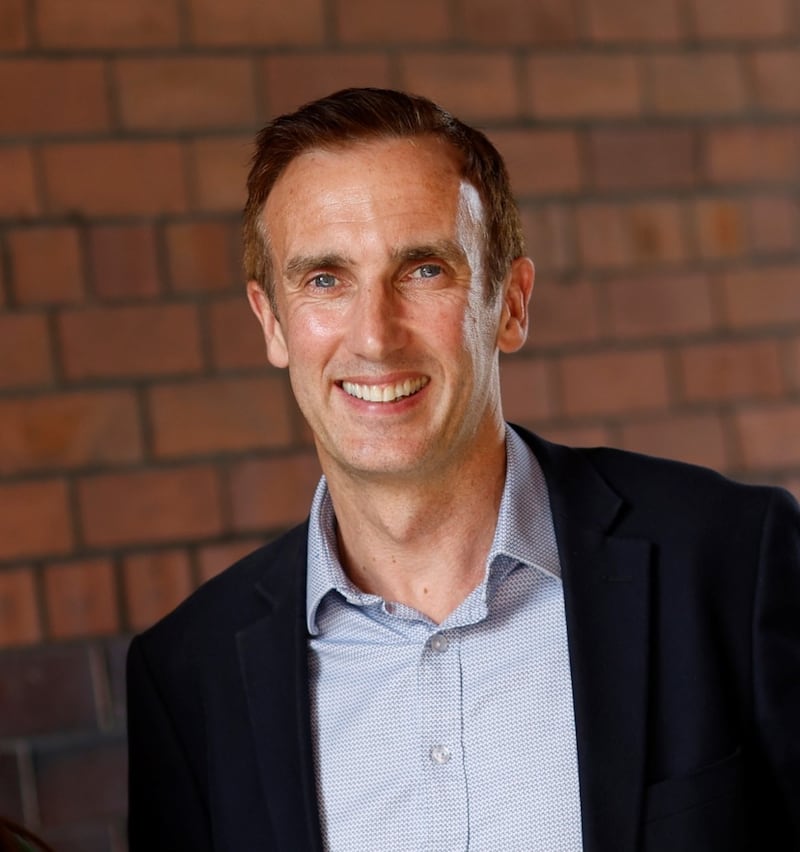
Delivering this transformation will require stronger European action to unlock investment.
“This includes expanding the use of corporate power purchase agreements, which can help companies secure stable electricity prices while backing renewable energy,” says Gallagher.
“Making sure firms can access affordable finance for electrification and energy efficiency will be critical. Clear and consistent policies, alongside targeted supports, can help maintain momentum and give businesses the confidence to act. By focusing on delivery, strengthening collaboration and supporting innovation, Ireland and the EU can turn the energy transition into a clear competitive advantage, ensuring the benefits are shared across the economy.”


