Simon Harris has had different opinions on the issue of Irish unity. Little more than two years ago, he told Sky News just days before he became taoiseach that unity was “not where my focus and priority is right now”.
Going into the election later that year, he heeded his predecessor Leo Varadkar’s advice to make unity an objective, rather than just an aspiration, in the party’s election manifesto.
However, that ambition was short-lived. The word “aspiration” returned in the negotiations surrounding the later programme for government: “Simon is not interested in this, period,” The Irish Times was told by a close source then.
Well, Harris is now interested, judging by his declaration that Fine Gael will have a unity blueprint ready for the party’s ardfheis in Dublin in November – something that came as a surprise to those who were expected to produce it.
READ MORE


The task has been given to Fine Gael’s previously little-known Northern Engagement Group, led by Dublin West TD Emer Currie, who is no stranger to Northern Ireland given that she is the daughter of former SDLP and FG politician Austin Currie.
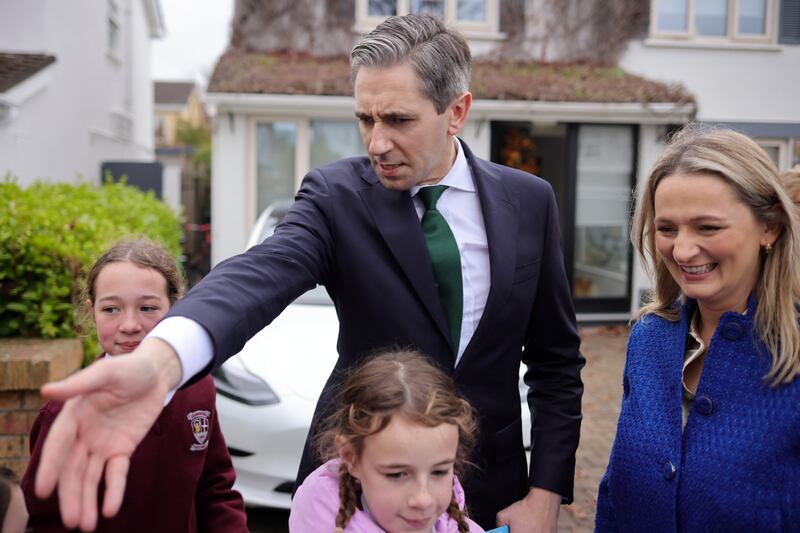
The group was the brainchild of Varadkar, who announced its creation to the Alliance Party’s eve-of-conference dinner in the Stormont Hotel in Belfast in 2019.
Varadkar was then still some way off from the full-throated public support for Irish unification that he espoused later, and that he has done so more publicly since he left office.
In his speech, he said “the Northern Ireland of the future should embody the best of what is British and the best of what is Irish”, enjoying the rights available in both jurisdictions.
The Northern Engagement Group would work closely “with people who consider themselves to be British or Irish and the growing numbers who feel that they are and can be both”.
Last Sunday, however, Harris gave it a new, far more specific purpose – charging it with producing the blueprint, one that would examine tax and spending, public services and so on.
Few in University College Dublin’s O’Reilly Hall, who had come to mark the centenary of former taoiseach, Garret Fitzgerald, expected to hear such an announcement, especially with such a short timetable.
His framing of the work ahead, and the speed surrounding it, has prompted surprise inside, and outside, Fine Gael.
Harris has set a high bar.
The November document will define what a unified Ireland could mean in practical terms, politically, economically and societally, informed by research, he says.
So far, however, there is nothing to indicate whether it will lay out a long list of options, or set down the price that comes with the choices that those wanting unity will have to face.
Given holidays and the usual summer lull, the timetable offered gives little, if any time to produce original research of its own, rather than simply drawing on work already done.
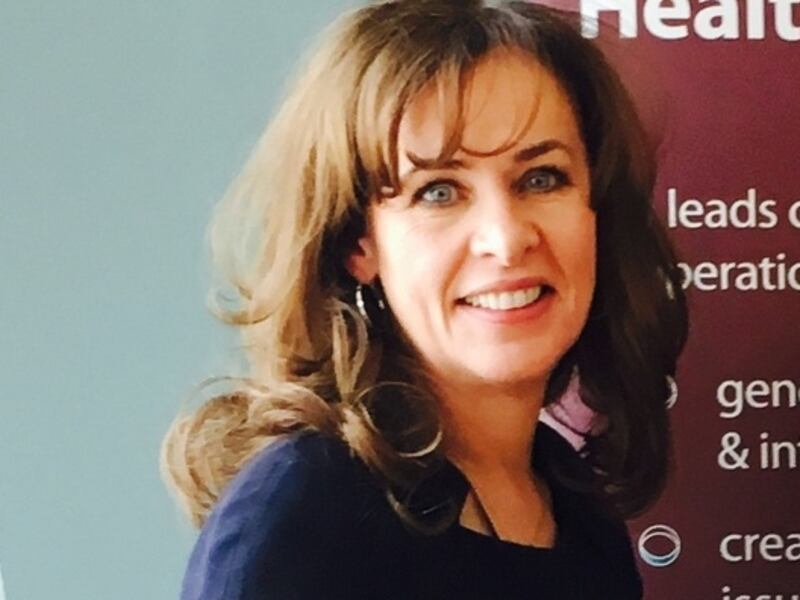
On Monday, the Ulster University academic Deirdre Heenan, who is to assist the group’s work, adopted a far more cautious approach when she spoke to UTV’s View from Stormont.
“My role is to take the temperature across the island. It is almost 30 years since the Good Friday Agreement and to see where we are in terms of opportunities for co-operation, collaboration, constitutional change,” she said.
“It is really about a listening exercise so that we move away from rhetoric about constant issues that are repeated time and time again and see what people are feeling about the whole issue.”
Heenan is nobody’s fool, so one must assume – short of any public declaration on her part, and bearing her UTV remarks in mind – that Harris’s “blueprint” ambitions go beyond what she had signed up for.
Since then, Heenan’s role has been clarified, The Irish Times understands, to report back on the opinions and views in the North on the question of unity that will feed into the final Fine Gael document.
On Tuesday Currie met Harris, Heenan and others to put, in the words of one source, flesh on the bone of Sunday’s announcement. There is much flesh to be added.
Currie’s group has not been idle. Earlier this month it went to Westminster to meet with Norther Secretary Hilary Benn and leading Democratic Unionist and Ulster Unionist figures, among others.
However, its purpose in life has sharply altered within that week, so there is now a question about whether some of the unionists who dealt with it before will do so again.
The question remains why Harris has done this, and why he has chosen to frame his ideas so ambitiously now. However, there are short-term gains, since grassroots Fianna Fáil grumble that Micheál Martin would not do the same.
And Martin will not do so, either, believing that ostentatious planning for unity south of the Border impedes the slow, deliberate work needed to build better relations with unionists, and could perhaps destroy it.
His Shared Island fund, now spending €2 billion on cross-Border co-operation, has succeeded in bringing recalcitrant unionists onboard exactly because it has come without constitutional baggage.
Many in Martin’s own ranks in Fianna Fáil, however, see this as falling far short. His caution is set against growing cultural confidence among younger voters in the Republic, one marked by often simplistic pro-unity opinions.
The North has rarely, if ever been at the top of Harris’s interests before now, but he clearly has made the political judgment that Fine Gael must be at the vanguard of any conversation that does happen.
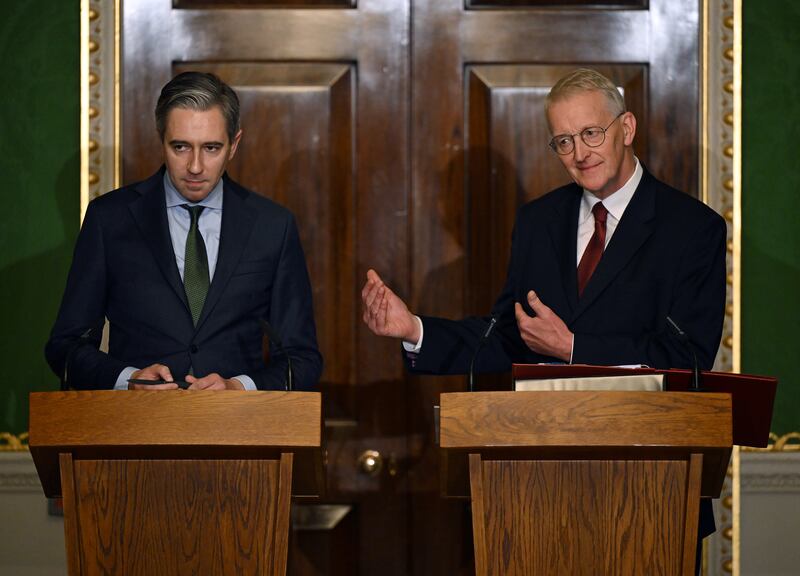
On Monday, Harris, speaking in Dublin Castle, said parties “can’t walk in with their hands empty, you have to come in with ideas” if, and when, a unity conversation does start.
With a nod to the politics of all of this, he insisted that every party in the Republic favours unity, not just Sinn Féin: “Mary Lou MacDonald isn’t the guardian of a united Ireland.” Note to younger voters, perhaps.