Several Irish restaurants now have a Michelin star. We might be forgiven for forgetting those days in Ireland when offering top-class food was as rare as making a vegan sausage. Jammet’s in Dublin was an exception.
The only French restaurant in the city for the best part of seven decades, The Jammet Hotel and Restaurant opened in St Andrew’s Street in 1901 and moved to Nassau Street in 1926. Two years later Vogue assessed it to be “one of Europe’s best restaurants” where the sole and grouse were “divine”. William Orpen succumbed to its charms. WB Yeats had his own table.
During its lifetime it exuded a bygone age. John Ryan, who celebrated his 21st birthday party there, wrote that “the main diningroom was pure French Second Empire, with a lovely faded patina to the furniture, snow-white linen, well cut crystal, monogrammed porcelain, gourmet sized silver-plated cutlery and gleaming decanters”.
Most famous visitors to Dublin yielded to its charms. After the second World War, with films being made at Ardmore Studios, Jammet’s welcomed movie stars including James Cagney, Rita Hayworth, Rock Hudson, Danny Kaye and Orson Welles. Visiting singers joined them such as Tony Bennett, Bing Crosby, Nat King Cole and Frankie Laine.
READ MORE


Dublin’s theatre luminaries loved its French atmosphere. Hilton Edwards and Micheál Mac Liammóir of the Gate – “the happiest married couple in Dublin” – had lunch several times a week. Brendan Behan enjoyed the Oyster Bar.
Behan, a favourite of Ireland’s most famous hostess, Oonagh Guinness, made his own contribution to Irish culinary lore when he pointed out that “the Guinnesses have been good to the people of Dublin, but then the people of Dublin have been good to the Guinnesses”.
And Louis Jammet did his bit for the people of his adopted city. He lent his expertise to the City of Dublin Vocational Education Committee in creating the first chefs and waiters courses in the 1930s and worked in the development of apprenticeship and catering education.
Behan had many a scrape in his time, but came nowhere close to Seán O’Sullivan’s collapse into the soup – head first into his own bowl – whereupon he had to be rescued from drowning. Lacking remorse, O’Sullivan used to say: “We are the people our mothers warned us against.”
Notwithstanding such mishaps, the Swiss maitre d’hotel described his clientele, in an authoritative tone, as “la crème de la crème”.
As befitted such an upmarket establishment, the sommeliers had to be on their toes. The Earl of Wicklow had the habit of studying the wine list for at least 10 minutes and commenting on any changes since his previous visit. During this time he would command the attention of the apprehensive wine waiter who was forced to ignore other diners seeking his services.
Some regulars did not need to peruse any menu, naturally, and a few, such as Jack B Yeats and Harry Kernoff, drew on them. For his Blue Room, Louis Jammet bought a Yeats painting which featured – exuberantly – well-heeled gourmets in London’s Cafe Royal. Other diners left less valuable drawings in the guestbook, such as Ray Bradbury, who worked on the screenplay of Moby Dick, directed by John Huston.
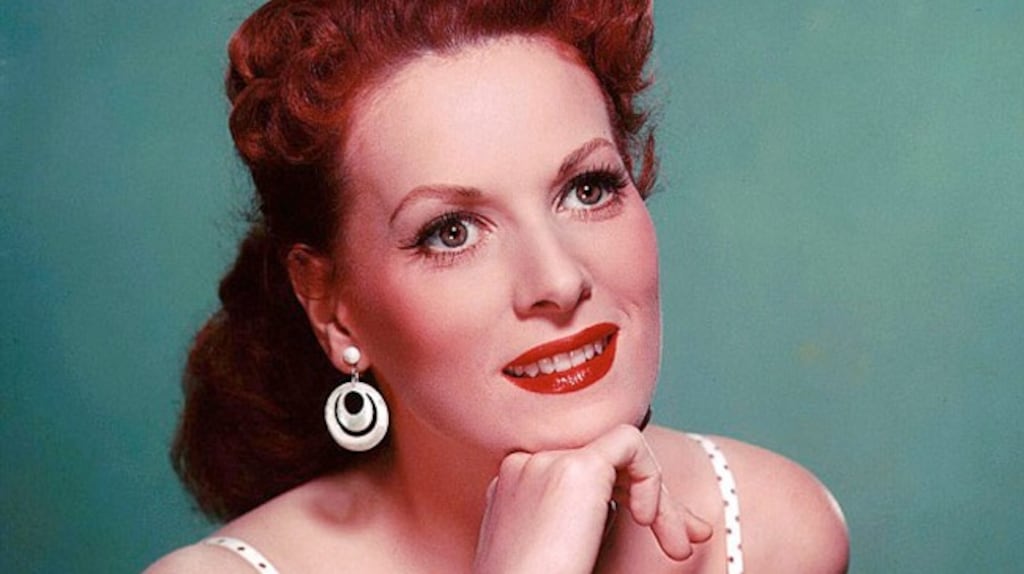
Two Hollywood Maureens enjoyed themselves over the years in Jammet’s: Maureen O’Sullivan, who starred as Jane opposite Johnny Weissmuller in the Tarzan movies, and Maureen O’Hara, who proved to be more than her match for John Wayne in The Quiet Man.
But the restaurant was eye-wateringly expensive. At the height of Beatlemania, John Lennon drew a caricature of himself in the guestbook with the message: “The other three are saving up to come here! YEAH – 3.” Lennon was not the only one to feel out of place there.
To celebrate Maeve Binchy’s entry to college – the first such achievement in her family – her father decided to treat the family to haute cuisine. The waiters were graciously patient with the teenage novices, who disappointed their parents by only ordering what they knew from home.
But this had little or no effect on the expense incurred. Maeve’s dad was ashen-faced when he received the bill and her mother looked tense as she rooted around in her bag for coins to leave on the table.
As they left, a puzzled Maeve, feeling proud of herself, gathered up the money her mother left behind. The family’s arduous dining experience ended in laughter outside when the novelty of tipping in Dublin had to be explained to her.
Much changed in the 1960s and not always for the better. The Beatles’ landmark album, Sgt Pepper’s Lonely Hearts Club Band, became the soundtrack for “the summer of love” in 1967, but some weeks before its release Jammet’s closed its doors for the last time.
As a result gourmet Dublin would be left with more than a few lonely hearts, including many who had never even eaten on the premises.


